
Blue-green algae and your dog: when swimming water turns dangerous
Blue-green algae can kill a dog. How to recognise it, what to do if your dog is poisoned, and where to check bathing water in Belgium and the Netherlands.
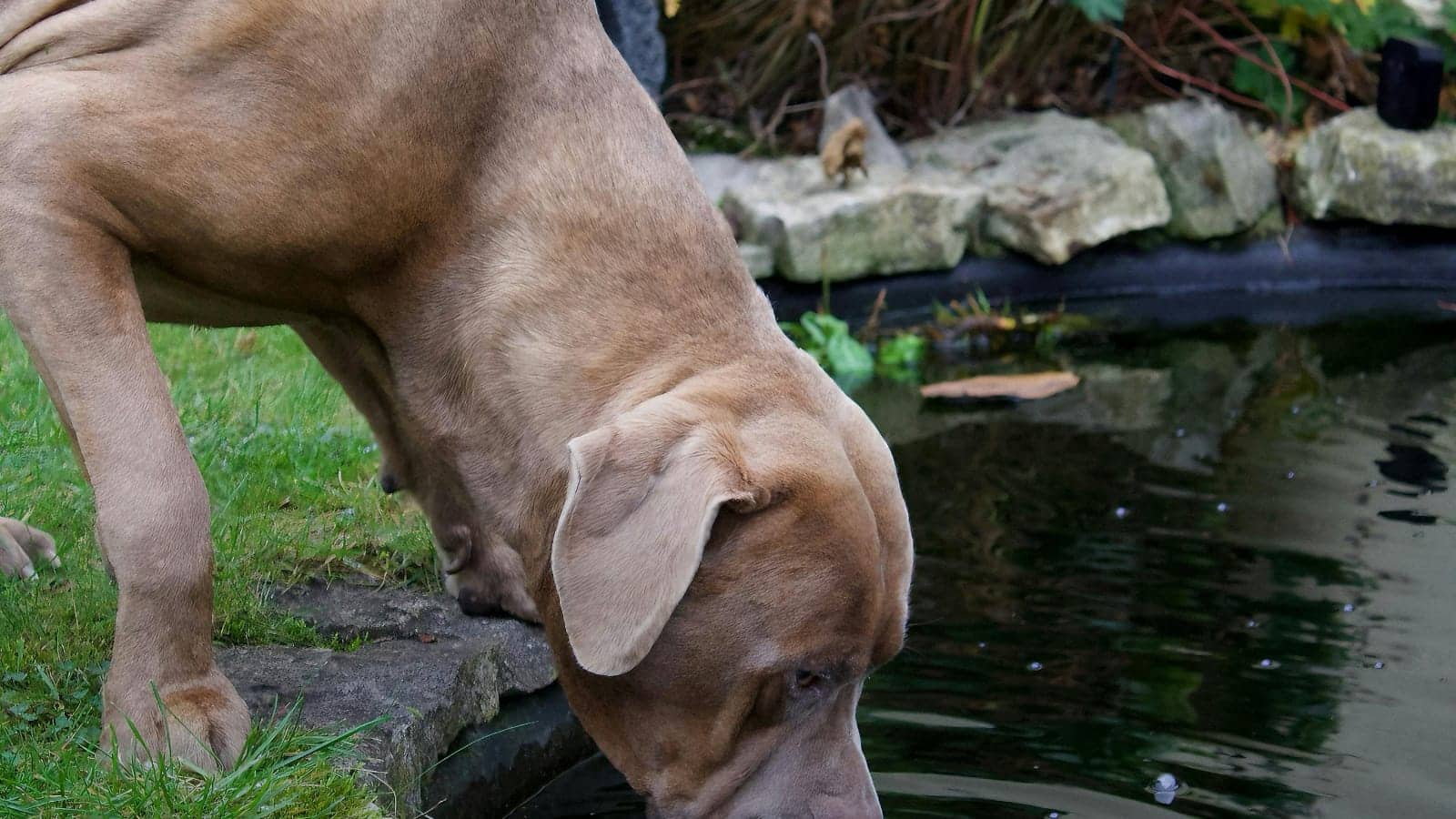
Blue-green algae become dangerous for your dog as soon as a blue-green, sometimes reddish-brown, oily-looking layer floats on the water, or as soon as the water manager has issued a warning or a ban. A dog takes in the toxins by drinking the water and by licking his wet coat after a swim. If he has been in water like that, rinse him off with clean water at once and drive to the vet, even if he seems fine. Before you set out, check the water in Flanders on kwaliteitzwemwater.be and with the VMM, in Wallonia on environnement.wallonie.be/baignade, and in the Netherlands on zwemwater.nl or in the Zwemwater app.
This information is no substitute for a vet. If you think your dog has swallowed blue-green algae, call your vet or an out-of-hours clinic straight away. Warnings and websites change, so check the current situation before you go.
When swimming water turns dangerous
Blue-green algae are actually bacteria, cyanobacteria, that occur naturally in fresh water. In warm weather they can multiply fast in water that barely moves: ponds, pools, canals, recreational lakes. Some blooms produce toxins that attack the liver or the nervous system. The veterinary college at Cornell University points out that you can’t tell from the look of the water whether a bloom is toxic. So treat every bloom as dangerous.
A dog runs a greater risk than a human swimmer. He drinks the water, fetches a stick or ball out of the floating scum and then licks his wet coat clean. That way he takes in a lot in a short time.
The usual points about swimming, such as currents, tiredness and wet ears, are covered in swimming with your dog.
Recognising blue-green algae in the water
The Flemish government describes a layer on the water that is blue-green, sometimes reddish-brown, and looks oily. Waterschap Limburg talks of a blue-green or red layer. The insurer Univé also mentions a green haze and bluish foam, and advises staying away if the water smells unpleasant.
Clear-looking water is no guarantee. Look out for signs on the bank: when a bloom is confirmed, the water manager puts one up, but plenty of ponds and canals are never checked. On warm days it’s safer to keep your dog away from still water you know nothing about. See also dogs and hot weather for ways to cool him down without a pond.
Symptoms of blue-green algae poisoning in dogs
The UK vet charity PDSA says the first signs can appear as soon as 15 minutes after exposure, or only after a few days. Cornell lists vomiting, diarrhoea, drooling, weakness, pale gums, muscle tremors or stiffness, difficulty breathing, paralysis, seizures and sudden collapse, among others. A dog can die from it within hours.
There is no antidote. The vet can support the dog, for example with a drip, oxygen and anti-seizure medication. If the dog arrives early and is still stable, the vet can try to remove part of the toxin from the stomach and gut. So don’t try to make him sick yourself. According to Cornell, dogs that survive poisoning by liver toxins are sometimes left with chronic liver disease.
What to do if your dog has swum in blue-green algae
- Get him out of the water and don’t let him drink any more of it.
- Rinse his coat thoroughly with clean water, from a bottle or jerrycan if there’s nothing else. The US Environmental Protection Agency (EPA) advises wearing gloves.
- Stop him licking his coat. Towel him dry and keep him close on the lead.
- Phone the vet while you’re on the way. Say it may be blue-green algae and where you were. Don’t wait for symptoms.
You can find a practice nearby in our list of vets. Outside opening hours, ask for the out-of-hours service. In summer, a few litres of tap water in the car belong with your first aid kit for the road.
Checking bathing water in Flanders
Kwaliteitzwemwater.be shows the water quality at places where you may swim or do water sports, including the swimming and recreation ponds where a recreation ban applies. The Flanders Environment Agency (VMM) keeps a list of blooms reported by water managers, with the date and municipality. For canals and rivers, De Vlaamse Waterweg, the Flemish waterways authority, keeps an overview of confirmed blooms and the measures taken. In early August 2026, VRT NWS reported that it had found blue-green algae in all the canals in Limburg, where many kinds of water recreation were then banned or discouraged.
If you spot a suspicious layer yourself, report it. For a river or stream, contact your municipality. For a swimming or recreation pond, contact the manager, which is usually the municipality too.
Checking bathing water in Wallonia
The Service public de Wallonie (SPW) monitors the official bathing zones during the bathing season together with the research institute ISSeP. In 2026 the season ran from 15 May to 30 September, across 24 zones in rivers and lakes. When cyanobacteria bloom, the municipal authorities can impose a temporary swimming ban. The results are on environnement.wallonie.be/baignade. Water outside those zones isn’t measured there, so you’re left with your own eyes and the municipality’s signs.
Checking bathing water in the Netherlands
Zwemwater.nl and the free Zwemwater app show the latest status for each official bathing site. Every site gets one of five statuses: good water quality, under investigation, warning, negative swimming advice or swimming ban. Monitoring runs from 1 May to 1 October. After that, the official sites are no longer checked and warnings may be withdrawn. A warm late summer can therefore bring blue-green algae to a spot where the app no longer shows anything.
Report a blue-green or red layer to the regional water authority (waterschap). Waterschap Limburg has a reporting point for this and puts up signs by the water during a bloom, taking them down only once the danger has passed.
Frequently asked questions
How do I recognise blue-green algae in the water? By a blue-green, sometimes red or reddish-brown layer that looks oily, by green streaks or by bluish foam along the edge. You can’t tell by looking whether a bloom is toxic. If in doubt, keep your dog out of the water.
How quickly does a dog get ill from blue-green algae? Symptoms can start within 15 minutes, or only after several hours and sometimes days: vomiting, diarrhoea, drooling, trembling, laboured breathing or collapse. Go straight to the vet, even if your dog isn’t showing anything yet.
What should I do if my dog has swum in blue-green algae? Rinse his coat with clean water straight away, stop him licking it and call the vet on the way. There is no antidote, so treatment needs to start as soon as possible.
Where can I check for blue-green algae in bathing water? In Flanders on kwaliteitzwemwater.be, with the VMM and, for canals, with De Vlaamse Waterweg. In Wallonia on environnement.wallonie.be/baignade. In the Netherlands on zwemwater.nl and in the Zwemwater app.