
Visiting a breeder: a checklist of what to ask and what to look at
What to ask and check when you visit a puppy at the breeder: the mother, litter, age, microchip, passport, contract and approval in Belgium and the Netherlands.
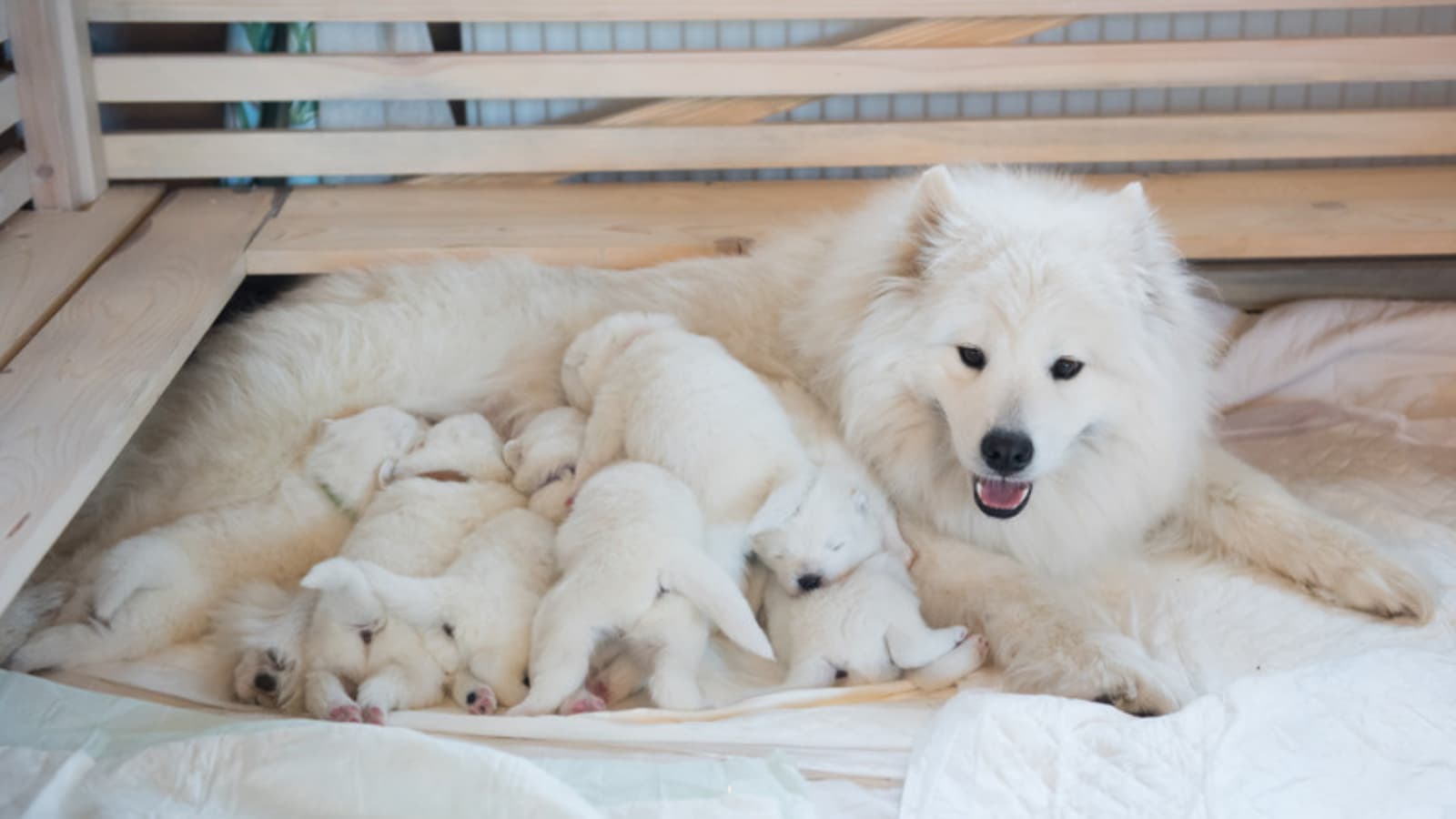
Take this list with you when you go to see a puppy. You want to see the mother, with her puppies, in the space where they are growing up. You ask about the health tests of both parents, the microchip number and the passport. You agree when the puppy can come home: not before 8 weeks in Flanders, not before 7 weeks in the Netherlands. Ask what you will take home, whether there is a written contract and what happens if things go wrong. Check too that the breeder is approved or registered. What sets a good breeder apart in general is covered in how to spot a reliable dog breeder. How puppy mills work, and how an ad can already give one away, is explained in what is a puppy mill.
The rules differ between Flanders, Brussels, Wallonia and the Netherlands, and they change from time to time. We follow the official sources listed at the bottom, as they were online in November 2026. If in doubt, call the animal welfare service of your region, or RVO in the Netherlands.
Before you go
Ask for the approval number on the first phone call or, in the Netherlands, for the UBN. That way you can look it up at home instead of wondering on the spot. Ask too how old the puppies are and when they can leave.
Set aside time. Vet and behaviourist Ian Dunbar recommends spending at least two hours with a litter, because eight-week-old puppies switch between wild play and deep sleep roughly every ninety minutes. Stay ten minutes and you only see one of the two. A second visit, ideally with everyone who will live with the dog, takes an afternoon and tells you a lot.
Our book My puppy journal opens with honest questions to ask yourself before you ring a breeder.
The mother
Brussels Environment gives buyers one simple piece of advice: check that the mother is there when you see the litter. The Raad van Beheer, the Dutch kennel club, writes that with a pedigree breeder you always see the mother, and that its staff check her microchip and DNA for every pedigree litter. If she isn’t there, the Raad says you are better off not buying.
Watch how she reacts to you. A mother who is wary of a stranger for the first few minutes while her puppies are still small is no reason to leave. If she stays fearful or tense, or you can only see her behind a door, ask why. The father often lives with another breeder. That can mean the breeder chose the stud dog with care.
Ask how many litters the mother has had and when the last one was. In the Netherlands, the Besluit houders van dieren allows a dog no more than one litter in any twelve months. Ask for her microchip number too. In the Netherlands, the breeder needs that number to report the birth of the puppies, so it should match the litter’s paperwork.
Where the puppies are raised
A puppy raised indoors, in the kitchen or the living room, already knows the hoover and the doorbell before it comes to you. Dunbar sees puppies from a barn or a kennel at the bottom of the garden as poorly prepared for family life. Feel free to ask where they sleep, and not only to see the room where they are shown to you.
Brussels Environment gives a short list for looking at the puppies themselves: a clean coat and a clean bottom, eyes and nose that aren’t running, and enough space. Look for toys as well. In Flanders, an approved breeder has to give the puppies objects they can handle and play with.
Find out where they go to the toilet. If the whole floor is covered in newspaper or straw, puppies learn, according to Dunbar, that they can relieve themselves anywhere, and they bring that habit home with them. A fixed toilet spot, away from their bed, is better.
How the puppies respond
Sit quietly on the floor and let the puppies come to you. Ask the breeder how many different people pick up and play with the puppies each day, and whether that included children and men. Dunbar recommends asking exactly that, because puppies that only know the breeder are more likely to be frightened of strangers later on.
| What you do | What you hope to see | What to ask more about |
|---|---|---|
| Sit on the floor | Puppies that come over quickly to sniff, tug at your sleeve and nip your hands | A puppy that keeps hiding |
| Pick up a puppy and hold it against you | It wriggles for a moment, then relaxes | It stays rigid or won’t settle |
| Touch the ears, paws, mouth and belly | It lets you, perhaps after a bit of squirming | It growls or pulls away every time |
| Clap your hands once | It startles and comes back to look within a few seconds | It runs off and stays away |
In puppies of six to eight weeks, nipping your hands is simply saying hello without manners. Dunbar is more concerned about a puppy that stays shy at that age: in his view, that isn’t normal in a well-socialised litter. If you choose such a puppy anyway, expect weeks of extra work. Never roll a puppy onto its back to “test” whether it resists. All that shows is that a frightened puppy either struggles or freezes.
How old the puppy must be to leave
| Region | Minimum age | Source |
|---|---|---|
| Flanders | 8 weeks | Vlaanderen.be |
| Brussels | 7 weeks | Brussels Environment |
| Wallonia | 7 weeks in the 2007 Royal Decree, which serves as the basis again; the rules are being revised | Wallex |
| Netherlands | 7 weeks | Besluit houders van dieren, article 1.20 |
In Wallonia, a 2022 decree raised the limit to 8 weeks, but the Council of State annulled it on 10 December 2024. Since then the 2007 Royal Decree has served as the basis again, and the Walloon government is working on new rules. If you are buying in Wallonia, check with the Walloon animal welfare service. If you agree on 8 weeks with the breeder, you are within the rules in all four regions. If they offer a puppy younger than their region allows, that is a reason to walk away.
Microchip, registration and passport
In Belgium, only a vet may microchip a dog. Every dog must be chipped and registered in DogID by 8 weeks at the latest, and in any case before it is sold or given away. A puppy always leaves with its passport. The seller reports the change of owner to DogID. According to Vlaanderen.be, two to three weeks later you receive a definitive identification certificate as a sticker for the passport, along with a white card to keep for any future change. The microchip number has 15 digits. Compare the number in the passport with the one on the guarantee certificate or your contract. In Brussels, according to Brussels Environment, the microchip number must already appear in the ad.
In the Netherlands, the breeder has the puppies chipped and registered within 7 weeks of birth, and arranges the European pet passport with the vet within the same period. At handover, they report the puppy as leaving and give you a registration number or safe code. You then register the puppy yourself with a portal of your choice. The Besluit houders van dieren also puts a duty on you as the buyer: you may not acquire a dog that isn’t microchipped, has no passport or isn’t registered. The rules per country are set out in microchipping and registration.
Health tests on the parents
Which tests are needed depends on the breed. Ask for the results on paper, for the mother and for the father. A breeder who says everything is fine but shows you nothing hasn’t answered your question. Ask too how old the grandparents lived to. Dunbar sees a long lifespan in a line as one of the best indicators of health and temperament.
In Flanders, since 1 July 2025, a puppy sold with a pedigree must comply with the Flemish breeding decree. The parents must then have had the DNA tests and other checks set out in their breed’s breeding programme, and inbreeding in the litter is capped. In Belgium, the KMSH issues pedigrees in the LOSH stud book.
In the Netherlands, a Raad van Beheer pedigree puppy has a microchip number starting with 528140. That number appears at the bottom left of its pedigree. Ask to see the mother’s original pedigree as well. The Raad van Beheer itself points out that a pedigree is not a quality mark or a guarantee certificate, so you still need the test results.
What you take home
What a breeder must hand over by law depends on the region and the type of breeder. From an approved breeder in Flanders you get:
- a guarantee certificate showing, among other things, the microchip number, breed, date of birth, buyer and seller details and the date of sale;
- written guidance on feeding, housing and care, with information on the breed and on training;
- a puppy that has had its first vaccination against parvovirus, distemper, kennel cough and infectious canine hepatitis;
- the passport, which has to go with the puppy anywhere in Belgium.
The breeder also goes through a questionnaire with you, so that your choice is a considered one.
A commercial breeder in the Netherlands gives you written or digital information on your dog’s care, housing, behaviour and costs, and all relevant information about its health, including at least proof of vaccination. These duties don’t apply to a private person with a one-off litter, but you can still ask for the same.
Either way, ask for a bag of the food the puppy is eating now and a piece of blanket that smells of the litter. Nothing requires it, and a breeder who offers it has thought about the first nights at your place.
Contract and taking the dog back
Ask for a written contract and read it before you pay. Make sure it states at least the microchip number, the price and what happens if the puppy falls ill.
If you buy in Flanders or Brussels from an occasional breeder or a private person, you don’t get a guarantee certificate. You are, however, entitled to a refund if the dog dies shortly after delivery from distemper (within 10 days), parvovirus (within 10 days) or infectious canine hepatitis (within 6 days), with a vet’s certificate. Those time limits come from Brussels Environment. If you buy from a professional seller, Brussels Environment points to the two-year legal guarantee. For the first six months you then don’t have to prove that the defect was there at delivery.
No law requires a breeder to take a dog back. Ask anyway what they would do if, in five years’ time, you could no longer keep the dog. A breeder who takes their dogs back or helps find a new home will be happy to put that in writing.
The breeder’s approval
| Region | Who needs an approval | What you check |
|---|---|---|
| Flanders | Anyone breeding 3 or more litters a year. Below that, they are an occasional breeder without approval. | An HK number from Dierenwelzijn Vlaanderen, tied to one address. Flanders publishes a list of approved dog breeders. |
| Brussels | Anyone breeding 3 or more litters a year. | A number starting with HK followed by 8 digits, required in the ad. |
| Wallonia | Every breeder who sells litters, including the occasional breeder with no more than 2 litters a year. | The approval number from the Walloon authorities, required in every ad. |
| Netherlands | Anyone breeding commercially. RVO gives more than 20 dogs in 12 months as one indicator, alongside others such as registration with the Chamber of Commerce or advertising. | A UBN with RVO and a manager with a certificate of competence. Even someone with a one-off litter needs a UBN. |
A Flemish hobby breeder has no more than 5 litters a year and 3 breeds. Anyone breeding more is a professional breeder. In Flanders, only approved breeders may advertise in general media and on social media. If a breeder moves house, the approval lapses, so the address you visit should be the address on the approval. In the Netherlands, commercial breeding doesn’t depend on a fixed number of litters. A breeder who considers themselves a hobby breeder has to show this during an inspection.
Red flags during the visit
How puppy mills work, and which ads should already make you suspicious, is covered in what is a puppy mill. On the spot, watch out above all for these:
- the mother has “just gone for a walk”, or the puppies are brought in to you one at a time;
- you are asked to meet in a car park or at a petrol station instead of where the litter lives;
- the puppy can leave younger than the rule in that region allows;
- there is no passport, or the paperwork “will follow”;
- the approval number is missing or belongs to a different address;
- the breeder won’t draw up a contract and would rather be paid in cash;
- you are pushed to decide today.
If you still have doubts after the visit, don’t buy. Breeders listed on GoPuppy are under breeders. If you would rather give a home to a dog that needs one, look at a shelter and read adopting a dog. All our articles on choosing and raising a puppy are in order in our puppy guide.
Frequently asked questions
What questions should I ask a breeder when I visit a puppy? Ask to see the mother, how many litters she has had and when the last one was. Ask for the health test results of both parents on paper, the puppy’s microchip number and when it was chipped and registered. Ask what you will take home, whether there is a written contract and what the breeder does if things don’t work out. In Belgium, ask for the approval number; in the Netherlands, ask a commercial breeder for their UBN.
How old should a puppy be when you collect it? In Flanders, at least 8 weeks. In the Netherlands, the Besluit houders van dieren allows a puppy to leave its mother from 7 weeks, and Brussels Environment also gives 7 weeks for Brussels. In Wallonia, since a 2022 decree was annulled, the 2007 Royal Decree serves as the basis again, and it states 7 weeks. The Walloon rules are being revised. A puppy collected at 8 weeks is within the rules everywhere.
How do I know if a breeder in Belgium is approved? In Flanders, a breeder needs an approval from 3 litters a year, with a number that starts with HK. The approval is tied to one address. Flanders publishes a list of approved dog breeders. In Brussels, the HK number must appear in the ad. In Wallonia, even an occasional breeder who sells litters needs an approval and must show that number in every ad.
What should you get when you buy a puppy? Always the passport, and a puppy that is microchipped and registered. In Flanders, an approved breeder hands over a guarantee certificate and written guidance on feeding, housing, care and training, and the puppy has had its first vaccinations. A commercial breeder in the Netherlands gives you written information on care, housing, behaviour and costs, plus proof of vaccination.
Should I be able to see the mother at the breeder’s? Yes. Brussels Environment advises checking that the mother is there when you go to see the litter. The Raad van Beheer, the Dutch kennel club, writes that with a pedigree breeder you always get to see the mother, and that you are better off not buying a puppy from a breeder where she is missing. The father often lives elsewhere, and that is not a bad sign.