
Leaving your dog home alone: how long is OK and how do you build it up?
How to spot separation anxiety, how many hours a dog can stay home alone, and how to teach a puppy to be alone without barking, chewing or panic.
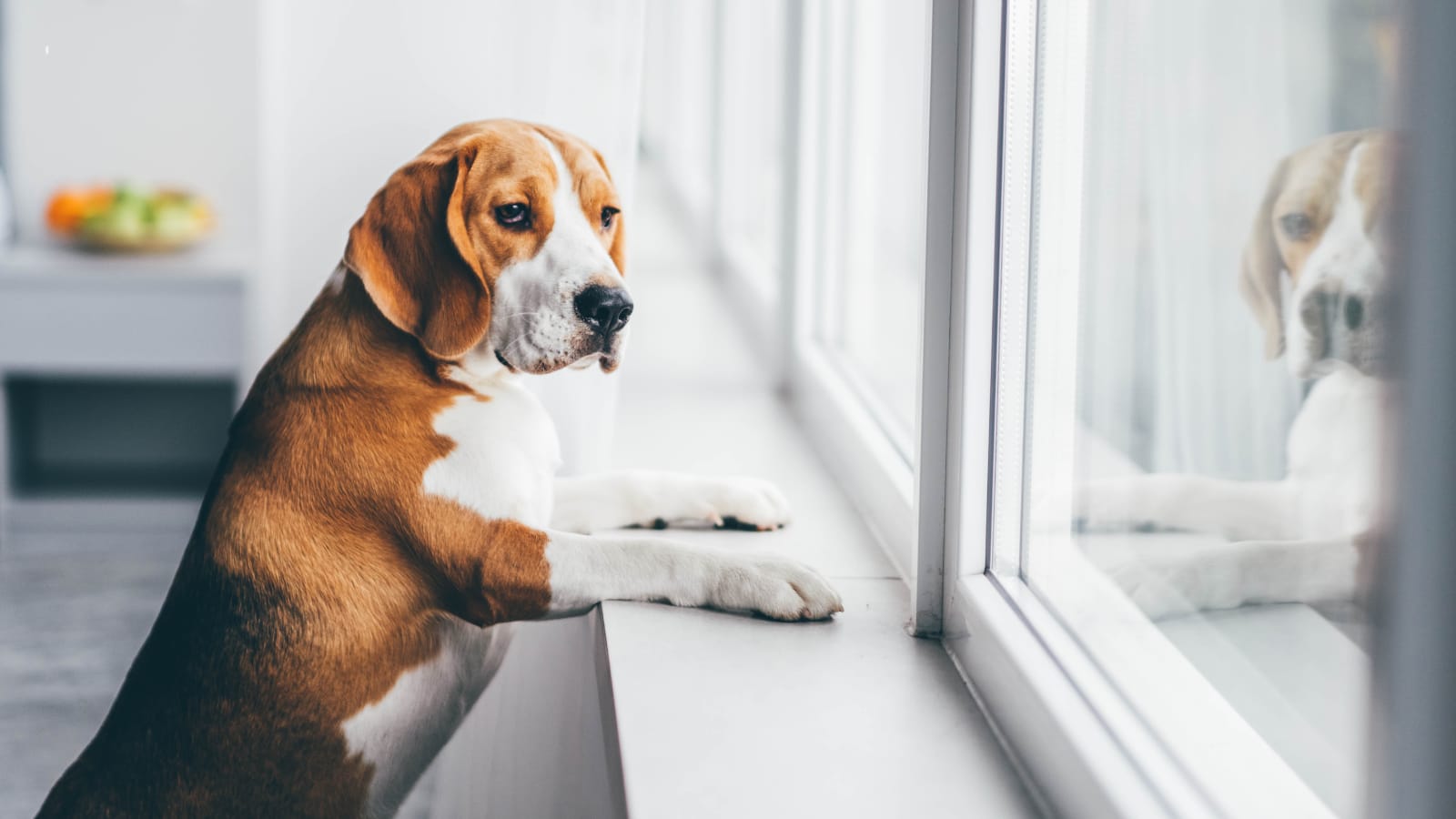
Most adult dogs can stay home alone for a few hours, provided they’ve learned it step by step. Four hours is often named as the upper limit, because after that a dog needs to relieve himself. Don’t leave a puppy under six months alone for more than two hours. If you’re out for longer, you need someone to drop in: a neighbour, a dog walking service or day care.
If your dog panics badly, injures himself or suddenly changes his behaviour, have him checked by the vet first. Pain or another physical cause may play a part.
How many hours is too long?
We found no legal maximum in Belgium or the Netherlands. The rules of thumb come from practice:
| Dog | Suggested time alone | Why |
|---|---|---|
| Puppy of 8 to 12 weeks | a few minutes to half an hour, building up | bladder and being alone are still new |
| Puppy up to 6 months | up to 2 hours, after building up | needs to pee roughly every two hours |
| Adult dog | around 4 hours | needs to go out after that |
| Older dog | shorter, judge case by case | pees more often, gets restless sooner |
The LICG, the Dutch information centre for companion animals, stresses that dogs differ and that temperament plays a part. A border collie used to working all day gets bored faster than a basset hound that likes to sleep. How to help an older dog who pees more often and has stiff joints is covered in walking an older dog.
If you work full time, a long morning walk isn’t enough. Plan for someone to pop in around midday, or a few days of day care a week. What to ask is in choosing a dog walking service and choosing day care.
Building up time alone
Start on the day your puppy or new dog arrives, even if you’re home for the first weeks. Taking a fortnight off to settle the puppy and then leaving him alone for eight hours on day fifteen is asking for trouble.
How to build it up:
- Leave him alone briefly in another room while you’re at home. A few seconds, then come back.
- Make the time longer slowly: half a minute, a minute, five minutes.
- Then actually go out of the door, first to the letterbox, then round the block.
- Only move on if he stays calm. If he whines or scratches, the step was too big and you go back.
The LICG advises building up in small steps of a few minutes and only going faster if your dog reacts calmly. Some trainers start at two seconds and work up to half an hour. If that goes well indoors, build up the time outside the door in the same way.
Leaving and coming home without fuss
Make leaving an ordinary moment. No long goodbye, no “be a good boy”. Pick up your keys and coat now and then without leaving, so those actions lose their meaning.
When you come home, greet him calmly, once he’s settled a little. Never punish him for what he did while you were out. He links the punishment to your return. The cushion from two hours ago is already forgotten, and the next time gets worse.
What helps while you’re away:
- a sniffy walk before you go, so he’s tired and content
- a filled toy or a chew he has already used safely while you were there
- a fixed spot he likes to lie in, with a blanket that smells of you
- some background noise, if street sounds startle him
Recognising and treating separation anxiety
Boredom and separation anxiety look alike but need a different approach. A bored dog chews things all over the house, often after a while. A dog with separation anxiety panics in the first minutes after you leave. He whines, barks, scratches at the front door or window, drools and pants, and sometimes pees indoors although he’s house-trained.
Set a camera or your old phone to record when you leave. You’ll see when it starts and how bad it is.
With real separation anxiety, more toys or a longer walk won’t get you there. It needs a step-by-step plan, sometimes with a vet’s help for medication. Don’t shut a dog with separation anxiety in a crate when you leave: many panic more and injure themselves on the bars. A dog behaviour therapist can draw up that plan with you. Helping an insecure or anxious dog offers guidance too.
A dog that copes well alone at home won’t automatically cope while travelling. If you’re taking him on holiday, also read leaving your dog alone in a hotel room.
Frequently asked questions
How long can an adult dog stay home alone? Four hours is often given as a rule of thumb, and only for a dog that has learned to be alone. After that he needs to go out to relieve himself. How much a dog can cope with varies from dog to dog.
How long can a puppy be left alone? Much less. For a puppy under six months, most sources put the limit at two hours, and only after building it up calmly. A puppy also needs to go out roughly every two hours.
How do I know if my dog has separation anxiety? The problems start shortly after you leave: whining or barking, scratching at the door or window, chewing near the exit, peeing indoors although he’s house-trained, panting and drooling. A camera or a sound recording shows what happens while you’re out.
Does a second dog help with being alone? Not by itself. A dog with separation anxiety usually misses you, and another dog rarely makes up for that. And you’ll then have to teach the second dog to be alone as well.