
Flying with your dog: cabin, hold and the rules airline by airline
Cabin or hold: the 8 kg limit and the rules at KLM, Transavia, TUI fly and Brussels Airlines for your dog, and when you're better off driving.
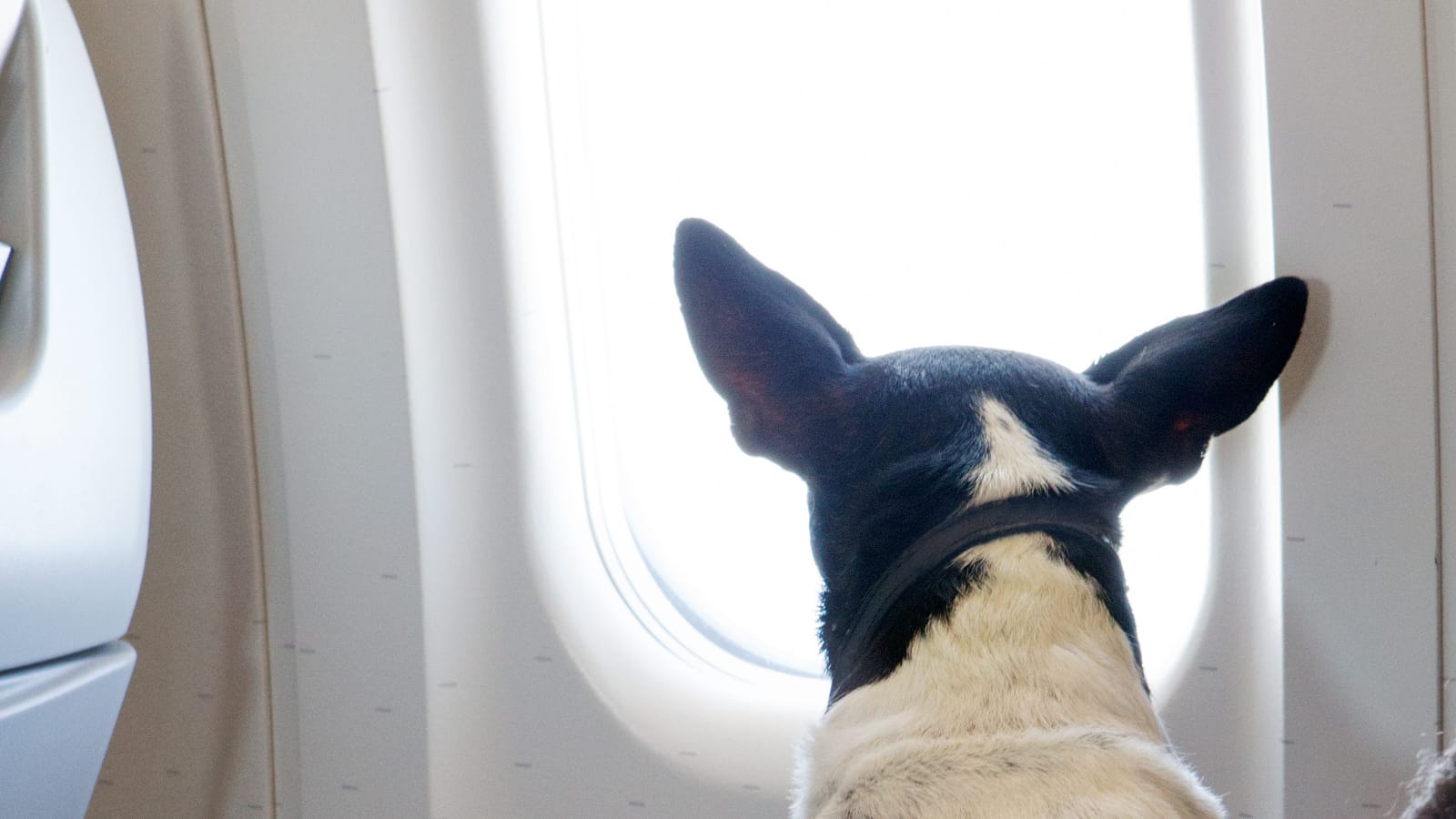
A dog can fly in the cabin if he weighs no more than 8 kg together with his travel bag. That’s the rule at KLM, Transavia, TUI fly and Brussels Airlines. A heavier dog travels in the hold, and some airlines don’t offer that. Ryanair and easyJet don’t take dogs at all, except assistance dogs. Always book your dog separately and early, because each flight only has a few places for animals.
Airlines change their conditions regularly, and they vary by route and aircraft. These rules applied in November 2026. Check them with your airline just before you book.
Cabin or hold
In the cabin, your dog stays in a soft travel bag under the seat in front of you. He can’t come out during the flight. The bag counts towards the weight, so a 1.5 kg bag leaves room for a dog of around 6 kg. A chihuahua, a miniature dachshund or a small Jack Russell fits; a beagle usually doesn’t.
In the hold, your dog travels in a sturdy crate, in a heated and ventilated space. He’s on his own for hours, with noise, changes in temperature and strangers’ hands during loading and unloading. A healthy, calm dog usually copes. For an anxious or older dog it’s a hard day. Have your vet check your dog a few weeks before you travel. Some airlines won’t carry animals in the hold to hot destinations in summer. Ask when you book.
What do airlines flying from Belgium and the Netherlands require?
KLM allows dogs up to 8 kg (bag included) in the Economy cabin, and in Business on flights within Europe. It isn’t possible in Premium Comfort or in Business on intercontinental flights. Your dog must be at least 15 weeks old and travel on the same flight as you. Larger dogs can go in the hold on many routes; within Europe the maximum crate size depends on the aircraft. Register your dog with KLM as soon as possible after booking, because each flight has only a few places for animals.
Transavia takes dogs and cats in the cabin, in a soft bag of no more than 40 x 30 x 24 cm, together no heavier than 8 kg. Your dog must be vaccinated against rabies at least 21 days before departure. You add him when you book or up to 2 hours before departure, if there’s still space. A hard crate isn’t allowed in the cabin.
TUI fly (Belgium and the Netherlands) carries dogs and cats in the cabin up to 8 kg. You then book a window seat. Heavier dogs travel in the hold for a surcharge. Flat-faced dogs are only allowed in the cabin, and on long-haul flights pets aren’t allowed in the cabin, except assistance dogs.
Brussels Airlines allows cats and small dogs up to 8 kg with the bag in the cabin. A dog up to 20 kg with crate can go in the hold as checked baggage. To and from the United Kingdom, the airline doesn’t take pets in the cabin or hold, only as cargo.
Ryanair and easyJet don’t carry pets. Only recognised assistance dogs are allowed on certain routes.
The price depends on the airline and destination, from a few dozen euros for a flight within Europe to a few hundred for an intercontinental one. You only see the amount when you book.
Papers and travelling to the United Kingdom
Within the EU your dog needs a microchip, a valid rabies vaccination and a European pet passport. The chip must be placed before or at the same time as the vaccination, and after the first vaccination you wait at least 21 days. It’s all in travel documents for your dog.
If you’re going to the United Kingdom, the country also requires a tapeworm treatment between 24 hours and 5 days before arrival, and dogs can’t enter in the cabin. They travel as cargo, or you take the car on the ferry or through the Eurotunnel. For countries outside Europe, start months ahead with your vet, because some countries require a blood test or quarantine.
Preparing your dog
Get your dog used to the travel bag or crate weeks before you leave. Leave it open in the living room, put a blanket in it that smells of home and give him a treat in it now and then. A dog that knows his bag lies more calmly in it on the plane.
On the day:
- give him a small meal a few hours before departure, not right before
- let him relieve himself just before you enter the terminal, because not every airport caters for dogs past security
- pack a small water bowl and poo bags in your hand luggage
- avoid sedatives: KLM and many vets advise against them, especially in the hold, because a sedated dog finds it harder to keep his balance and body temperature. If your dog is very anxious, ask your vet whether flying is a good idea at all
When you’re better off not flying
If your dog weighs more than 8 kg and your destination can be reached by car, driving is often calmer for him. You stop when he needs to and he stays with you. Read how to secure him safely in the car. For an anxious or older dog, a good boarding kennel can be a better choice than a flight in the hold.
If you take him along, book a place to stay in advance where he’s welcome. On GoPuppy you’ll find holiday homes and other dog-friendly stays in Belgium and the Netherlands.
Frequently asked questions
How heavy can a dog be to fly in the cabin? At KLM, Transavia, TUI fly and Brussels Airlines the limit is 8 kg, including the travel bag. That works out at a dog of about 6 kg. Heavier dogs travel in the hold, if the airline offers it.
Can my dog fly with Ryanair? No. Ryanair doesn’t carry pets, only recognised assistance dogs on certain routes. easyJet doesn’t carry dogs that aren’t assistance dogs either.
Can a flat-faced dog fly? Often only in the cabin. Breeds such as the French bulldog, pug and English bulldog are more prone to breathing problems in the hold, and many airlines refuse them there. TUI fly only carries them in the cabin, so within the 8 kg. Flying is hard on these breeds even in the cabin: have your vet assess whether your dog can cope, and avoid hot days.
What papers does my dog need to fly? Within the EU a microchip, a valid rabies vaccination and a European pet passport. After the first rabies vaccination you wait at least 21 days. Extra rules apply outside the EU and for the United Kingdom.