FCI 343 · Italy

Cane Corso

An Italian molosser of 40 to 50 kg, descended from the Roman molossers. His standard calls him a guardian of property, family and livestock, and PDSA puts his exercise needs at about two hours a day.

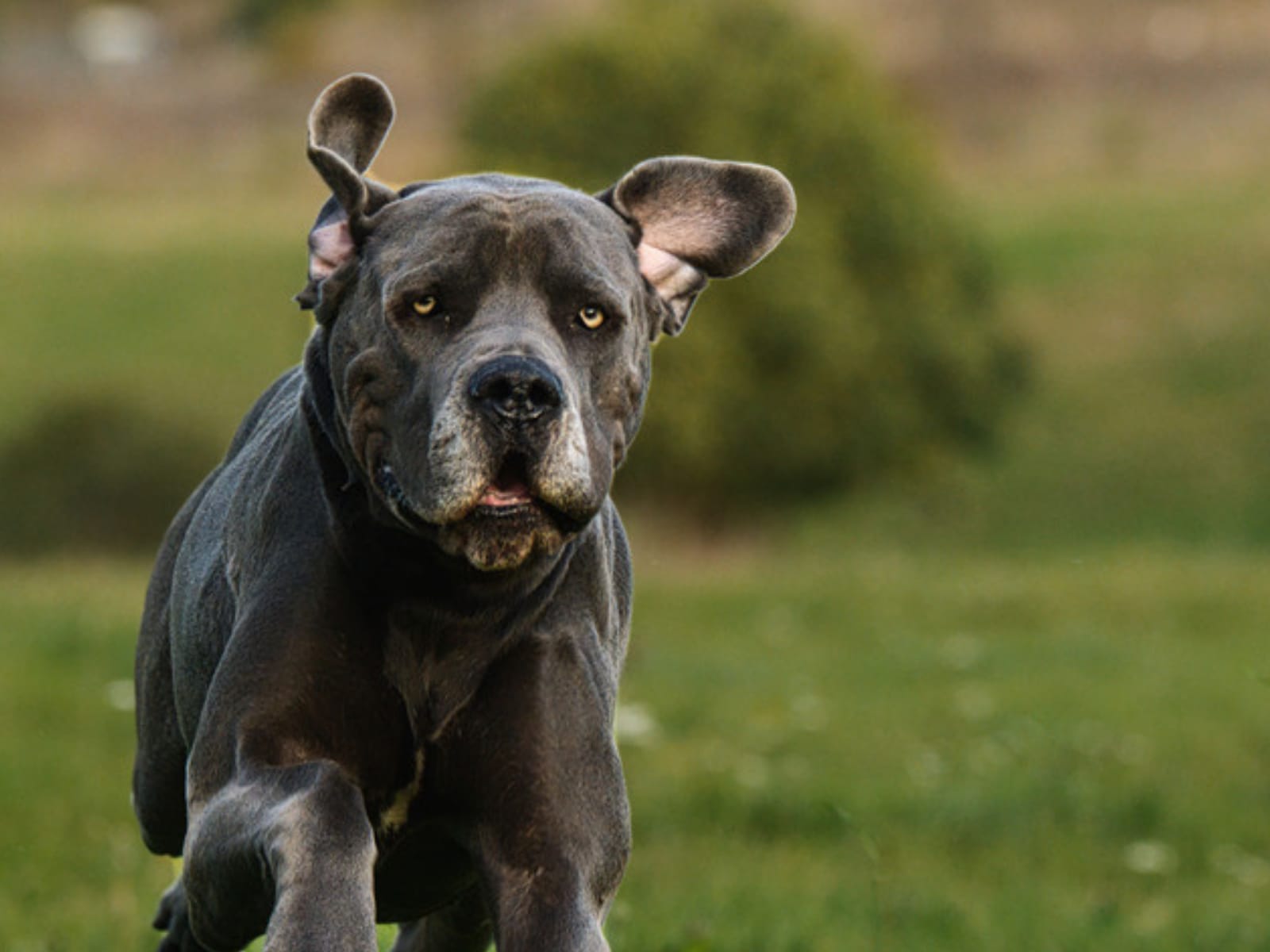
Grey Cane Corso with natural ears running across a meadow

Breed facts

FCI
no. 343 · group 2, molossoid, mastiff type
Origin
Italy
Height at withers
male 64–68 cm · female 60–64 cm
Weight
male 45–50 kg · female 40–45 kg
Exercise
about 2 hours a day (according to PDSA)
Lifespan
under 10 years

The GoPuppy profile

These are breed averages and our own assessment. Your own dog’s age, fitness and training matter more.

  1. WalkingLong walksPDSA puts it at about two hours of exercise a day and warns that a heavy dog should not be expected to run for miles. Long walks at a steady pace suit him better than a full-day hike.
  2. Dog sportScent work and one sportScent work, mantrailing and obedience suit his weight. PDSA advises against long-distance running for this heavy breed.Suitsscent workmantrailingobedience
  3. Terraces and cafésRather not a busy terraceThe standard describes a guardian. He is large, watches what goes on around him and needs space. A busy terrace takes a lot of training; a quiet terrace outside peak hours is more realistic.
  4. Travel and staysRules or heat when travellingAt 40 to 50 kg he does not fit in every holiday home. In Bavaria he is listed in 'Kategorie 2', and in Munich he must be kept on a lead of no more than two metres in the street.
  5. CityNeeds a big gardenA large guard dog is better off in a house with a fenced garden than in a flat on a busy street.

Character

According to the FCI standard, the Cane Corso is “extremely agile and responsive” and a “guardian of property, family and livestock”. In the past he herded cattle and hunted big game. A guard dog of this weight needs an owner who starts socialising and training early. A dog school with experience of large breeds can help.

Origin

The standard names the old Roman molosser as his direct ancestor. The breed was once found all over Italy, but survived longest in Apulia and the neighbouring regions. The name comes from the Latin ‘cohors’, protector of the farmyard. The FCI places him in Group 2, among the molossoid breeds of mastiff type.

Size

Males measure 64 to 68 cm and weigh 45 to 50 kg, females 60 to 64 cm and 40 to 45 kg. The standard allows 2 cm either way.

Health: what a good breeder tests for

  • Hips and elbows (according to PDSA, hip and elbow dysplasia occur in the breed)
  • Eyes and eyelids (PDSA lists entropion, ectropion and cherry eye)
  • Know the signs of bloat (gastric torsion); PDSA lists it as a concern in this breed

Ask for the parents’ results when you visit a litter. This is not medical advice; your vet knows your dog.

Breeders of this breed on GoPuppy

No breeder of this breed on GoPuppy yet.

GoPuppy does not check breeders’ health tests. A listing here is not a seal of approval.

Read also