FCI 120 · Ireland

Irish Setter

A red gundog, developed in Ireland for hunting. The standard calls him keen, intelligent, energetic, affectionate and loyal, with great stamina.

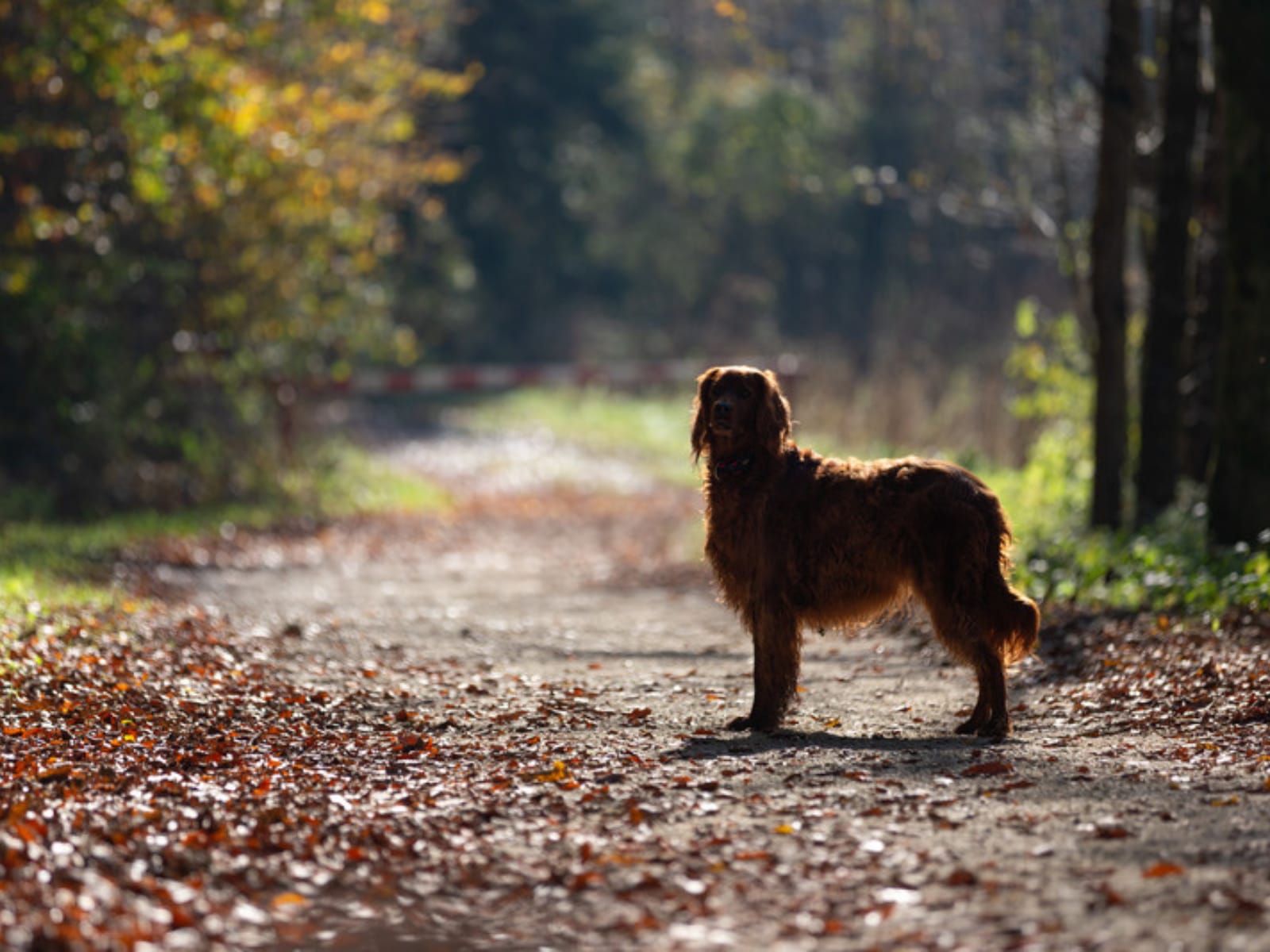
Irish Setter on a woodland path in autumn

Breed facts

FCI
no. 120 · group 7, British and Irish pointers and setters
Origin
Ireland
Height at withers
male 58–67 cm · female 55–62 cm
Exercise
more than 2 hours a day (according to the Royal Kennel Club)
Lifespan
over 10 years
Coat
medium length, sheds

The GoPuppy profile

These are breed averages and our own assessment. Your own dog’s age, fitness and training matter more.

  1. WalkingFull-day hikesMore than two hours of exercise a day, according to the Royal Kennel Club. An adult setter will manage a full-day hike.
  2. Dog sportSport with a build-upGundog work, canicross and scent work. The standard speaks of 'great stamina'.Suitsgundog workcanicrossscent work
  3. Terraces and cafésTerrace after trainingThe standard calls him 'keen, intelligent, energetic, affectionate and loyal'. A terrace goes best after a good walk.
  4. Travel and staysTravel takes preparationLarge, with a medium-length coat. Plan stops on the way where he can really run.
  5. CityNeeds a big gardenThe Royal Kennel Club assumes a large house with a large garden, in town or country.

Character

According to the FCI standard, the Irish Setter is keen, intelligent, energetic, affectionate and loyal. He has evolved into a hardy, healthy, intelligent dog with excellent working ability and great stamina.

Origin

The Irish Red Setter was developed in Ireland as a working dog for hunting game. He derives from the Irish Red and White Setter and an unknown solid red dog, and was a clearly identifiable type by the 18th century. The Irish Red Setter Club was established in 1882, issued the breed standard in 1886, and published the breed’s working style in 1998. The FCI places him in Group 7, section 2, with a working trial, alongside the English Setter and the Gordon Setter among others. Another British pointing dog is the English Pointer.

Health

The Royal Kennel Club puts genetic diversity first and recommends DNA tests for PRA rcd4, PRA rcd1 and CLAD, along with hip, elbow and eye testing.

Size

Males measure 58 to 67 cm, females 55 to 62 cm.

Health: what a good breeder tests for

  • Prioritising genetic diversity when choosing the parents
  • DNA test for PRA rcd4, PRA rcd1 and CLAD
  • Hips (X-ray, official result)
  • Elbows (X-ray, official result)
  • Eye testing

Ask for the parents’ results when you visit a litter. This is not medical advice; your vet knows your dog.

Breeders of this breed on GoPuppy

No breeder of this breed on GoPuppy yet.

GoPuppy does not check breeders’ health tests. A listing here is not a seal of approval.

Read also