FCI 312 · Canada

Nova Scotia Duck Tolling Retriever

A Canadian retriever that lures ducks by playing. He runs and jumps along the shore while the hidden hunter throws sticks, until the curious ducks swim within gunshot range.

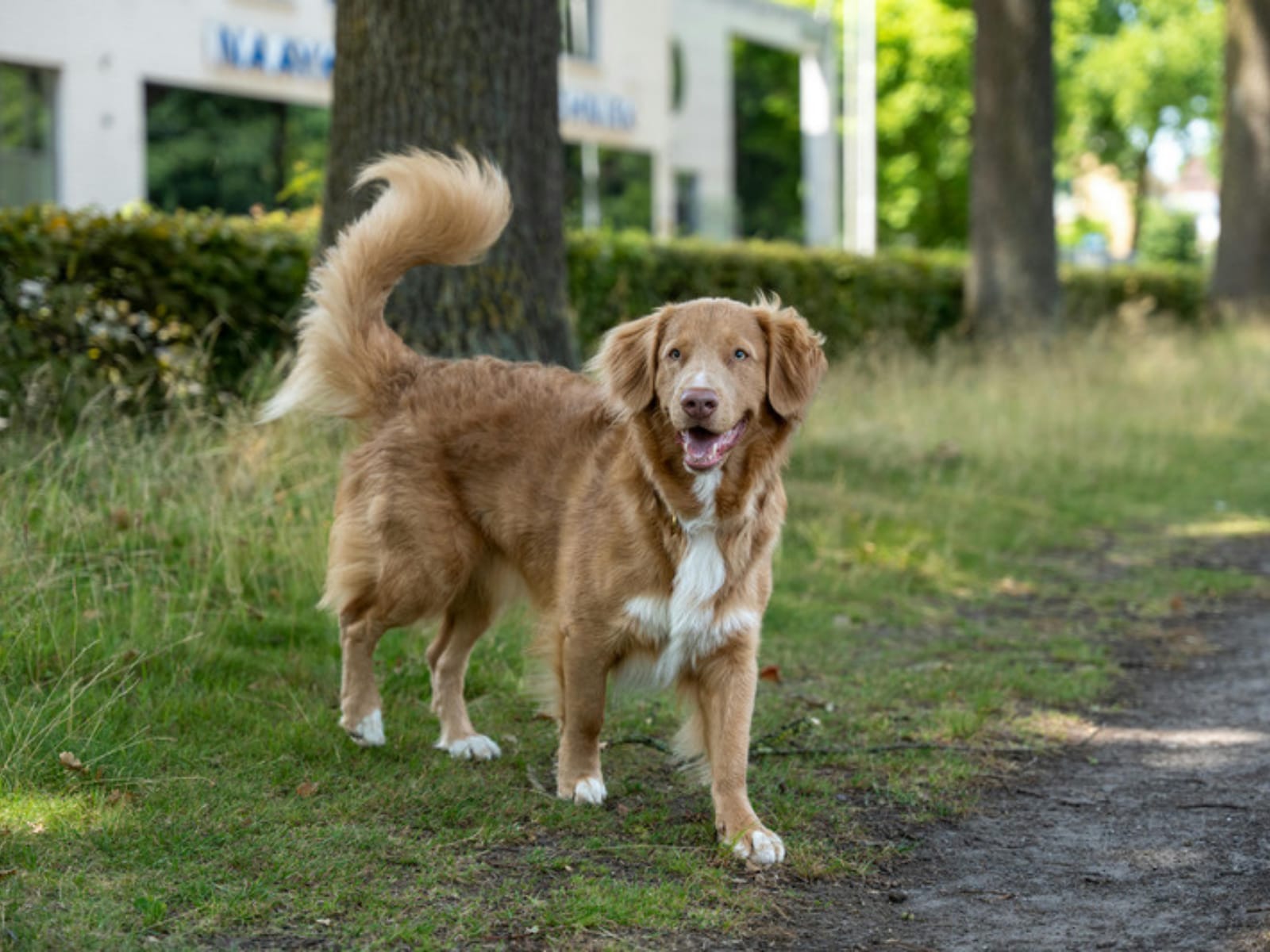
Nova Scotia Duck Tolling Retriever in a park

Breed facts

FCI
no. 312 · group 8, retrievers
Origin
Canada
Height at withers
male 48–51 cm · female 45–48 cm
Size
Ideally 48 to 51 cm for males and 45 to 48 cm for females, give or take 2.5 cm. Weight is a guideline.
Weight
male 20–23 kg · female 17–20 kg
Exercise
up to 1 hour a day (according to the Royal Kennel Club)
Lifespan
under 10 years
Coat
medium length, sheds

The GoPuppy profile

These are breed averages and our own assessment. Your own dog’s age, fitness and training matter more.

  1. WalkingLong walksThe Royal Kennel Club gives up to an hour of exercise a day, but the standard speaks of 'great endurance'. A healthy Toller likes long walks, preferably along water.
  2. Dog sportSports partnerDummy training and swimming: the standard calls him 'a strong and able swimmer' and a tenacious retriever on land and from water.Suitsdummy trainingswimminggundog work
  3. Terraces and cafésTerrace after trainingA playful, clever dog. After a walk or a swim he settles more easily.
  4. Travel and staysTravels with some planningMedium-sized and easy to take in the car. A towel for after swimming.
  5. CityBetter with a gardenThe Royal Kennel Club says a small house with a small to medium garden is enough, in town or country.

Character

The FCI standard describes the Toller as highly intelligent, easy to train and with great endurance. He is a strong swimmer and a tenacious retriever, ready the moment there is something to fetch. According to the standard, his tolling work depends on that retrieving desire and playfulness.

Origin and work

The Toller was developed in Nova Scotia, Canada, in the early 19th century to toll (lure) and retrieve waterfowl. The standard describes his work: he plays on the shore, disappears from sight and reappears, while the hunter throws sticks or a ball. The ducks come to look, and the dog then retrieves the shot birds. The FCI places him in Group 8, section 1, retrievers, with a working trial.

Colour and health

The coat is red or orange in various shades, usually with white on the tail tip, feet, chest or as a blaze. The Royal Kennel Club puts genetic diversity first and recommends DNA tests for DM, prcd-PRA, CEA/CH, DE and JADD, along with eye, elbow and hip testing. It gives a lifespan of under ten years.

Size

Ideally a male measures 48 to 51 cm and a female 45 to 48 cm, give or take 2.5 cm. As a guideline, males weigh 20 to 23 kg, females 17 to 20 kg.

Health: what a good breeder tests for

  • Prioritising genetic diversity when choosing the parents
  • DNA test for DM (degenerative myelopathy)
  • DNA test for prcd-PRA
  • DNA test for CEA/CH, DE and JADD
  • Hips (X-ray, official result)
  • Elbows (X-ray, official result)
  • Eye testing

Ask for the parents’ results when you visit a litter. This is not medical advice; your vet knows your dog.

Breeders of this breed on GoPuppy

No breeder of this breed on GoPuppy yet.

GoPuppy does not check breeders’ health tests. A listing here is not a seal of approval.

Read also