
Character
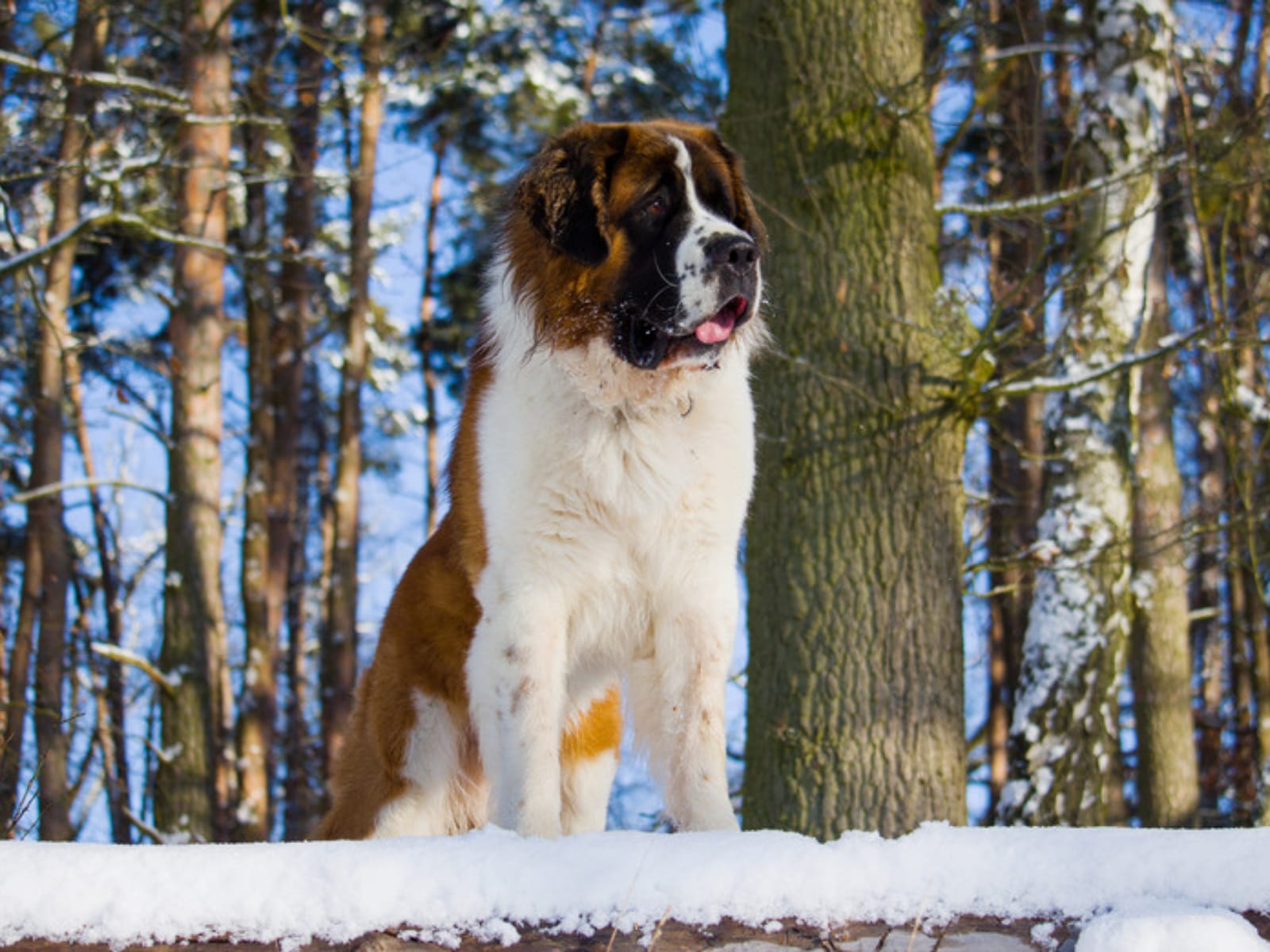
The FCI standard calls the St. Bernard friendly by nature, with a temperament that is calm to lively, and watchful. He was a companion and rescue dog, and the standard still asks for that steady character.
Origin
On the Great St Bernard Pass, monks founded a hospice for travellers and pilgrims in the 11th century. Since the mid-17th century they kept large mountain dogs there for guarding and protection; a picture from 1695 and a written document from 1707 record them. The dogs rescued travellers lost in snow and fog. These stories, and the accounts of soldiers who crossed the pass with Bonaparte in 1800, made the ‘Barry dog’ famous across Europe in the 19th century. The legendary Barry became the epitome of the rescue dog.
Heinrich Schumacher of Holligen near Bern was the first to issue pedigrees, from 1867. The Swiss stud book began in February 1884; its very first entry was the St. Bernard Leon. On 2 June 1887 he was officially recognised as a Swiss breed, and he has been regarded as Switzerland’s national dog ever since. The FCI places him in Group 2, section 2.2.
Two coats
The standard has a short-haired and a long-haired variety, both of considerable size.
Health and size
The Royal Kennel Club gives a lifespan of under ten years and recommends hip, elbow and eye testing. Males measure at least 70 cm, females at least 65 cm. The maximum is 90 cm for males and 80 cm for females, but taller dogs are not penalised if they are balanced and move soundly.


