FCI 99 · Germany

Weimaraner

A silver-grey German pointing dog, already kept at the court of Weimar in the first third of the 19th century. According to the standard he is probably the oldest German pointing breed, pure bred since 1900.

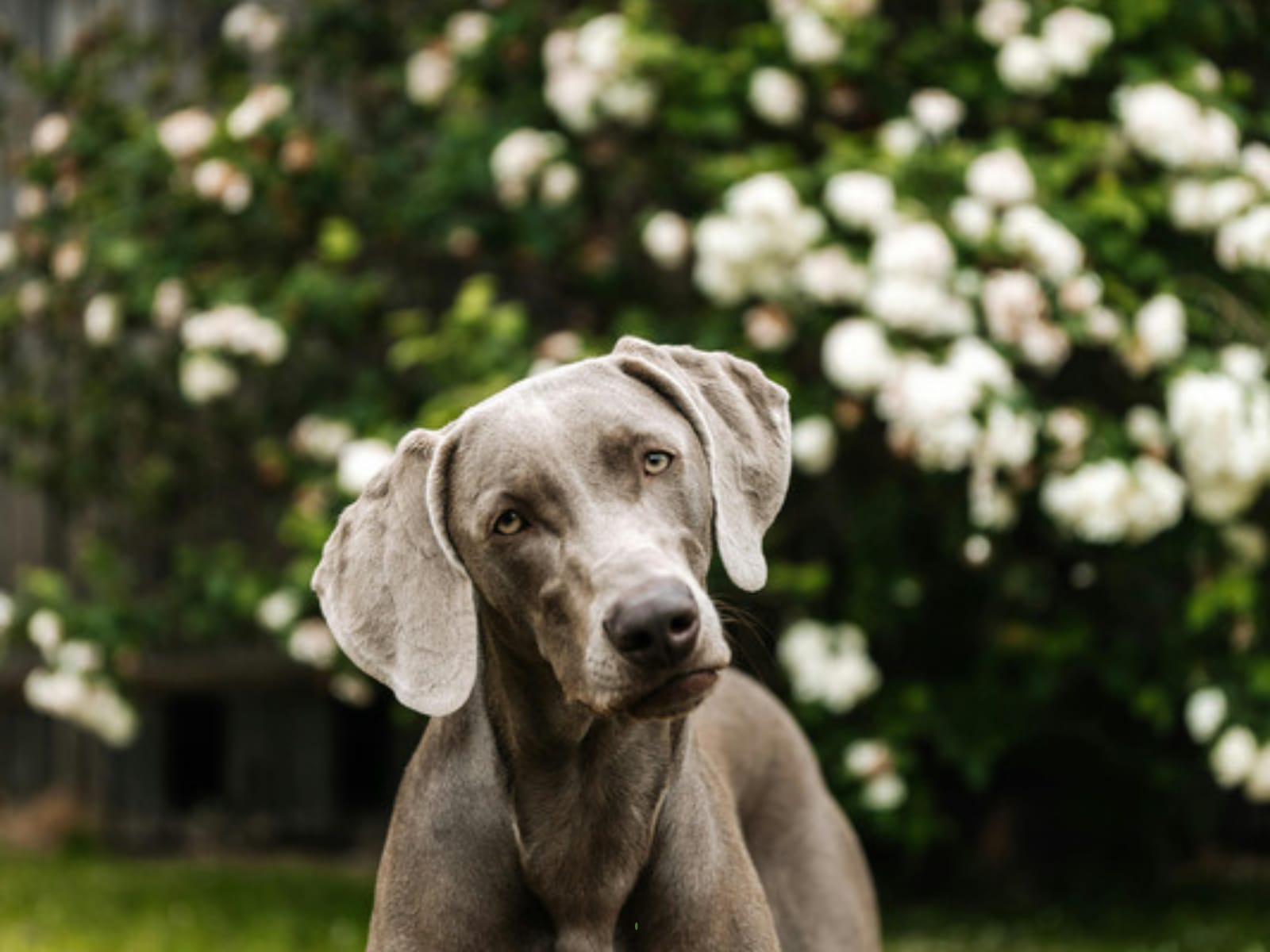
Weimaraner in front of a flowering shrub

Breed facts

FCI
no. 99 · group 7, continental pointing dogs
Origin
Germany
Height at withers
male 59–70 cm · female 57–65 cm
Weight
male 30–40 kg · female 25–35 kg
Exercise
more than 2 hours a day (according to the Royal Kennel Club)
Lifespan
over 10 years
Coat
short, sheds

The GoPuppy profile

These are breed averages and our own assessment. Your own dog’s age, fitness and training matter more.

  1. WalkingFull-day hikesMore than two hours of exercise a day, according to the Royal Kennel Club. An adult Weimaraner will manage a full-day hike.
  2. Dog sportSport with a build-upGundog work, dummy training, scent work and canicross. The standard notes a 'remarkable ability to pick up scent'.Suitsgundog workdummy trainingscent workcanicross
  3. Terraces and cafésTerrace after trainingThe standard calls him 'a good watchdog, without aggressiveness however'. A terrace goes best after a good walk.
  4. Travel and staysTravel takes preparationLarge, with a short coat. Plan stops on the way where he can really run.
  5. CityNeeds a big gardenThe Royal Kennel Club assumes a large house with a large garden, in town or country.

Character

According to the FCI standard, the Weimaraner is a versatile, easily trained, steady and passionate hunting dog. He searches systematically and with perseverance without being too lively, has a remarkable nose and loves to work after the shot. He is a good watchdog, but not aggressive.

Origin

There are many theories about his origin, the standard says. What is certain is that the Weimaraner, then still with a great deal of liam hound (‘Leithund’) blood, was kept at the court of Weimar in the first third of the 19th century. Breeding then lay mostly with professional hunters and gamekeepers in central Germany, around Weimar and in Thuringia. From about 1890 he was bred to a plan and entered in a stud book, and he has stayed largely free of crosses since. Besides the short-haired dog, a long-haired variety has occurred since the turn of the 20th century, though it is much rarer. The FCI places him in Group 7, section 1.1, with a working trial.

Colour and health

The coat is silver, roe or mouse grey, with head and ears usually slightly paler. The Royal Kennel Club recommends hip, elbow and eye testing.

Size

Males measure 59 to 70 cm and weigh about 30 to 40 kg, females 57 to 65 cm and 25 to 35 kg.

Health: what a good breeder tests for

  • Hips (X-ray, official result)
  • Elbows (X-ray, official result)
  • Eye testing

Ask for the parents’ results when you visit a litter. This is not medical advice; your vet knows your dog.

Breeders of this breed on GoPuppy

GoPuppy does not check breeders’ health tests. A listing here is not a seal of approval.

Read also