
Dog scared of fireworks: getting through New Year's Eve together
Preparing your dog for New Year's Eve: what you can still do, when to call the vet, and what the Dutch fireworks ban and the Belgian local rules mean.
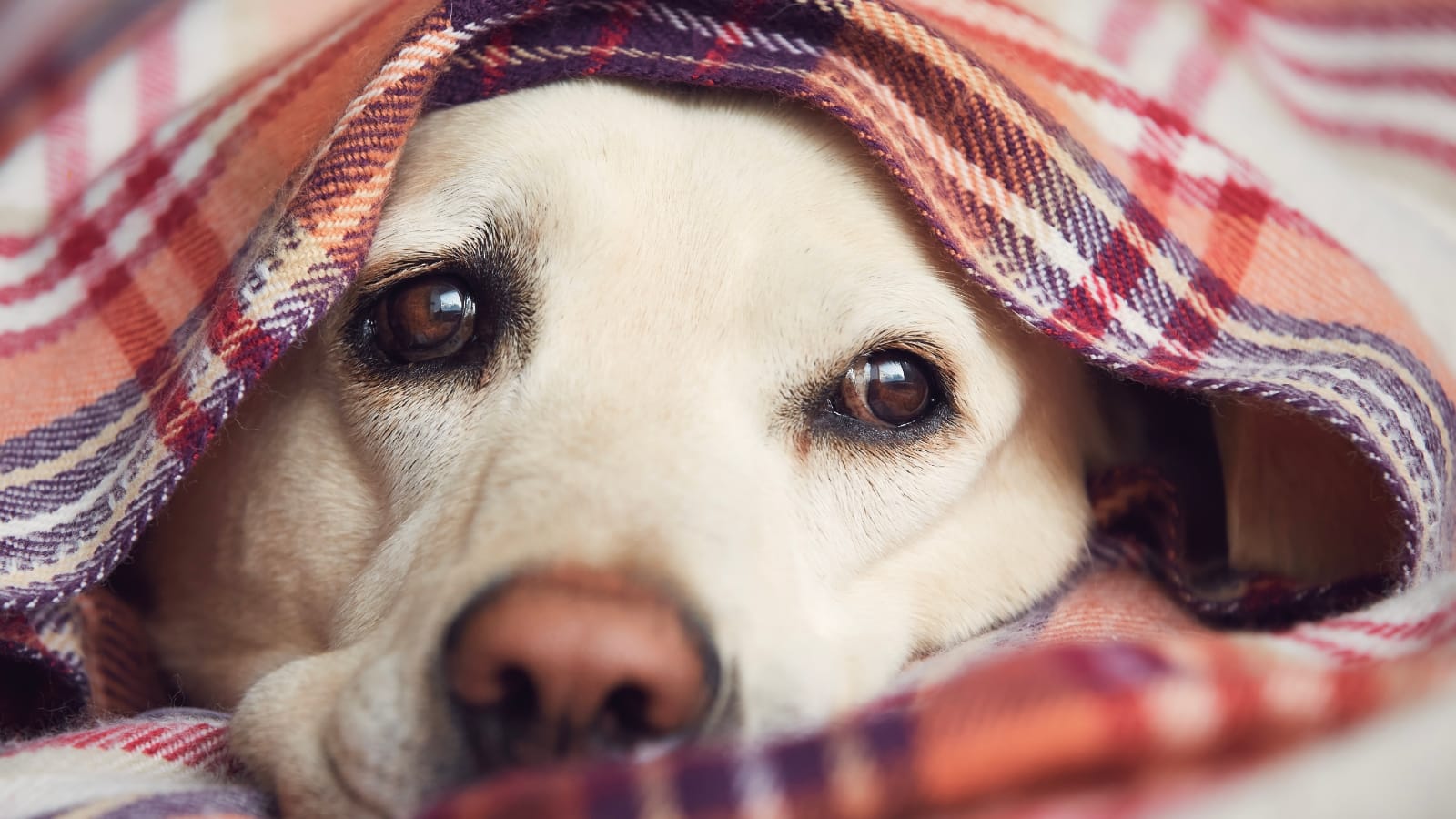
A dog that’s afraid of fireworks shouldn’t be left alone on New Year’s Eve. Walk him in daylight and on the lead, make sure his microchip is registered to your current phone number, and give him a dark, quiet spot indoors where he can hide. If he panics every year, call your vet now. Diaries fill up in early December, and many practices close between Christmas and New Year.
This article doesn’t replace a vet. If your dog is severely frightened, keeps trembling or injures himself, have him examined.
What changes for New Year 2026-2027?
In the Netherlands, the Safe New Year Act (Wet veilige jaarwisseling) came into force on 1 August 2026. Private individuals may no longer own, transport or set off F2, F3 and F4 fireworks. Ordering fireworks abroad and having them shipped is also banned. Still allowed: sparklers and other F1 items, professional displays, and associations or foundations that get an exemption from the mayor to set off designated F2 fireworks, for example at a street party. Some municipalities, such as Opmeer and Hoorn, are not granting that exemption this year.
For your dog, the Netherlands will probably be quieter than before, although illegal fireworks won’t disappear. If you live near the border, you’ll also hear what goes up on the Belgian or German side.
Belgium has no national ban. The Brussels-Capital Region bans fireworks across its whole territory. Elsewhere, each municipality sets the rules in its police regulation, and they vary a lot. Last year Ghent only allowed legal fireworks on New Year’s night from midnight to one o’clock. Lier did the same and bans them for the rest of the year. Look up your own municipality’s rules, and those of the place where you’ll celebrate if you’re visiting.
In the weeks before New Year’s Eve
A young dog that isn’t scared yet can get used to the sound. Play a recording of fireworks very quietly while you play with him or feed him. If he stays relaxed, turn the volume up a little a few days later. If he startles, go back to the previous level. A few minutes a day is enough.
With a dog that’s already afraid, six weeks usually isn’t enough. Allow at least two months to reduce a fear. That work is better started in spring, with a behaviourist. See also what a dog behaviour therapist does.
For now, the step is an appointment with your vet. They check whether your dog is healthy enough for medication and which one suits him. Utrecht University sends vets an updated information letter on this every year. Products that only sedate help little: the dog still hears the bangs just as loudly, but can no longer run away or hide. Some medicines have to be started days or even weeks before New Year’s Eve, which is another reason to call now. Also ask whether you can try the medication on an ordinary day first, so you know how your dog reacts.
On the day: 31 December
- Take a long walk during the day, at a quiet moment and on the lead. As soon as it gets dark, the first fireworks go up.
- Keep him on the lead in your own garden too if the fence isn’t fully closed.
- Check that his chip is registered to your current address and phone number. How that works in Belgium and the Netherlands is explained in microchipping and registration.
- Give him a tag with your phone number and a harness he can’t slip out of. If he runs off anyway, read what to do if your dog goes missing.
- Feed him before dark. A frightened dog eats poorly.
In the evening, give him a place indoors where he can hide: an open crate with a blanket over it, a corner behind the sofa, the bathroom. Let him choose, even if that’s under the bed. Close the curtains, switch the lights on and put the radio or TV on a little louder than usual. Keep him away from the front door, because a panicking dog slips out the moment someone comes in.
Stay calm and do what you’d do on an ordinary evening. If he seeks contact, you can hold him or stroke his back gently. That doesn’t reward his fear. What makes it worse: pulling him out of his hiding place, punishing him, or taking him outside “to get used to it”.
After midnight and on 1 January
Keep a dog that was very scared indoors for the first few hours. For toilet breaks, the garden on a lead is fine. In the morning, check your garden or street for firework debris: unexploded pieces can still go off, and a dog that chews them swallows chemicals.
Over the following days, watch how he reacts to other loud noises. In some dogs, fear of fireworks spreads to thunder, a slamming door or a dropped pan. If you notice that, don’t wait until next year. The articles on helping an insecure or anxious dog and on stress signals help you recognise it.
Frequently asked questions
Does the Dutch fireworks ban apply this New Year’s Eve? Yes. Since 1 August 2026, private individuals may no longer own or set off category F2, F3 or F4 fireworks. Sparklers and other F1 items are still allowed, as are professional displays, and associations can ask the mayor for an exemption. Expect your dog to hear bangs anyway.
Can you set off fireworks in Belgium on New Year’s Eve? That depends on your municipality. The Brussels-Capital Region bans them; in Flanders and Wallonia the municipal police regulation decides. Last year Ghent only allowed them on New Year’s night between midnight and one o’clock. Check your own municipality’s website.
Is it still worth starting sound training now? With a young dog that isn’t scared yet, yes: short sessions with firework sounds played very quietly, paired with something nice. A dog that already panics won’t change in six weeks. In that case, call your vet or a behaviourist now so there’s a plan before 31 December.
Can I comfort my dog when he’s scared? Yes. Staying calmly close to him, or holding him if he seeks it, doesn’t make the fear worse. Fussing over him or getting nervous yourself doesn’t help. Behave the way you would on an ordinary evening.