
Oak processionary caterpillars and your dog: risks, symptoms and what to do straight away
Oak processionary caterpillars put your dog most at risk from mid-May to September. If the tongue swells, rinse the mouth and go straight to the vet.
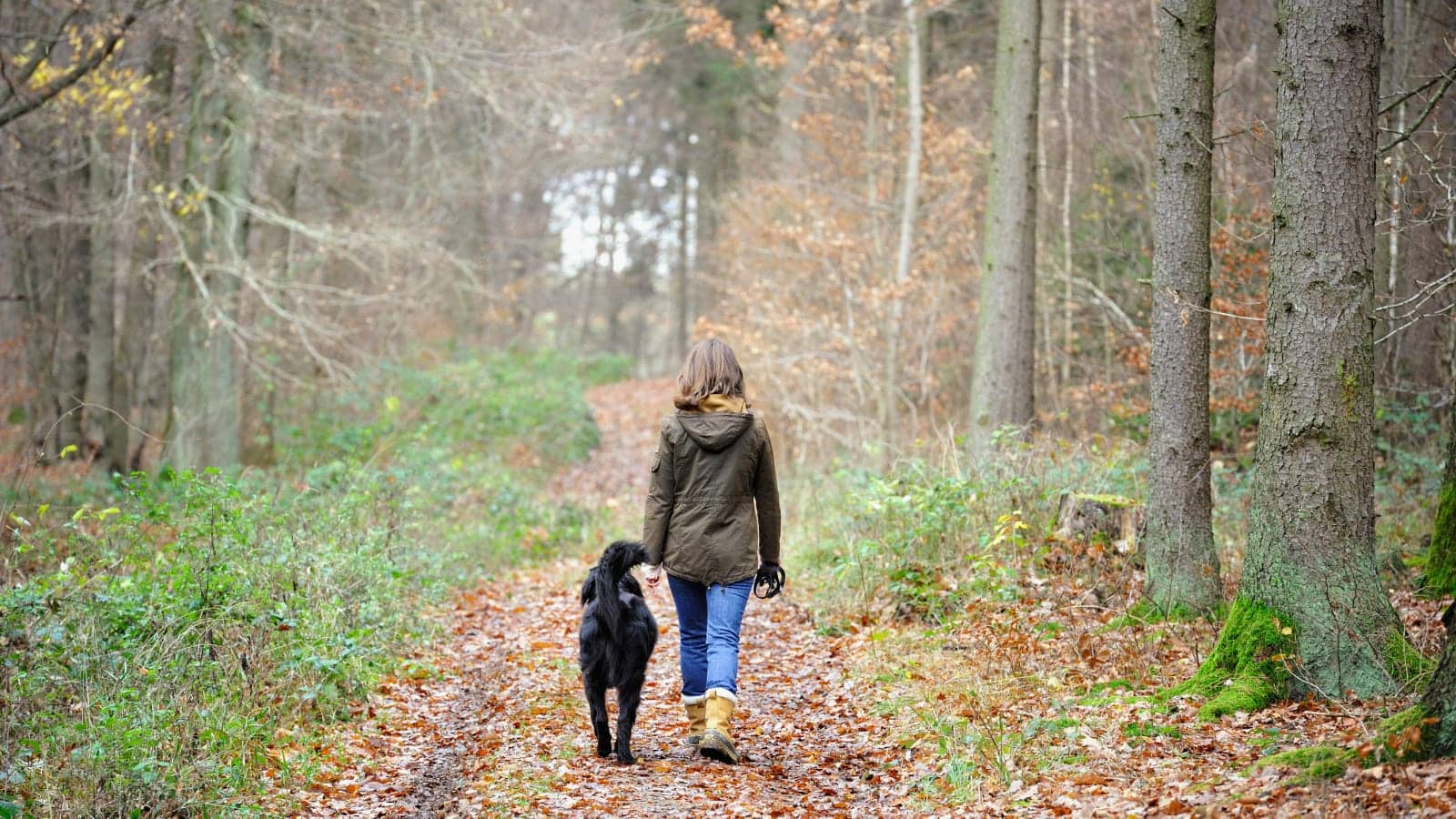
The stinging hairs of the oak processionary caterpillar are most dangerous for your dog from mid-May to the end of June, when the caterpillars grow them, and then until September, when the hairs blow out of empty nests. A dog that sniffs a nest or picks up a caterpillar will usually have a thick, red tongue, swollen lips or watery eyes within a few hours. Rinse his mouth with lukewarm water and go straight to the vet. In both Belgium and the Netherlands, you report a nest to the municipality.
This article doesn’t replace your vet. If your dog has symptoms on the tongue, lips or eyes after a walk near oak trees, or is struggling to breathe, ring your vet straight away.
Where and when the risk is highest
The oak processionary caterpillar lives only on oaks, and prefers solitary trees in the sun. You’ll find it in oak avenues, along roadside verges, in parks and on the edges of woods. In the Netherlands, according to the RIVM, caterpillars are on oaks in almost the whole country in May, June and July. In Flanders, the provinces of Antwerp and Limburg are hit hardest, with outbreaks in Flemish Brabant and East Flanders too. In Wallonia the caterpillar was first found only in 2019, around Arlon and Eupen, and has been spreading since.
From the third larval stage, around mid-May, a caterpillar grows stinging hairs. The RIVM estimates that a single caterpillar carries around 700,000. By day the caterpillars stay in their nest. At night they climb in a line to the crown to feed, which is where the name comes from. The hairs break off easily and travel on the wind, so your dog doesn’t need to touch a caterpillar to be affected.
Old nests stay dangerous
An empty nest is full of shed skins and stinging hairs. These stay active for a long time: Gezond Leven, the Flemish health institute, says five to seven years, the RIVM six to eight years in places where the caterpillar has been. So even in autumn and winter your dog can still come into contact with hairs. The Dutch Kennisplatform Processierups also points out that nests can sit low on the trunk or even on the ground. A dog that snuffles through the leaves under an oak or picks up sticks and acorns puts his mouth right next to those hairs.
Symptoms in your dog
A dog’s mouth is the most vulnerable part, because he sniffs and licks at nests. Vets describe these signs:
- a thick, red tongue, sometimes with blisters on the tongue and inside the mouth
- swollen lips, itching, heavy drooling and difficulty swallowing or breathing
- red, watery eyes
- coughing, nausea, vomiting or lethargy
Symptoms usually start suddenly, a few hours after the walk. Veterinary dermatologist Annette van der Lee told the Dutch broadcaster NOS that a severe reaction can lead to tissue death. A damaged tongue then makes eating and drinking difficult. If the tongue swells quickly or your dog is struggling to breathe, treat it as an emergency.
What to do straight away
- Put on gloves or slip a plastic bag over your hand, so the hairs don’t end up on your own skin.
- Rinse the mouth, lips and eyes thoroughly with lukewarm water. A wet cloth on the tongue eases the pain.
- Ring your vet and say it’s the oak processionary caterpillar. A vet can slow the allergic reaction with an injection. Don’t give human painkillers or antihistamines without checking first, as some are poisonous to dogs.
- Don’t rub the coat. Rinse it, or go over it with a lint roller or sticky tape to remove loose hairs.
- Wash your own clothes and your dog’s blanket at 60 degrees, as the RIVM advises.
If your dog has touched a nest but you can’t see anything yet, rinse his mouth anyway and keep a close eye on him for a few hours. If you’re walking in an area with lots of oaks, look up a vet nearby beforehand. A pair of disposable gloves and a bottle of water fit easily in your first aid kit for the road.
Reports and warnings in Belgium
A ministerial circular of 12 October 2020 sets out who does what. On public land, the municipality is responsible. On private land, the owner has to pay a specialist firm to remove the nest. The fire service only steps in at the municipality’s request, when a nest on public land threatens safety or public health.
In Flanders you report a nest to your municipality, often to its environment department (milieudienst). Many municipalities have a form or app where you mark the spot on a map and add a photo. A nest along a towpath or canal is reported to De Vlaamse Waterweg. In Brussels, too, reports go through the municipality. In Wallonia every municipality has a processionary caterpillar officer (référent chenille processionnaire) who follows up reports. The site chenille-processionnaire.wallonie.be has a map of known nests. Check its date, as it isn’t updated every year.
Reports and warnings in the Netherlands
In the Netherlands you report a nest in a public space to your municipality, through its website or a reporting app such as Fixi. The municipality usually has the nest vacuumed away. If the tree is on private land, it’s usually up to the owner. During the season many municipalities put up warning signs where there are lots of nests, sometimes at the entrance to a nature reserve as well. For questions about symptoms in people, you can contact the GGD, the regional public health service. The Kennisplatform Processierups (processierups.nu) brings together knowledge on management and control.
Walking during the season
If you see a warning sign or a grey, web-like nest on a trunk, keep your dog on the lead and give the oak a wide berth. Never try to remove a nest yourself, as that is exactly when a lot of hairs come loose. In many nature areas he has to be on the lead anyway, see can my dog go off-lead here. Between May and September, choose a route along meadows or water rather than an oak avenue. Let your dog run in a fenced off-lead area where you know the trees. After the walk, look in his mouth and eyes at the same time as you check his coat for ticks.
Frequently asked questions
Are oak processionary caterpillars dangerous for dogs? Yes. Their stinging hairs give a dog a thick, red tongue, swollen lips and watery eyes, usually within a few hours of contact. In a severe reaction, tissue on the tongue can die. If your dog has any symptoms in the mouth or on the tongue, go to the vet straight away.
What do I do if my dog has touched a processionary caterpillar nest? Put on gloves, rinse his mouth, lips and eyes with lukewarm water and ring your vet straight away. Don’t rub his coat. Remove loose hairs with sticky tape or a lint roller, or rinse the coat.
Are processionary caterpillars still dangerous for my dog in autumn and winter? Yes. The caterpillars have gone by then, but old nests and loose stinging hairs stay active for years. The RIVM puts it at six to eight years in places where the caterpillar has been.
Where do I report an oak processionary caterpillar nest? In Flanders and Brussels, to your municipality; in Wallonia, to your municipality’s processionary caterpillar officer (référent chenille processionnaire). In the Netherlands you report a nest to the municipality, through its website or a reporting app. If the tree is on private land, the owner has to have the nest removed.