
Puppy vaccinations and the first vet visit: schedule, worming and microchip
The puppy vaccination schedule in Belgium and the Netherlands week by week, what the vet does at the first visit, and worming, microchip and passport.
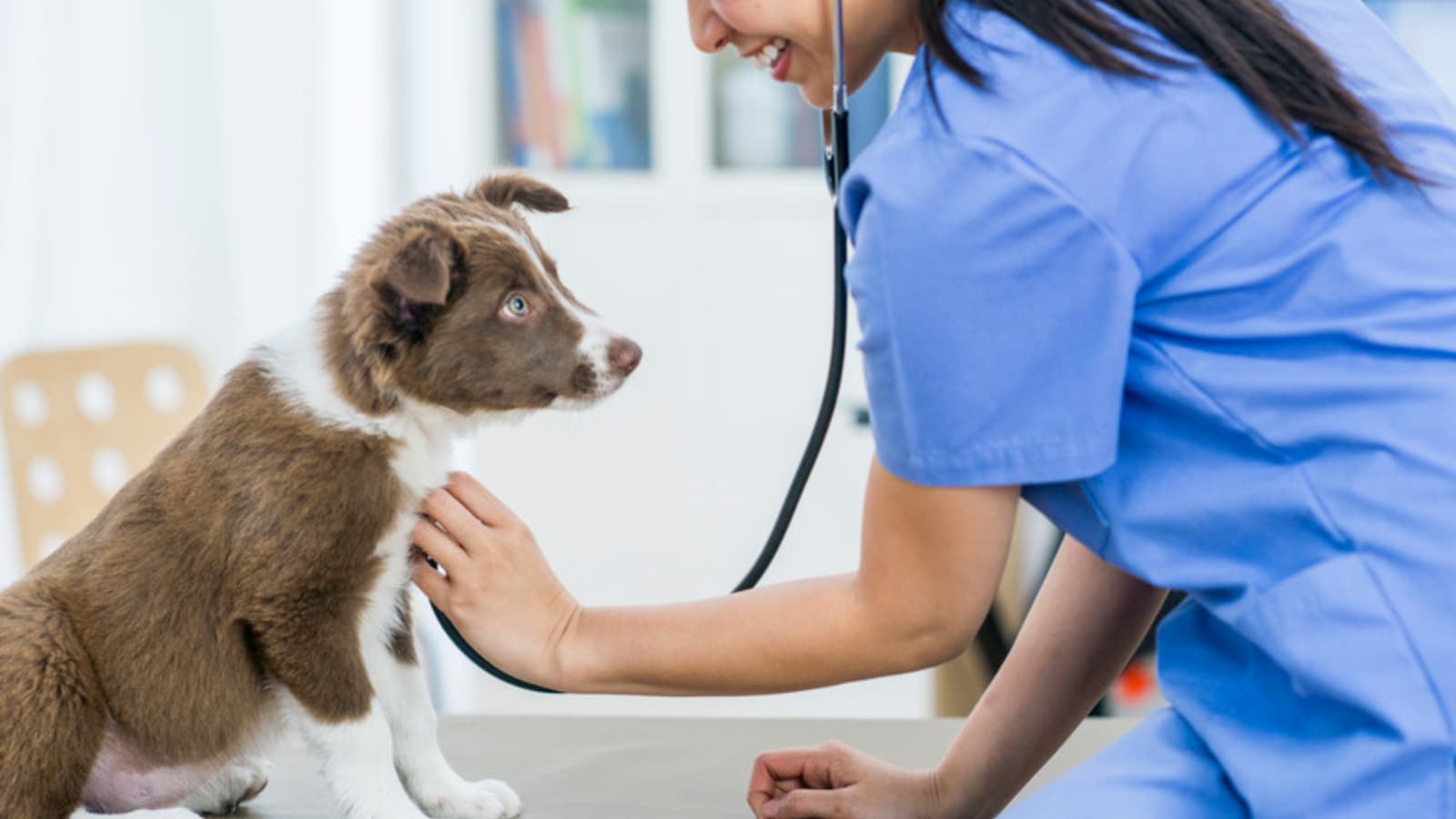
Most puppies in Belgium and the Netherlands get their first vaccinations at around 6, 9 and 12 weeks, against parvo, distemper, infectious canine hepatitis (ICH) and leptospirosis. Puppies at higher risk get an extra jab at 16 weeks, and a booster follows at around six months or a year. A kennel cough vaccine is added if your puppy goes to boarding kennels or a puppy class, and a rabies jab if he travels abroad with you. Have your own vet check your puppy as soon as possible after he moves in. The vet sets the rest of the schedule and tells you when your puppy can safely play with other dogs.
This information is no substitute for a vet. Your vet tailors the vaccination schedule to your puppy: his age at the first jab, his health and how much contact he has with other dogs.
The first visit to the vet
Your puppy has often seen a vet before he comes home. PDSA writes that many breeders have their puppies health-checked, microchipped and given a first vaccination. So ask for those records. Your puppy should come with a European pet passport, where the vaccinations are recorded as stickers. Ask the breeder, too, when the puppy was last wormed.
The LICG, the Dutch information centre for companion animals, recommends having your own vet check your puppy as soon as possible after you buy him. Your puppy gets to know the practice early, and if he has a congenital defect, you find out in time for any guarantee from the breeder. The vet looks over the whole body, paying attention, according to PDSA, to the heart, breathing, eyes, ears, mouth and weight. Your vet does a health check like this before every vaccination. If your puppy is ill, the LICG says it can be better to postpone the jab.
At that first visit your puppy isn’t fully protected yet. The LICG therefore suggests booking an appointment at the start of surgery hours, so he doesn’t come into direct contact with lots of other animals. If that isn’t possible, keep him on your lap in the waiting room. How to choose a practice that suits you is covered in choosing a vet. On GoPuppy you’ll find vets in Belgium and the Netherlands.
Which vaccinations does a puppy get
The LICG names three core diseases that every dog should be vaccinated against: distemper (Carré’s disease), infectious canine hepatitis and parvovirus. In the Netherlands, dogs are also vaccinated every year against leptospirosis, known locally as Weil’s disease. The KNMvD, the Royal Netherlands Veterinary Association, recommends vaccinating all dogs in the Netherlands against those four diseases. The Flemish government lists them too in its pet guide: parvo, leptospirosis, distemper and hepatitis. In the 2024 WSAVA guidelines, the leptospirosis vaccine counts as a core vaccine in regions where the disease is endemic.
Parvo attacks the intestines. A puppy gets watery, often bloody diarrhoea, vomits and dehydrates quickly. The LICG writes that the virus stays infectious outside the dog for at least a year, and it spreads through faeces. Distemper is a highly contagious viral disease that, besides vomiting and diarrhoea, can affect the airways, the skin and the nervous system. Infectious hepatitis causes fever, bleeding and liver inflammation, and can kill a young dog suddenly. Leptospirosis is caused by bacteria passed on through urine or contaminated water, notably the urine of rats and mice. People can catch it too.
Kennel cough, also called infectious canine cough, is a kind of cold that can be caused by the parainfluenza virus, adenovirus type 2 and the bacterium Bordetella. The LICG recommends a vaccine if your dog goes to boarding kennels, a show, a dog walking service or a training class. According to the KNMvD, the vaccine is usually compulsory for boarding kennels or a dog school. Your vet draws up a separate schedule for it, with drops in the nose or an injection.
The vaccination schedule in weeks
A puppy receives antibodies through his mother’s first milk. They protect him for a while, but as long as there are plenty of them in his blood, they also cancel out the vaccine. How long that lasts varies from puppy to puppy. According to the LICG, some puppies are already less protected at around six weeks, while others keep their protection for more than twelve weeks. That’s why a puppy gets several jabs, two to four weeks apart.
If vaccination starts at 6 weeks, the LICG schedule usually looks like this:
| Age | Vaccination according to the LICG |
|---|---|
| 6 weeks | distemper and parvo, possibly hepatitis |
| 9 weeks | parvo and leptospirosis |
| 12 weeks | distemper, parvo, hepatitis and leptospirosis, sometimes parainfluenza too |
| 16 weeks | extra jab for puppies at higher risk |
| six months or 1 year | booster for the core diseases |
By 16 weeks, the LICG says, maternal antibodies have gone in almost all puppies. Whether your puppy is done at 12 weeks or gets another jab at 16 weeks depends on the risk of infection. Instead of that last jab, the vet can do a blood test 4 weeks after the 12-week vaccination. If there are enough antibodies, the 16-week jab is no longer needed. The international WSAVA guidelines go a step further: start at 6 to 8 weeks, repeat every 2 to 4 weeks until the puppy is at least 16 weeks old, then a blood test from 20 weeks or an extra jab at around 26 weeks.
In the Netherlands, a puppy raised by a commercial breeder must receive a first vaccination against parvo and distemper before 7 weeks. If your puppy had his first vaccination later, the vet tailors the schedule to him.
The LICG explains that the booster at around one year is mainly meant for puppies that didn’t respond well enough to the puppy jabs. It can also be given at around six months, so such a puppy isn’t left unprotected for long. After that, dogs are vaccinated against the core diseases every three years and against leptospirosis every year. Our own book, My puppy journal, has a page where you can record each vaccination.
Worming, fleas and ticks
A puppy is infected with roundworms before birth and through his mother’s milk. ESCCAP, a European body of veterinary parasitologists, advises worming puppies from 2 weeks of age, every two weeks until 2 weeks after weaning, then monthly until they are 6 months old. The LICG follows the same monthly approach up to 6 months, then four times a year. One practical point from the LICG vaccination leaflet: a vaccine works better if your puppy was wormed one to two weeks beforehand.
Treat for fleas and ticks all year round. When you buy a product, say it’s for a puppy. Not every product is suitable for young animals, and according to the LICG, breeds with the MDR1 mutation, such as collie types and German Shepherds, don’t tolerate some products. Check with your vet in that case. How to remove a tick safely is explained in ticks on dogs.
Microchip and passport
In Belgium, every dog must be microchipped and registered in DogID by 8 weeks of age at the latest. Only a vet may implant the chip, and the vet issues the European pet passport at the same time. A seller may not sell or give away a dog that isn’t chipped and registered, and you receive the passport straight away. Two to three weeks after the transfer, you get a final registration certificate to stick in the passport.
In the Netherlands, a puppy must be microchipped and registered within seven weeks of birth. The breeder hands the dog over with a European pet passport, and you then transfer the registration to your own name in the registration portal. The RVO advises against buying a dog if the chip, registration or passport isn’t in order. You can read more in microchipping and registration.
Rabies: only when needed
According to the KNMvD, rabies doesn’t occur in pets in the Netherlands, so a dog that stays at home doesn’t need the vaccine. Belgium has been free of classical rabies since 2001, according to the FAVV, the Belgian food safety agency. Taking your dog abroad changes things. A valid vaccination is compulsory for travel to another EU country.
According to Your Europe, the first jab can be given at 12 weeks, after which you wait at least 21 days. So a puppy can travel at the earliest at around 15 weeks. The chip must already be in place when the vaccine is given, or it doesn’t count. If you bring a puppy in from abroad, he must also be at least 15 weeks old, according to the Flemish government and the LICG. Belgium and the Netherlands don’t accept younger, unvaccinated puppies. The rules for each country are in travel documents for your dog.
When can your puppy go out and play with other dogs
According to AVSAB, the American Veterinary Society of Animal Behavior, the first three months of life are the most important period for getting used to people, animals, sounds and places. During those months your puppy isn’t fully vaccinated yet. Waiting until everything is done comes at a cost as well. AVSAB writes that in dogs under three years old, behaviour problems cause more deaths than infectious diseases, and it calls the risk of infection relatively small by comparison, given maternal immunity, a first vaccination and appropriate care.
WSAVA also supports early socialisation and writes that it can usually start before the vaccination series is finished. Research found a low risk of parvo in puppies that attended a puppy class halfway through their series. There is a condition attached. Let your puppy play only with healthy puppies and with healthy, fully vaccinated adult dogs, and avoid places outside the home that may be contaminated. According to the LICG, the parvovirus stays infectious outside the dog for at least a year.
AVSAB says a puppy can start a puppy class from 7 to 8 weeks, provided he had a first vaccination at least 7 days before the first class, plus a first worming treatment. AVSAB recommends classes on surfaces that are easy to clean and disinfect, preferably indoors. Leave dog parks and places used by lots of dogs of unknown vaccination status until your vet says it’s fine. Ask the dog school whether it requires a kennel cough vaccine. For finding a good class, see choosing a puppy course, and for what to practise in the first weeks at home, read a puppy at home.
What it costs
We didn’t find a price per vaccination in the veterinary sources. The Flemish government estimates the fixed costs for food, flea prevention, wormers and vaccinations together at 50 to 110 euros a month. Ask your own vet in advance what a consultation and a jab cost.
All our articles on your puppy’s first year are listed in order in the puppy guide. What your puppy must not eat is covered in food that is toxic to dogs.
Frequently asked questions
When does a puppy get its first vaccination? Usually at around 6 weeks, while the puppy is still with the breeder. In the Netherlands, a commercial breeder has to give puppies a first vaccination against parvo and distemper before 7 weeks. After that, a new jab follows every 2 to 4 weeks. Your vet tailors the rest of the schedule to your puppy.
How many vaccinations does a puppy need? If vaccination starts at 6 weeks, the LICG says there are usually three rounds, at 6, 9 and 12 weeks, sometimes with a fourth at 16 weeks. Your puppy then gets a booster for the core diseases at around one year, or as early as six months. Kennel cough and rabies are only added if your puppy needs them.
When can my puppy play with other dogs? There’s no need to wait for the last jab, as long as it happens in a controlled way. According to WSAVA, your puppy can then mix with healthy puppies and with healthy, fully vaccinated adult dogs. Avoid places used by lots of dogs whose vaccination status you don’t know, such as a busy dog field. Ask your vet what that means for your puppy and his schedule.
Does my puppy need a rabies vaccination? Only if he’s going abroad with you. According to the KNMvD, a dog that stays in the Netherlands doesn’t need it, and Belgium has been free of classical rabies since 2001, according to the FAVV. The jab can be given from 12 weeks and only becomes valid after 21 days. So a puppy can travel at the earliest at around 15 weeks.
How often should I worm my puppy? ESCCAP advises worming puppies every two weeks from 2 weeks of age until 2 weeks after weaning, then monthly until 6 months. After that, the LICG recommends four times a year. Ask the breeder when your puppy was last treated, so your vet can carry on with the schedule.