FCI 243 · United States

Alaskan Malamute

Named after the Mahlemut, an Inuit people who used him to pull heavy loads over long distances.

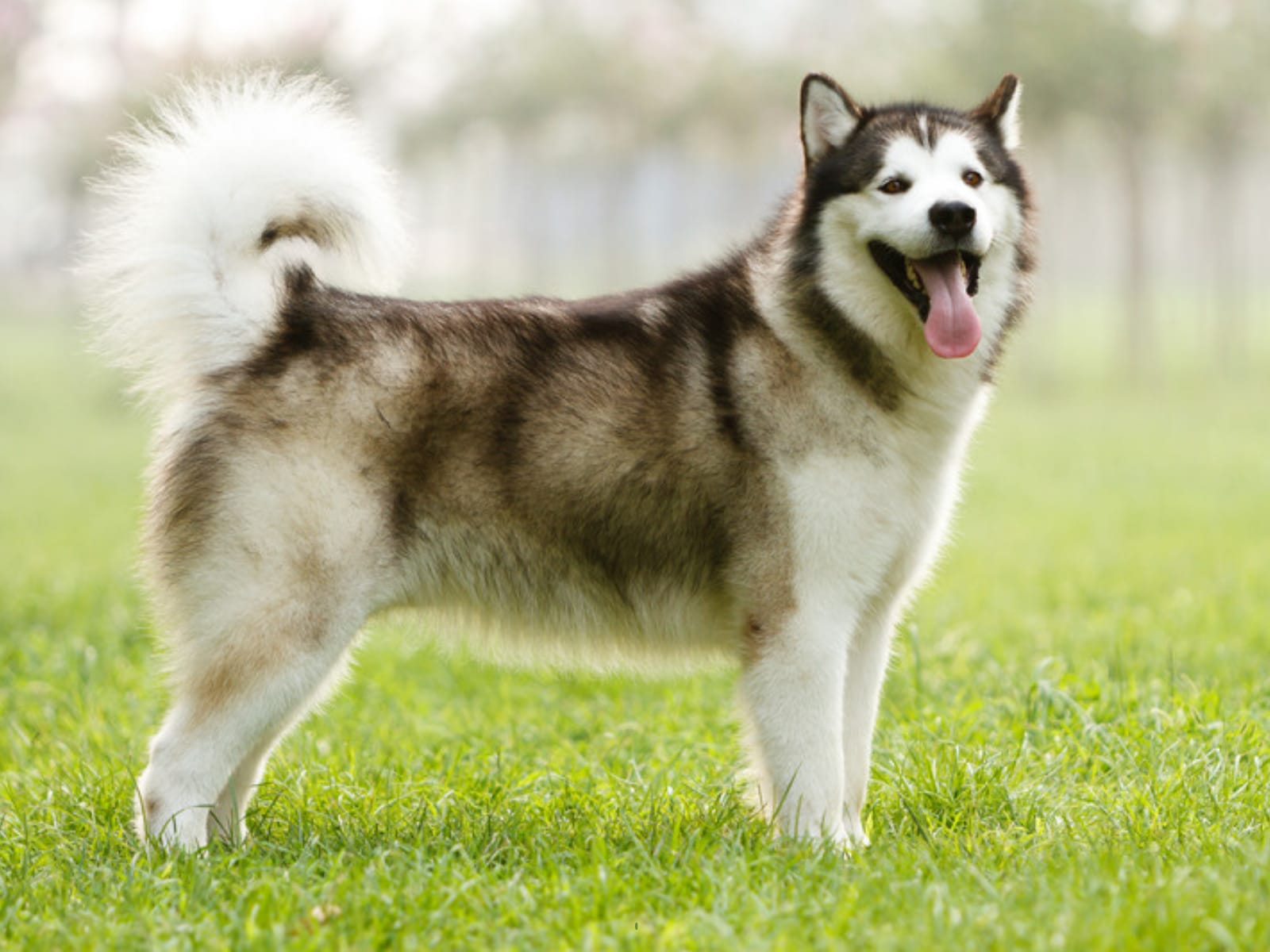
Alaskan Malamute standing in the grass

Breed facts

FCI
no. 243 · group 5, Nordic sledge dogs
Origin
United States
Height at withers
male 63.5 cm · female 58.5 cm
Size
These are the desirable freighting sizes; according to the standard, type, proportion and movement come first.
Weight
male 38 kg · female 34 kg
Exercise
more than 2 hours a day (according to the Royal Kennel Club)
Lifespan
over 10 years
Coat
medium length, sheds

The GoPuppy profile

These are breed averages and our own assessment. Your own dog’s age, fitness and training matter more.

  1. WalkingFull-day hikesThe Royal Kennel Club gives more than two hours of exercise a day. In warm weather, only during the cool hours.
  2. Dog sportSport with a build-upBuilt to pull. Sled dog sports, canicross and bikejoring suit him in cool weather.Suitscartingcanicrossscent work
  3. Terraces and cafésRather not a busy terraceThe standard calls him affectionate and friendly, not a one-man dog.
  4. Travel and staysRules or heat when travellingLarge and heavy, with a thick coat. He needs a cool, roomy car.
  5. CityThe Royal Kennel Club suggests a large house with a large garden, in the country.

Character

According to the FCI standard, the Alaskan Malamute is an affectionate, friendly dog, not a one-man dog. He is a loyal, devoted companion, playful when invited, and impressive in his dignity once mature.

Origin

The Royal Kennel Club explains that the breed takes its name from the Mahlemut, nomadic Inuit who used it to pull heavy loads over long distances. It is the strongest of the sled dogs. He often sleeps outside in all weathers; his double coat protects him against extreme cold, and even the insides of his ears are furred. The FCI gives the USA as country of origin and places him in Group 5, section 1, Nordic sledge dogs. A lighter sled dog is the Siberian Husky.

Health

The Royal Kennel Club puts genetic diversity first and asks for a DNA test for Alaskan Malamute polyneuropathy (AMPN). It also lists a DNA test for cone degeneration (CD) and hip, elbow and eye testing.

Size

The desirable freighting size is 63.5 cm and 38 kg for males, and 58.5 cm and 34 kg for females. According to the standard, type, proportion and movement come before size.

Health: what a good breeder tests for

  • Prioritising genetic diversity when choosing the parents
  • DNA test for Alaskan Malamute polyneuropathy (AMPN)
  • DNA test for cone degeneration (CD)
  • Hips (X-ray, official result)
  • Elbows (X-ray, official result)
  • Eye testing

Ask for the parents’ results when you visit a litter. This is not medical advice; your vet knows your dog.

Breeders of this breed on GoPuppy

No breeder of this breed on GoPuppy yet.

GoPuppy does not check breeders’ health tests. A listing here is not a seal of approval.

Read also