FCI 144 · Germany

Boxer

A German family, guard and working dog. His ancestor is the small Brabant 'Bullenbeisser', which held game for hunters until they arrived.

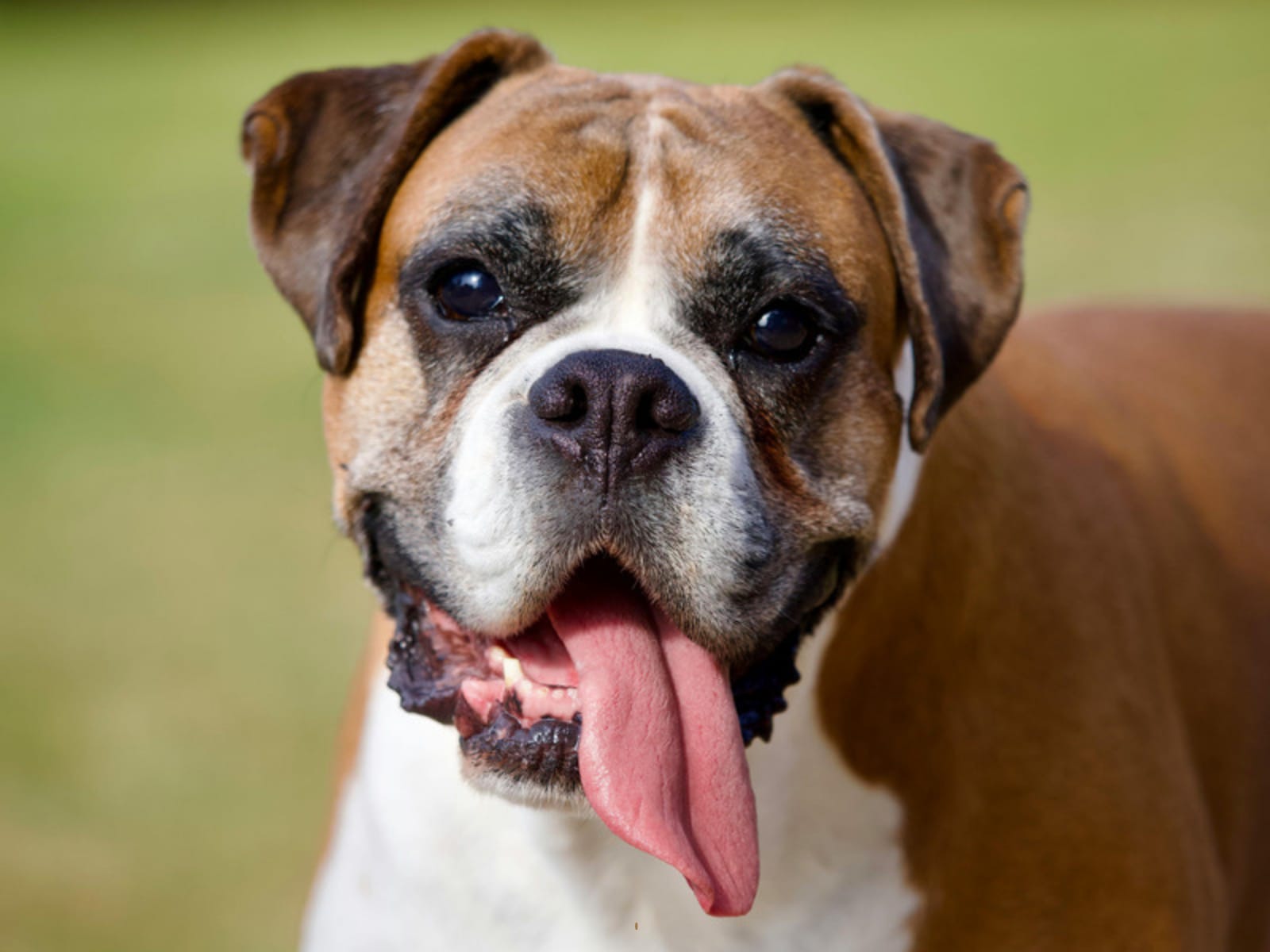
Boxer with natural ears, close-up

Breed facts

FCI
no. 144 · group 2, molossoid, mastiff type
Origin
Germany
Height at withers
male 57–63 cm · female 53–59 cm
Size
Males 57 to 63 cm, over 30 kg at about 60 cm; females 53 to 59 cm, about 25 kg at about 56 cm.
Exercise
more than 2 hours a day (according to the Royal Kennel Club)
Lifespan
over 10 years
Coat
short, sheds

The GoPuppy profile

These are breed averages and our own assessment. Your own dog’s age, fitness and training matter more.

  1. WalkingLong walksMore than two hours of exercise a day, according to the Royal Kennel Club. An adult Boxer will manage a long hike.
  2. Dog sportSport with a build-upIGP, agility, obedience and scent work. The standard calls him easy to train.SuitsIGPagilityobediencescent work
  3. Terraces and cafésTerrace after trainingThe standard calls him 'harmless with his family but distrustful of strangers', playful and friendly. Lying calmly among strangers takes practice.
  4. Travel and staysTravel takes preparationLarge, with a short coat. In hot weather, keep exertion low.
  5. CityBetter with a gardenThe Royal Kennel Club assumes a large house with a large garden, in town or country.

Character

According to the FCI standard, the Boxer should be fearless, self-confident, calm and equable; his temperament is of the utmost importance. He is devoted to his master and the whole household, watchful and courageous as a defender. Harmless with his family, distrustful of strangers, happy and friendly in play. He is easy to train and, in the standard’s words, ‘just as agreeable and appreciated in the family circle as he is as a guard, companion and working dog’.

Origin

The small Brabant ‘Bullenbeisser’ is regarded as the Boxer’s immediate ancestor. These dogs were in the hands of huntsmen: they had to seize the game put up by the hounds and hold it until the huntsman arrived. For that they needed jaws as wide as possible, which produced a dog with a wide muzzle and an upturned nose. The FCI places him in Group 2, section 2.1, with a working trial.

Health and size

The Royal Kennel Club recommends hip, elbow and eye testing. Males measure 57 to 63 cm and weigh over 30 kg at about 60 cm; females measure 53 to 59 cm and weigh about 25 kg at about 56 cm.

Health: what a good breeder tests for

  • Hips (X-ray, official result)
  • Elbows (X-ray, official result)
  • Eye testing

Ask for the parents’ results when you visit a litter. This is not medical advice; your vet knows your dog.

Breeders of this breed on GoPuppy

No breeder of this breed on GoPuppy yet.

GoPuppy does not check breeders’ health tests. A listing here is not a seal of approval.

Read also