FCI 288 · China

Chinese Crested Dog

A small companion dog in two varieties: the Hairless, with a crest, socks and a plume, and the Powder Puff, covered in a full soft coat.

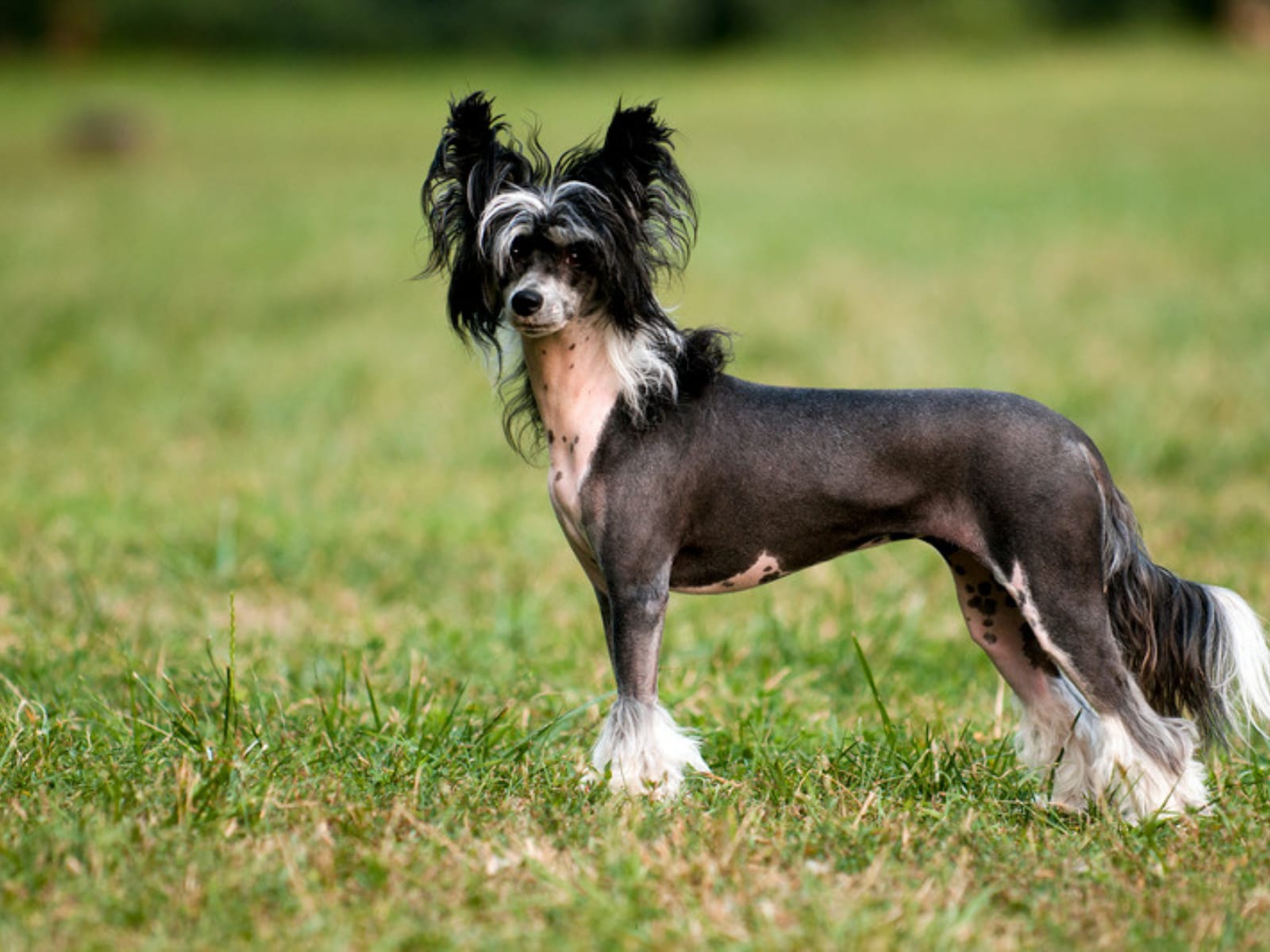
Hairless Chinese Crested standing in the grass

Breed facts

FCI
no. 288 · group 9, hairless breeds
Origin
China
Height at withers
male 28–33 cm · female 23–30 cm
Size
The standard gives this as the ideal height.
Exercise
up to 30 minutes a day (according to the Royal Kennel Club)
Lifespan
over 12 years
Coat
short, sheds

The GoPuppy profile

These are breed averages and our own assessment. Your own dog’s age, fitness and training matter more.

  1. WalkingOne to two hoursThe Royal Kennel Club gives up to thirty minutes of exercise a day; he happily walks further. The Hairless needs protection from sun and cold.
  2. Dog sportScent work and one sportHoopers, agility and scent work suit a light, agile dog.Suitshoopersagilityscent work
  3. Terraces and cafésTerrace with some practiceThe standard calls him happy and never vicious. Small, and easy under a table.
  4. Travel and staysTravels with some planningSmall and light, easy to take along.
  5. CityCity dogThe Royal Kennel Club says a flat is enough, in town or country.

Character

According to the FCI standard, the Chinese Crested is happy and never vicious.

Two varieties

The Hairless has a crest of hair on the head extending part way down the neck, “socks” covering the toes and a plume on the tail; the rest of the body is hairless. The Powder Puff is covered entirely with a veil of long, soft hair. Both belong to the same breed.

Origin

His origin is hard to pinpoint, but according to the standard he was owned by families of the Han dynasty in China. They were said to guard treasure houses and, in a larger, heavier form, to hunt. They were shown in America from 1885 to 1926 but were then rarely seen for some fifty years. Another hairless breed is the Xoloitzcuintle from Mexico. The FCI places him in Group 9, section 4, hairless breeds.

Health

The Royal Kennel Club puts genetic diversity first and asks for DNA tests for primary lens luxation (PLL) and PRA (prcd-PRA).

Size

The ideal height is 28 to 33 cm for males and 23 to 30 cm for females.

Health: what a good breeder tests for

  • Prioritising genetic diversity when choosing the parents
  • DNA test for primary lens luxation (PLL)
  • DNA test for PRA (prcd-PRA)

Ask for the parents’ results when you visit a litter. This is not medical advice; your vet knows your dog.

Breeders of this breed on GoPuppy

No breeder of this breed on GoPuppy yet.

GoPuppy does not check breeders’ health tests. A listing here is not a seal of approval.

Read also