FCI 181 · Germany

Giant Schnauzer

A large schnauzer, once a cattle drover in southern Germany, recognised as a working dog since 1925.

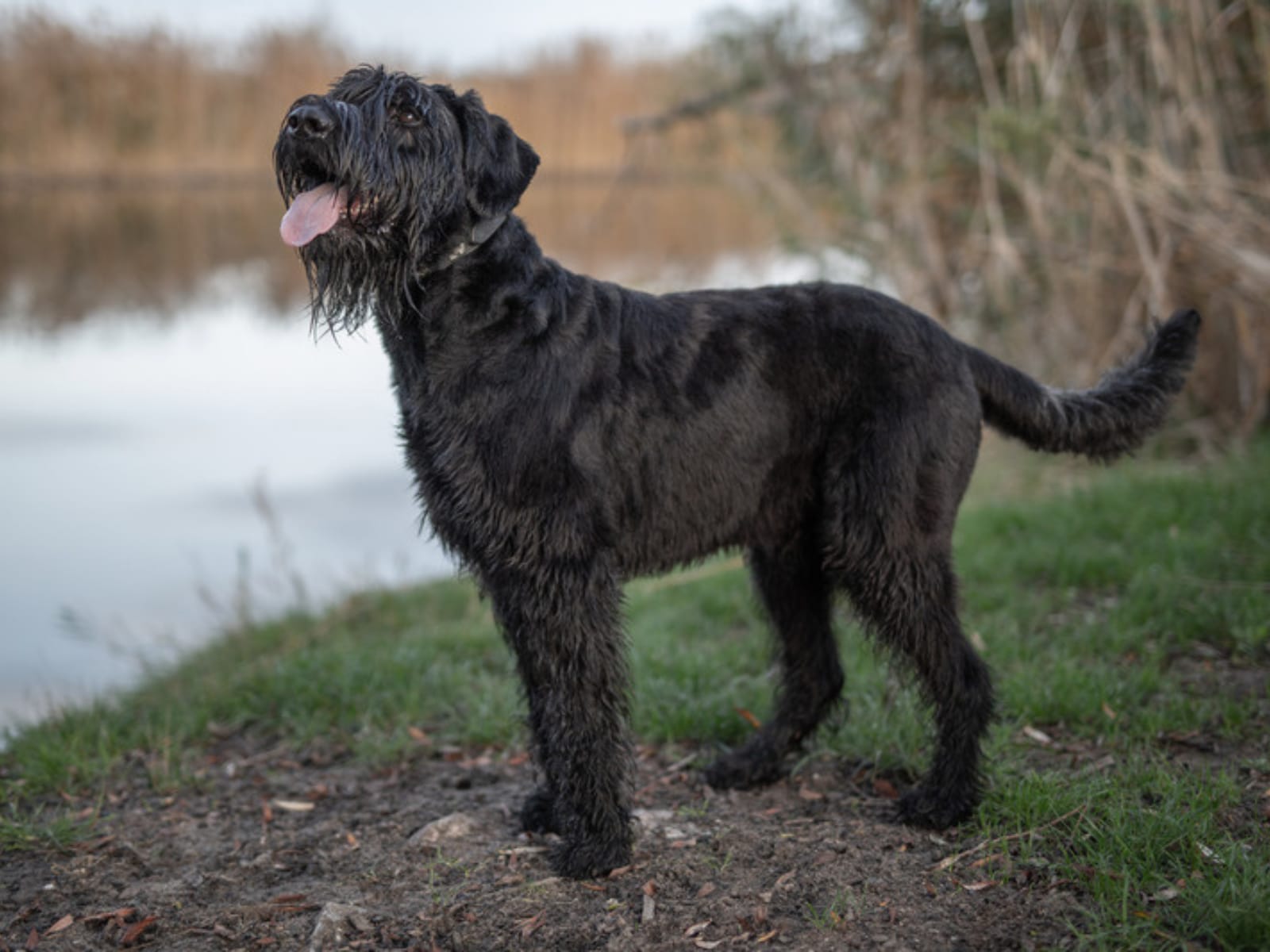
Black Giant Schnauzer with natural ears by the water

Breed facts

FCI
no. 181 · group 2, pinschers and schnauzers
Origin
Germany
Height at withers
60–70 cm
Weight
35–47 kg
Exercise
more than 2 hours a day (according to the Royal Kennel Club)
Lifespan
over 12 years
Coat
medium length, sheds little

The GoPuppy profile

These are breed averages and our own assessment. Your own dog’s age, fitness and training matter more.

  1. WalkingFull-day hikesThe Royal Kennel Club gives more than two hours of exercise a day.
  2. Dog sportSports partnerA working dog with a working trial. IGP, canicross and scentwork suit him.SuitsIGPcanicrossscent work
  3. Terraces and cafésRather not a busy terraceThe standard calls him good-natured and even-tempered.
  4. Travel and staysTravel takes preparationLarge. A roomy car or crate is needed.
  5. CityNeeds a big gardenThe RKC suggests a large house with a large garden, in town or country.

Temperament

According to the FCI standard the Giant Schnauzer is good-natured and even-tempered, with incorruptible loyalty towards his master. He has highly developed senses and is intelligent, trainable, strong, fast and enduring. His self-assurance suits him to being a companion, sporting, utility and working dog.

Origin

He was originally used to drive cattle in southern Germany. Around 1900 breeders recognised his working ability; the breed has had a stud book since 1913 and was officially recognised as a working dog in 1925. According to the Royal Kennel Club he was once known as the Munich Schnauzer and was developed from the Schnauzer with additions such as the Rottweiler and Great Dane. His smaller relative is the Miniature Schnauzer. The FCI places him in Group 2, Section 1, pinschers and schnauzers, with a working trial.

Health

The Royal Kennel Club prioritises genetic diversity and lists elbow, hip and eye testing (puppies included) and DNA tests for PRA (prcd-PRA and PRA5), dilated cardiomyopathy (DCM) and hyperuricosuria (HUU).

Size

Dogs and bitches measure 60 to 70 cm and weigh 35 to 47 kg.

Health: what a good breeder tests for

  • Prioritising genetic diversity when choosing the parents
  • Elbows (X-ray, official result)
  • Hips (X-ray, official result)
  • DNA test for PRA (prcd-PRA and PRA5)
  • DNA test for dilated cardiomyopathy (DCM)
  • DNA test for hyperuricosuria (HUU)
  • Eye testing, puppies included

Ask for the parents’ results when you visit a litter. This is not medical advice; your vet knows your dog.

Breeders of this breed on GoPuppy

No breeder of this breed on GoPuppy yet.

GoPuppy does not check breeders’ health tests. A listing here is not a seal of approval.

Read also