Temperament
The FCI standard describes Fauves de Bretagne as impassioned hunters that are good-natured with people, sociable, affectionate and even-tempered. They adapt to any terrain and any quarry. When hunting they are courageous, wily, tenacious and steady. Well handled, they are obedient and come back readily.
Origin
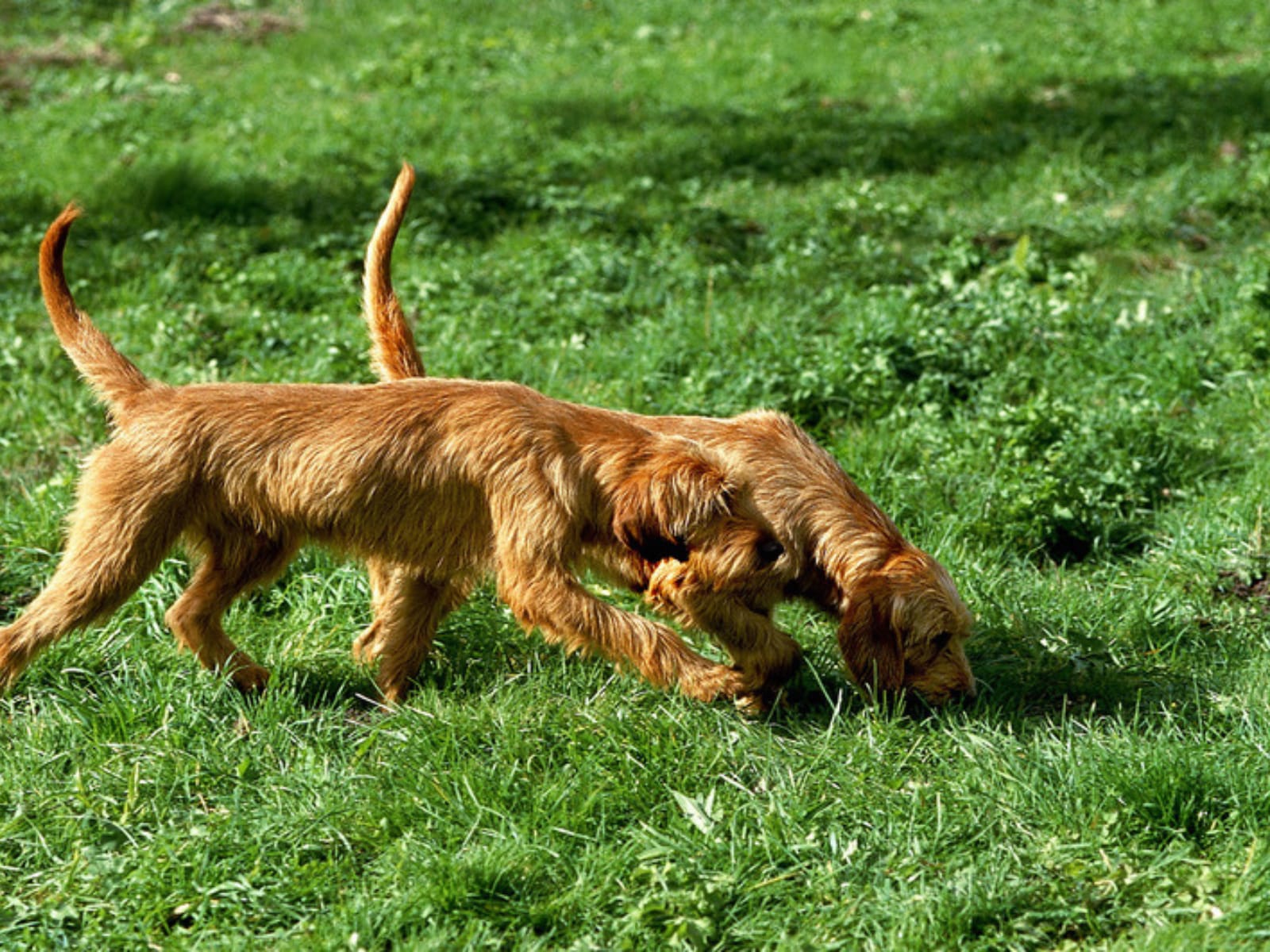
According to the standard, the Fauve de Bretagne is one of the oldest French scent hound breeds. As early as the 14th century a gentleman named Huet des Ventes kept a pack. Widely used for wolf hunting in Brittany until the 19th century, the breed declined when the wolves disappeared. Marcel Pambrun founded the Club du Fauve de Bretagne in 1949 to save the hounds, which had become rare. Since the 1980s, under Bernard Vallée, the Griffon Fauve de Bretagne has regained its place among French hounds. The Basset Fauve de Bretagne was derived from it. The coat is harsh and fairly short, from golden wheaten to brick red. The FCI places him in group 6, section 1.2, medium-sized hounds, with working trial. According to the Grand Griffon Vendéen standard, the Fauve de Bretagne is also part of its ancestry.
Health
The Royal Kennel Club prioritises genetic diversity and lists no further tests for this breed.
Size
Dogs and bitches measure 48 to 56 cm, with 2 cm tolerance for exceptional dogs. The standard gives no weight.