Temperament
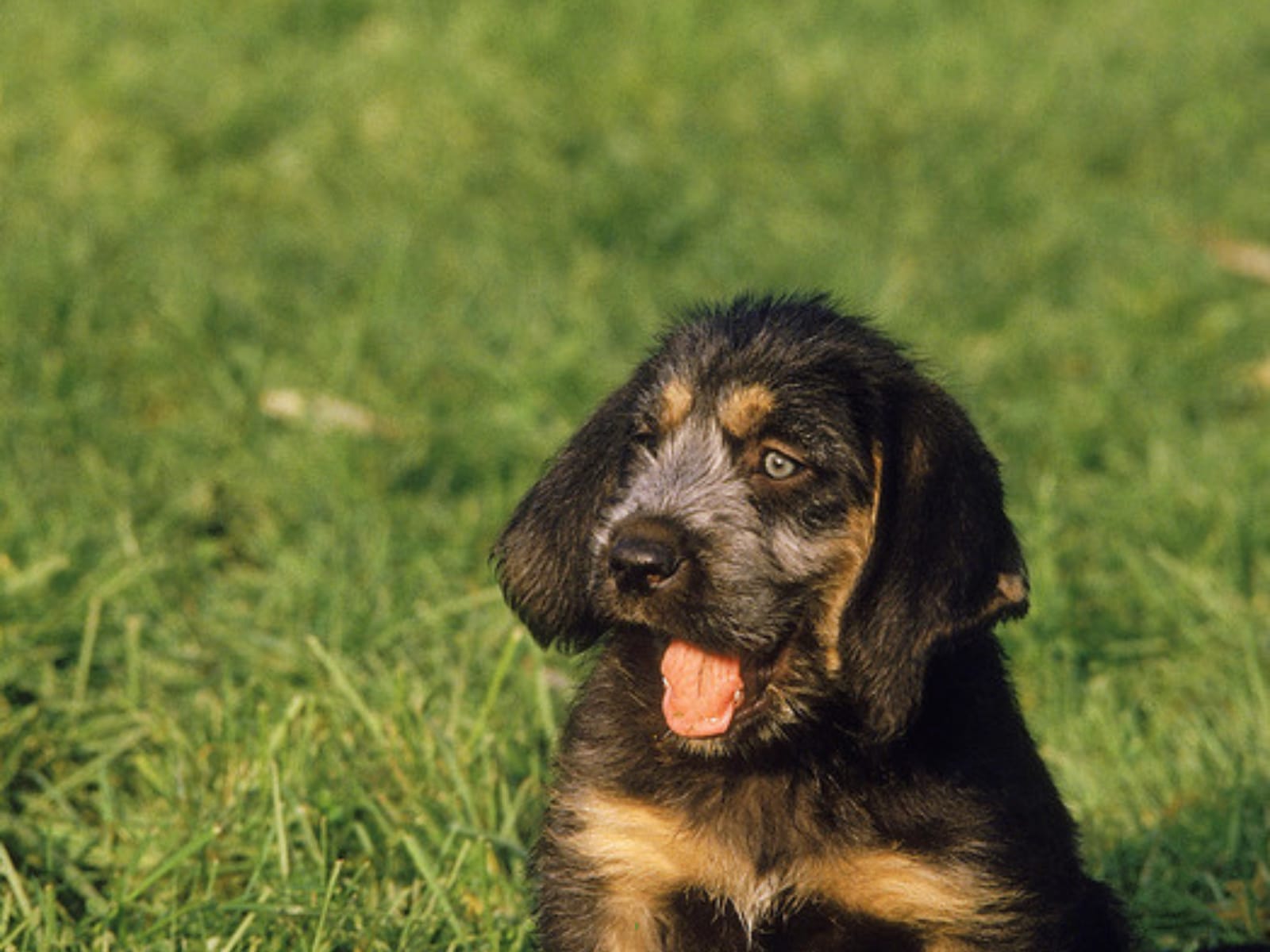
According to the FCI standard, the Griffon Nivernais has a very good nose and enjoys difficult terrain and thickets. He is brave when holding game at bay without being reckless, which makes him useful in small packs on wild boar. He can also be stubborn and independent. The standard asks his owner to teach him to obey from a young age. He is built for stamina.
Origin
He may descend from the hounds of the Gauls and from the grey Saint Louis dogs. He was valued for two hundred years, up to the reign of Louis XI, until Francis I, who preferred white hounds, dropped him from the royal packs. Noblemen in the Nivernais kept the breed until the French Revolution of 1789, after which it seemed to have disappeared. A century later it was rebuilt from dogs that had stayed in the region, often called “dogs of the country”. Around 1900 it received blood from the Griffon Vendéen, the Foxhound and the Otterhound. The breed club dates from 1925. Other wire-coated French hounds on GoPuppy are the Griffon Bleu de Gascogne and the Briquet Griffon Vendéen. The FCI places him in group 6, section 1.2, medium-sized hounds, with a working trial.
Health
We found no breed page at the Royal Kennel Club and no list of recommended health tests from the FCI. Ask the breeder about the tests done on both parents.
Size
Dogs measure 55 to 62 cm and bitches 53 to 60 cm, with 1 cm either way. The standard gives no weight.