Character
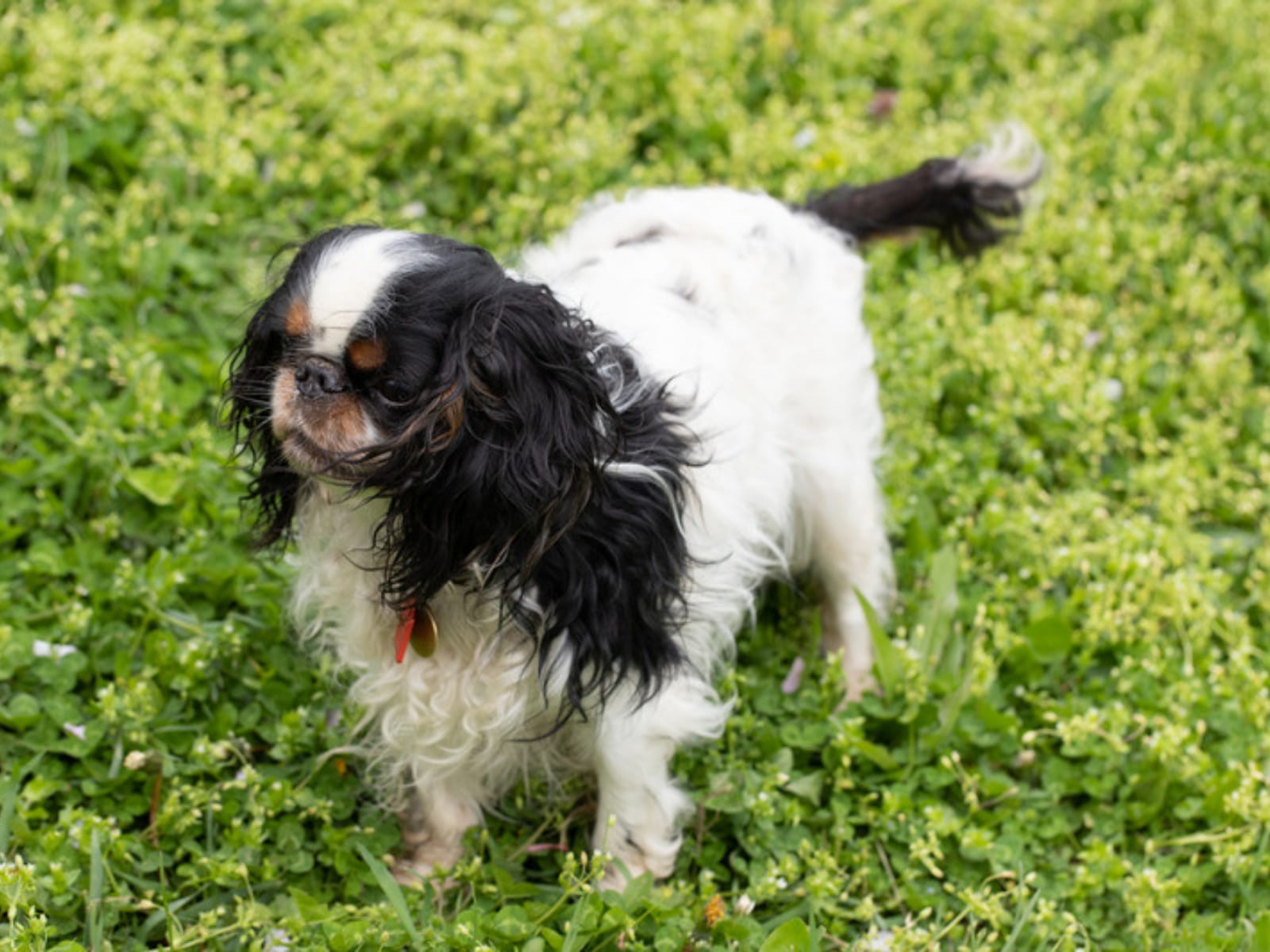
According to the FCI standard, the King Charles Spaniel is a happy, intelligent toy spaniel with a distinctive domed head. He is reserved, gentle and affectionate.
How it differs from the Cavalier
The King Charles and the Cavalier King Charles Spaniel share a history and were shown together as one breed until 1945. When short-faced toy dogs became fashionable, some breeders selected for a domed skull and a shorter muzzle. In 1926 fanciers of the old type, with a flatter skull and longer muzzle, broke away. In 1945 The Kennel Club recognised two breeds: the smaller dog with the domed skull and shorter face kept the name King Charles, the other became the Cavalier. The difference shows mainly in the head: the King Charles has a domed skull and shorter muzzle, and is slightly smaller.
Origin
Toy spaniels were long treasured in England and on the Continent. They were bred smaller and smaller from the setter dogs that established the spaniel type, and crossed with toy dogs from the East, which gave them their face. The name comes from a dog that was a great favourite of King Charles II. In some countries he is called the English Toy Spaniel. The FCI places him in Group 9, section 7, English toy spaniels.
Muzzle and health
The Royal Kennel Club puts genetic diversity first and lists eye testing and a breathing test (BOAS) for breeders. Ask the breeder for the results of both parents.
Weight
The standard gives no height, only a weight of 3.6 to 6.3 kg.