Character
According to the FCI standard, the Leonberger is an agreeable family dog who can be taken anywhere without difficulty and stands out for his friendliness towards children. He is neither shy nor aggressive, obedient and fearless. The standard asks for self-assurance, composure, a medium temperament with playfulness, a good memory and insensitivity to noise.
Origin
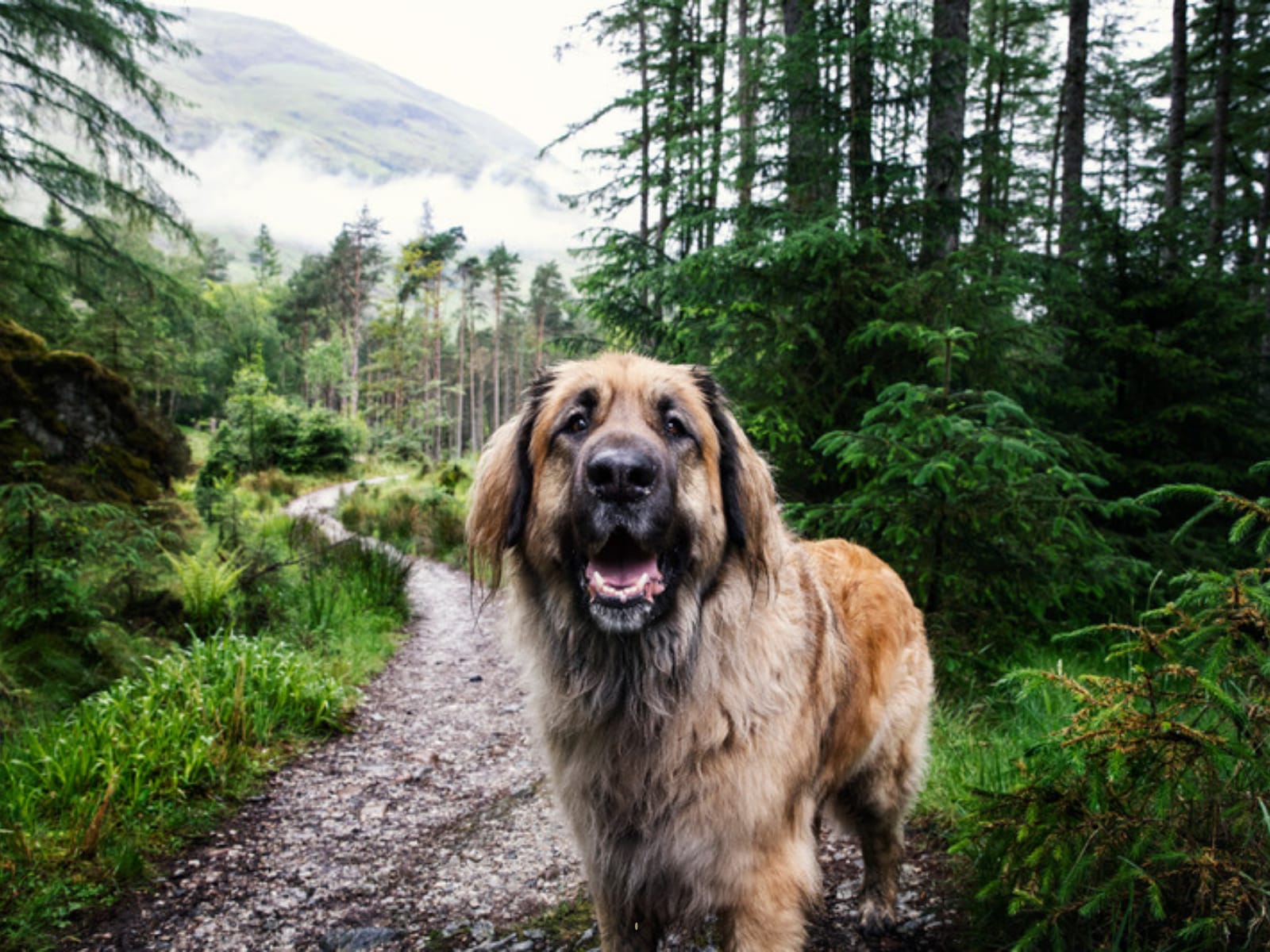
In the late 1830s and early 1840s, Heinrich Essig, a town councillor in Leonberg near Stuttgart, crossed a black-and-white Newfoundland bitch with a so-called ‘Barry’ male from the hospice on the Great St Bernard. Later a Pyrenean Mountain Dog was added. Essig wanted a lion-like dog, the lion being Leonberg’s heraldic animal. The first dogs really called Leonbergers were born in 1846. By the end of the 19th century he was a favoured farm dog in Baden-Württemberg, praised as a watch and draught dog. In both world wars the breeding stock fell sharply. The FCI places him in Group 2, section 2.2.
Health
The Royal Kennel Club gives a lifespan of under ten years. Breeders should prioritise genetic diversity, test hips, elbows and eyes (including gonioscopy) and do DNA tests for three forms of polyneuropathy (LPN1, LPN2, LPPN3) and for LEMP.
Size
Males measure 72 to 80 cm, with a recommended average of 76 cm. Females measure 65 to 75 cm, on average 70 cm.