FCI 71 · Great Britain

Manchester Terrier

An elegant black and tan terrier, bred to keep down rats in the growing mill towns around Manchester.

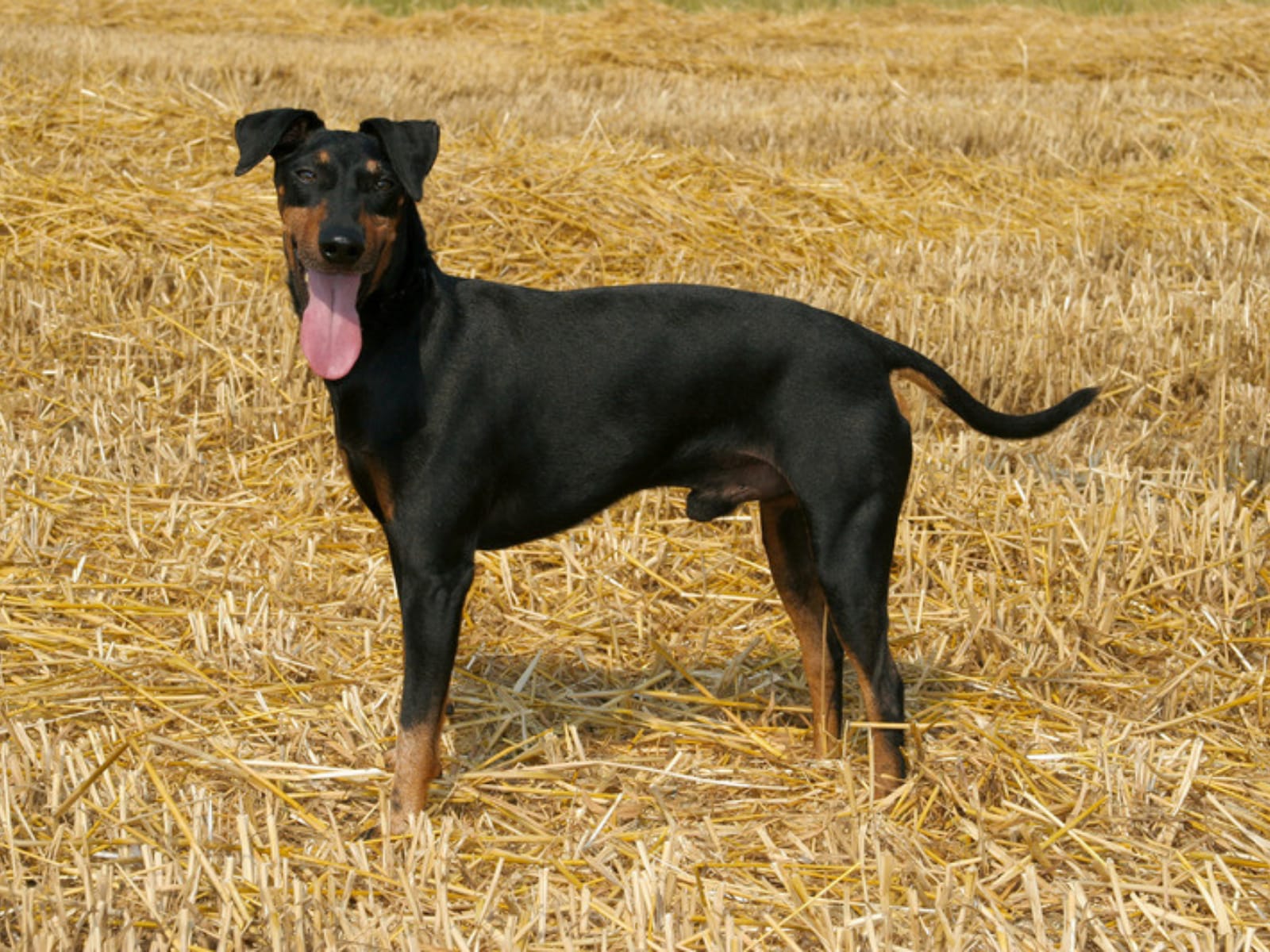
Black and tan Manchester Terrier in a stubble field

Breed facts

FCI
no. 71 · group 3, large and medium-sized terriers
Origin
Great Britain
Height at withers
male 41 cm · female 38 cm
Size
The standard gives these as ideal heights.
Exercise
up to 1 hour a day (according to the Royal Kennel Club)
Lifespan
over 12 years
Coat
short, sheds

The GoPuppy profile

These are breed averages and our own assessment. Your own dog’s age, fitness and training matter more.

  1. WalkingLong walksThe Royal Kennel Club gives up to an hour of exercise a day. He is fast and sporty.
  2. Dog sportSport with a build-upAgility, scentwork and canicross suit a fast terrier.Suitsagilityscent workcanicross
  3. Terraces and cafésTerrace after trainingThe standard calls him keen, alert, gay and sporting, discerning and devoted.
  4. Travel and staysTravels with some planningMedium-sized and light, with a short coat.
  5. CityTown or villageOriginally a town dog. The RKC suggests a small house with a small to medium garden.

Temperament

According to the FCI standard the Manchester Terrier is keen, alert, gay and sporting, discerning and devoted.

Origin

His name gives away his origin, and according to the standard there is probably some Whippet in his ancestry. He was bred as a ratter. Rat killing peaked in the mid-1800s, and in Manchester weekly dog shows were held in public houses, where he got classes of his own. According to the Royal Kennel Club he kept down rats in the growing towns and mills. His ears used to be cropped; after cropping was banned in 1898 his popularity declined. In 1945 only 11 dogs were registered. According to the Royal Kennel Club the English Toy Terrier descends from him. Other British terriers are the Border Terrier and the Airedale Terrier. The FCI places him in Group 3, Section 1, large and medium-sized terriers.

Health

The Royal Kennel Club prioritises genetic diversity and lists a DNA test for von Willebrand disease (vWD1), eye testing and tests for juvenile dilated cardiomyopathy (JDCM) and xanthinuria (type II).

Size

The ideal height is 41 cm for dogs and 38 cm for bitches.

Health: what a good breeder tests for

  • Prioritising genetic diversity when choosing the parents
  • DNA test for von Willebrand disease (vWD1)
  • Eye testing
  • Test for juvenile dilated cardiomyopathy (JDCM)
  • Test for xanthinuria (type II)

Ask for the parents’ results when you visit a litter. This is not medical advice; your vet knows your dog.

Breeders of this breed on GoPuppy

No breeder of this breed on GoPuppy yet.

GoPuppy does not check breeders’ health tests. A listing here is not a seal of approval.

Read also