FCI 197 · Italy

Neapolitan Mastiff

A very heavy Italian molosser, descended from the great Roman mastiff and preserved around Vesuvius.

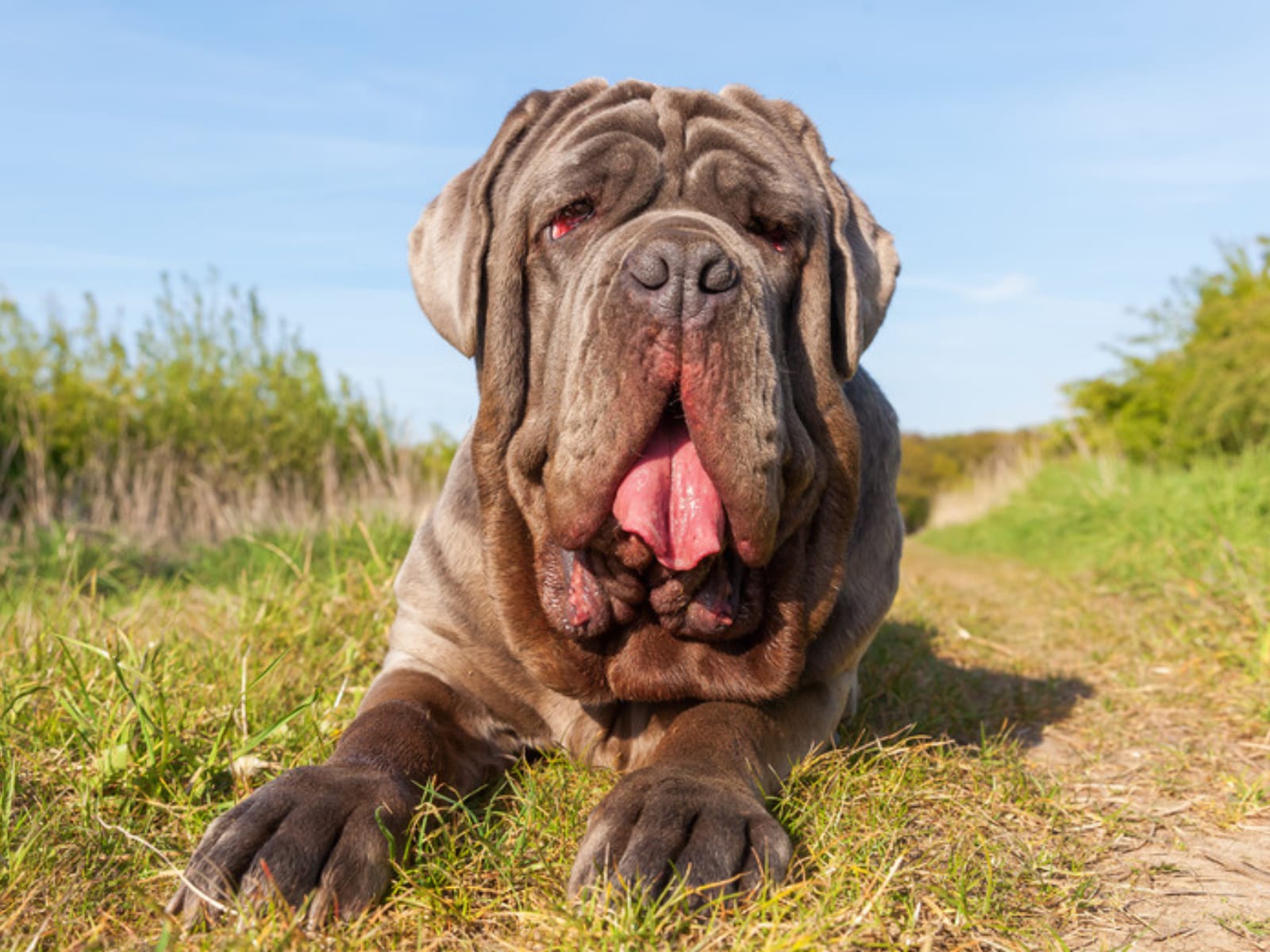
Grey Neapolitan Mastiff lying in the grass

Breed facts

FCI
no. 197 · group 2, molossoid, mastiff type
Origin
Italy
Height at withers
male 65–75 cm · female 60–68 cm
Weight
male 60–70 kg · female 50–60 kg
Exercise
up to 1 hour a day (according to the Royal Kennel Club)
Lifespan
under 10 years
Coat
short, sheds

The GoPuppy profile

These are breed averages and our own assessment. Your own dog’s age, fitness and training matter more.

  1. WalkingShort loopsThe Royal Kennel Club gives up to an hour of exercise a day. Calm walks suit his weight.
  2. Dog sportNot a sports dogNot a sporting dog. Scentwork keeps him busy without straining his body.Suitsscent work
  3. Terraces and cafésRather not a busy terraceThe standard calls him steady and loyal, not aggressive.
  4. Travel and staysVery large and heavy. In Bavaria he is listed in Kategorie 2.
  5. CityThe RKC suggests a large house with a large garden, in the country.

Temperament

According to the FCI standard the Neapolitan Mastiff is steady and loyal, not aggressive. He guards property and its inhabitants, always vigilant, intelligent, noble and majestic.

Origin

He descends from the great Roman mastiff described by Columella in the first century AD. Spread throughout Europe by the Roman legions, that dog is, according to the standard, the ancestor of numerous mastiff breeds. The breed survived for centuries in the countryside at the foot of Vesuvius and around Naples. It has been re-selected since 1947. The FCI places him in Group 2, Section 2.1, molossoid breeds of mastiff type.

Travel rules

Bavaria has rules for this breed. They are listed below, with the source.

Health

The Royal Kennel Club prioritises genetic diversity and lists elbow, hip and eye testing. It gives a lifespan of under ten years.

Size

Dogs measure 65 to 75 cm and weigh 60 to 70 kg. Bitches measure 60 to 68 cm and weigh 50 to 60 kg.

Health: what a good breeder tests for

  • Prioritising genetic diversity when choosing the parents
  • Elbows (X-ray, official result)
  • Hips (X-ray, official result)
  • Eye testing

Ask for the parents’ results when you visit a litter. This is not medical advice; your vet knows your dog.

Breeders of this breed on GoPuppy

No breeder of this breed on GoPuppy yet.

GoPuppy does not check breeders’ health tests. A listing here is not a seal of approval.

Read also