FCI 242 · Norway

Norwegian Elkhound (Grey)

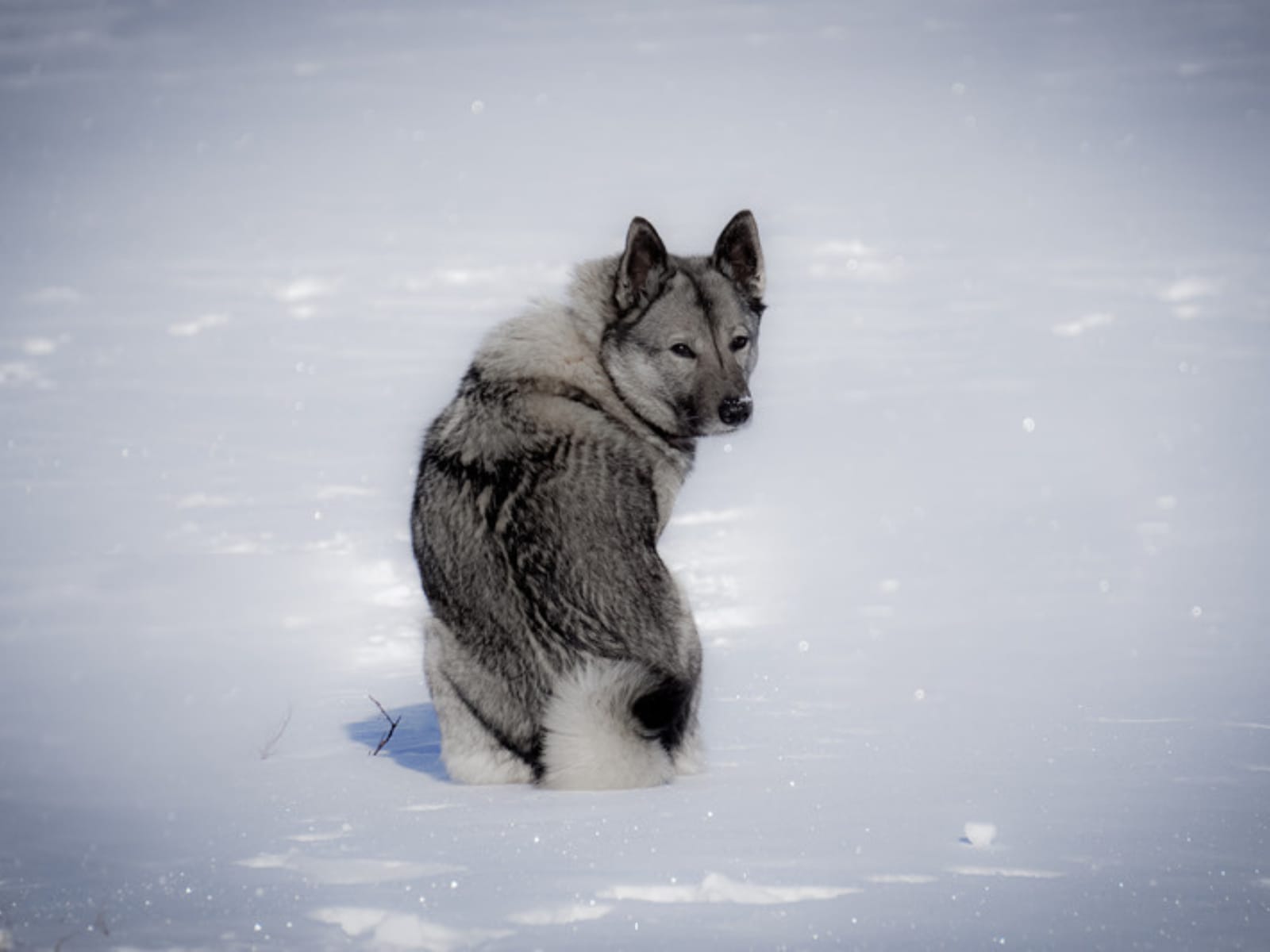
A grey Norwegian spitz for elk hunting, with a tail curled firmly over the back.

Grey Norwegian Elkhound sitting in the snow, looking back

Breed facts

FCI
no. 242 · group 5, Nordic hunting dogs
Origin
Norway
Height at withers
male 49–56 cm · female 46–53 cm
Size
The standard gives 52 cm as ideal for dogs and 49 cm for bitches. More than 3 cm under or 4 cm over is a disqualifying fault. It gives no weight.
Exercise
up to 1 hour a day (according to the Royal Kennel Club)
Lifespan
over 10 years
Coat
medium length, sheds

The GoPuppy profile

These are breed averages and our own assessment. Your own dog’s age, fitness and training matter more.

  1. WalkingFull-day hikesThe Royal Kennel Club gives up to an hour of exercise a day; as a hunting dog he can do far more.
  2. Dog sportSport with a build-upHunting, scent work and canicross suit an elkhound.Suitsgundog workscent workcanicross
  3. Terraces and cafésRather not a busy terraceThe standard calls him fearless, energetic and brave.
  4. Travel and staysTravel takes preparationMedium-sized, he travels in an ordinary car with a crate.
  5. CityNeeds a big gardenThe RKC suggests a large house with a large garden, in town or country.

Temperament

The FCI standard calls the grey Elkhound fearless, energetic and brave. He was bred for elk hunting: he finds the animal and holds it at bay by barking.

Origin

The FCI standard gives no history. According to the Royal Kennel Club, Stone Age skeletons of dogs very similar to the modern Elkhound have been found in Norway, which suggests the breed is ancient and little changed. He is grey, with lighter areas and a dark mask. There is also a black Norwegian Elkhound, which is a separate breed. For a long time the Jämthund was judged together with him. The Nordic countries hold a working trial. The FCI places him in group 5, section 2, Nordic hunting dogs.

Health

The Royal Kennel Club prioritises genetic diversity and lists DNA tests for primary open angle glaucoma (POAG), progressive retinal atrophy (prcd-PRA) and chondrodysplasia (CDSL). It also lists eye testing and a hip X-ray.

Size

The standard gives 52 cm as ideal for dogs and 49 cm for bitches. More than 3 cm under or 4 cm over is a disqualifying fault. It gives no weight.

Health: what a good breeder tests for

  • Prioritising genetic diversity when choosing the parents
  • DNA test for primary open angle glaucoma (POAG)
  • DNA test for progressive retinal atrophy (prcd-PRA)
  • DNA test for chondrodysplasia (CDSL)
  • Eye testing
  • Hips (X-ray, official result)

Ask for the parents’ results when you visit a litter. This is not medical advice; your vet knows your dog.

Breeders of this breed on GoPuppy

No breeder of this breed on GoPuppy yet.

GoPuppy does not check breeders’ health tests. A listing here is not a seal of approval.

Read also