FCI 16 · Great Britain

Old English Sheepdog

A large British sheepdog with a profuse, weather-resistant coat and a resonant bark. Its nickname comes from the tail that used to be docked.

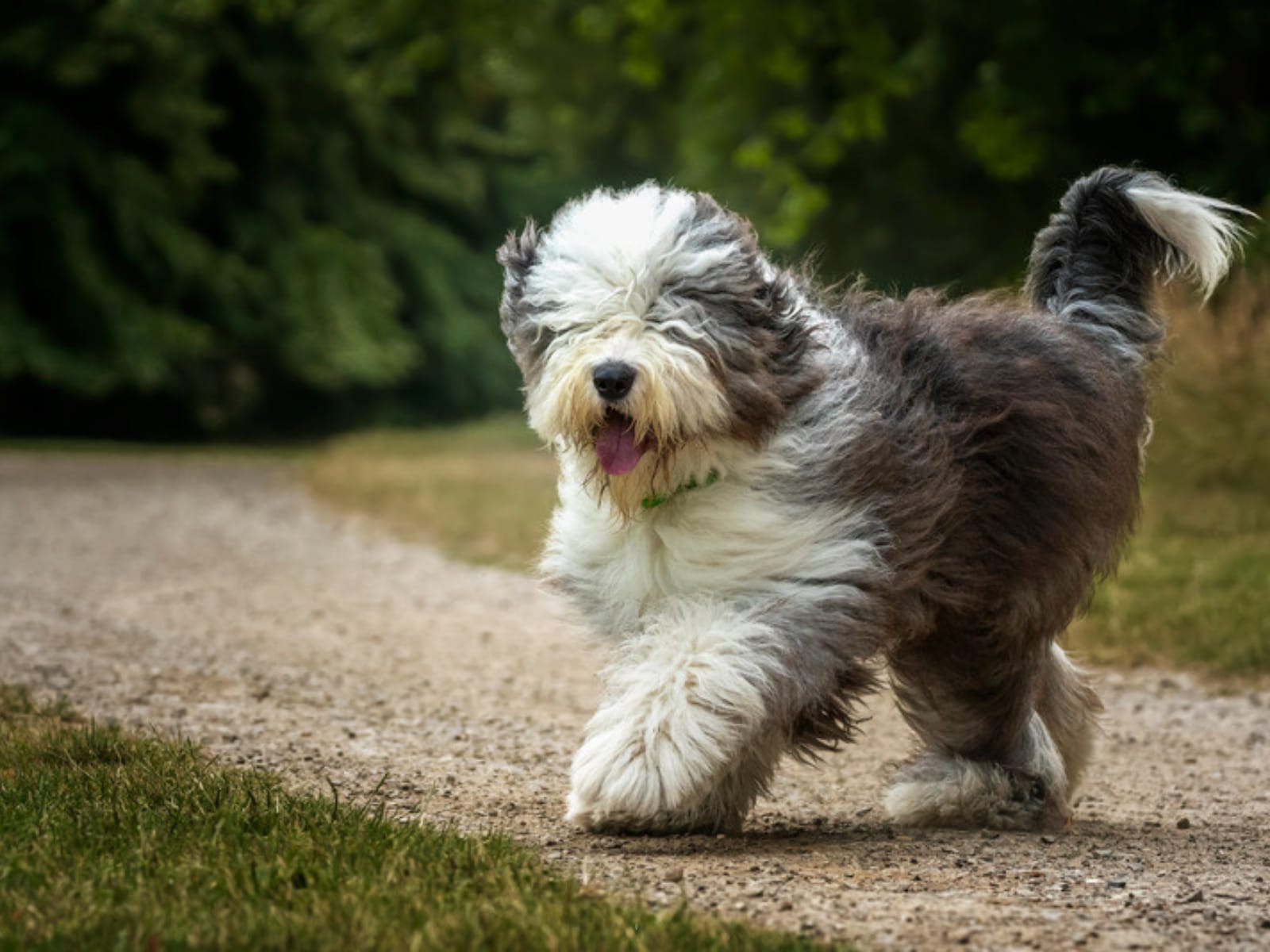
Old English Sheepdog with a natural tail walking along a path

Breed facts

FCI
no. 16 · group 1, sheepdogs
Origin
Great Britain
Size
Males 61 cm and upwards, females 56 cm and upwards. According to the standard, type and symmetry come before size.
Exercise
more than 2 hours a day (according to the Royal Kennel Club)
Lifespan
over 10 years
Coat
long, sheds

The GoPuppy profile

These are breed averages and our own assessment. Your own dog’s age, fitness and training matter more.

  1. WalkingLong walksThe Royal Kennel Club gives more than two hours of exercise a day. According to the RKC he should still be fit for work with the flock.
  2. Dog sportScent work and one sportHerding, obedience and scent work suit a sheepdog.Suitsherdingobediencescent work
  3. Terraces and cafésTerrace after trainingThe standard calls him biddable and even-tempered, bold, faithful and trustworthy, with no nervousness.
  4. Travel and staysRules or heat when travellingLarge, with a thick coat. He needs a roomy, cool car.
  5. CityNeeds a big gardenThe Royal Kennel Club suggests a large house with a large garden, in town or country.

Character

According to the FCI standard, the Old English Sheepdog is a biddable dog of even disposition. He is bold, faithful and trustworthy, with no suggestion of nervousness or unprovoked aggression. The standard calls him intelligent and friendly, with a bark resonant enough to frighten off any intruder.

Origin

Britain is listed as his country of origin, but his ancestry is thought to come from European shepherd dogs of the Owtcharka and Bergamasco types, bred to British sheepdogs. He is now regarded as a native British breed, often called the Bob-Tail. According to the Royal Kennel Club he was customarily docked until recent years; now that docking is no longer allowed, the nickname fits less well. The FCI places him in Group 1, section 1, sheepdogs.

Coat and health

His profuse, weather-resistant coat is a distinctive feature of the breed according to the standard and needs daily care according to the RKC. The RKC puts genetic diversity first and asks for hip, elbow and eye testing, plus DNA tests for primary ciliary dyskinesia (PCD) and multiocular defect (MOD).

Size

Males measure 61 cm and upwards, females 56 cm and upwards. According to the standard, type and symmetry come before size.

Health: what a good breeder tests for

  • Prioritising genetic diversity when choosing the parents
  • Hips (X-ray, official result)
  • Elbows (X-ray, official result)
  • Eye testing
  • DNA test for primary ciliary dyskinesia (PCD)
  • DNA test for multiocular defect (MOD)

Ask for the parents’ results when you visit a litter. This is not medical advice; your vet knows your dog.

Breeders of this breed on GoPuppy

No breeder of this breed on GoPuppy yet.

GoPuppy does not check breeders’ health tests. A listing here is not a seal of approval.

Read also