FCI 172 · France

Poodle

One breed in four sizes: Standard, Medium, Miniature and Toy. This page covers the three largest; the smallest has its own page, the Toy Poodle. According to his standard, the poodle descends from the Barbet, a dog used to hunt waterfowl.

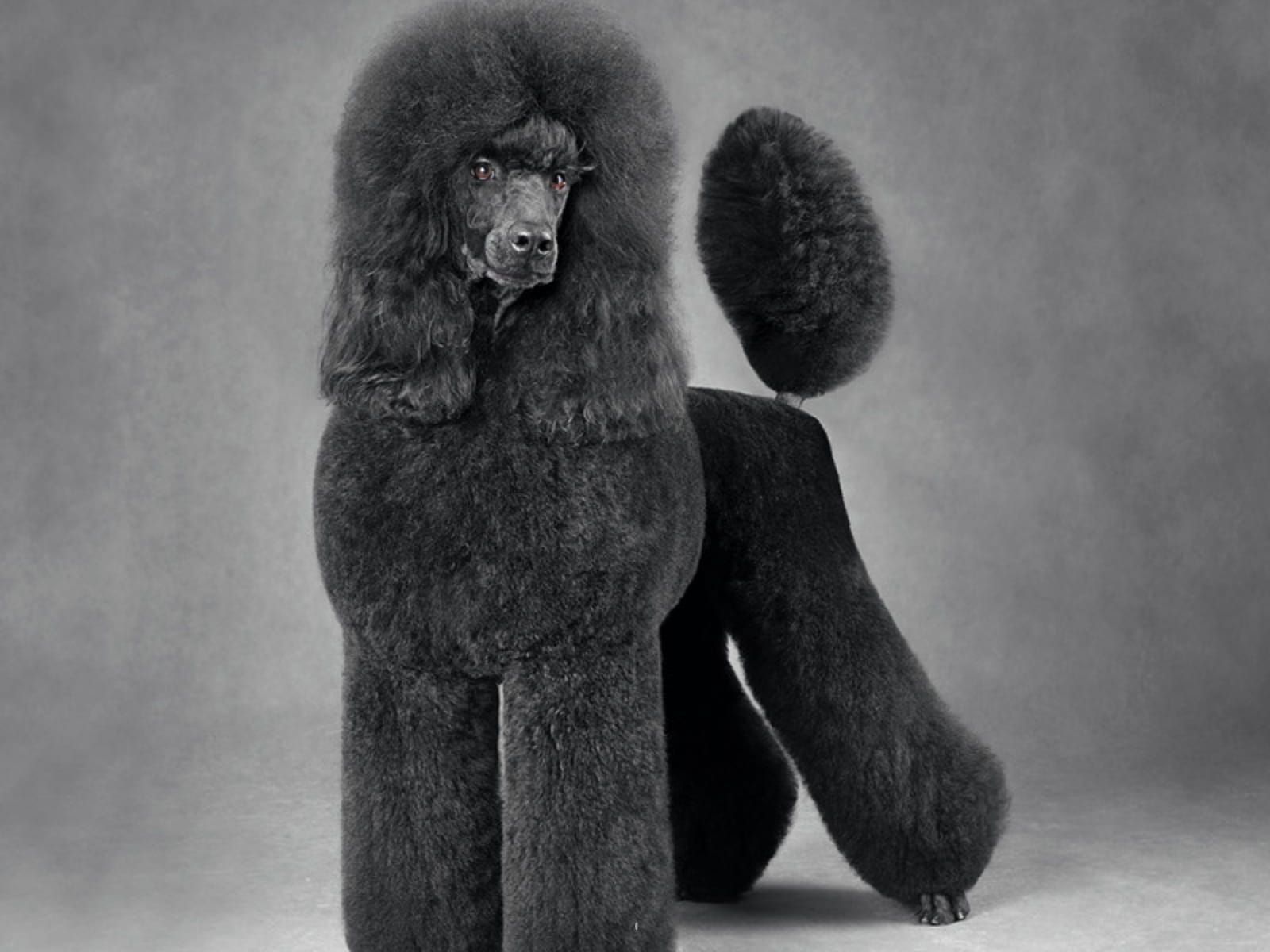
Black Standard Poodle in show trim

Breed facts

FCI
no. 172 · group 9, poodles
Origin
France
Height at withers
28–60 cm
Size
Standard 45 to 60 cm, Medium 35 to 45 cm, Miniature 28 to 35 cm. The Toy Poodle (24 to 28 cm) has its own page.
Exercise
up to 1 hour a day (according to the Royal Kennel Club)
Lifespan
over 12 years
Coat
medium length, sheds little

The GoPuppy profile

These are breed averages and our own assessment. Your own dog’s age, fitness and training matter more.

  1. WalkingLong walksThe Royal Kennel Club gives up to an hour of exercise a day, for the Standard and the Miniature alike. A healthy poodle happily walks further, and a Standard Poodle likes to swim.
  2. Dog sportSport with a build-upAgility, scent work, swimming and dummy training. The standard calls him 'capable of learning and being trained'.Suitsagilityscent workswimmingdummy training
  3. Terraces and cafésTerrace with some practiceThe standard speaks of 'a particularly pleasant companion dog'. A Miniature lies under the table, a Standard beside it.
  4. Travel and staysTravels with some planningDepends on the size: a Miniature travels easily, a Standard needs a roomy crate.
  5. CityTown or villageThe Royal Kennel Club assumes a small house for the Miniature and a large house for the Standard. Plan on a groomer nearby.

Character

The FCI standard calls the poodle “a dog renowned for its loyalty, capable of learning and being trained”. He learns quickly and willingly, whatever his size.

Four sizes

The standard recognises Standard (45 to 60 cm), Medium (35 to 45 cm), Miniature (28 to 35 cm) and Toy (24 to 28 cm). It is one breed with one standard; only the size differs. The smallest size has its own page: the Toy Poodle.

Origin

The French word ‘caniche’ comes from ‘cane’, a female duck. According to the standard, the poodle was originally used for hunting waterfowl and descends from the Barbet. The name ‘caniche’ first appears in 1743. After that, Barbet and poodle gradually went separate ways. The FCI places the poodle in Group 9, companion and toy dogs, with France as the country of origin.

Coat

The Royal Kennel Club lists the poodle among dogs that do not shed, with a coat that needs daily care. Not shedding is not the same as hypoallergenic: in a Dutch study (Vredegoor et al., 2012), poodles and Labradoodles actually carried more of the main dog allergen in their coat than other dogs. More on our page about designer crossbreeds.

Health per size

For the Standard Poodle, the Royal Kennel Club recommends DNA tests for prcd-PRA, PRA rcd4 and vWD1, along with eye and hip testing. For the Miniature it is DNA tests for OC and prcd-PRA, eyes and hips. Ask a breeder for the results of both parents.

Health: what a good breeder tests for

  • Standard Poodle: DNA tests for prcd-PRA, PRA rcd4 and vWD1, eyes and hips
  • Miniature Poodle: DNA tests for OC and prcd-PRA, eyes and hips

Ask for the parents’ results when you visit a litter. This is not medical advice; your vet knows your dog.

Breeders of this breed on GoPuppy

No breeder of this breed on GoPuppy yet.

GoPuppy does not check breeders’ health tests. A listing here is not a seal of approval.

Read also