FCI 56 · Hungary

Pumi

A lively Hungarian herding dog, developed by crossing the Puli with terrier-type dogs.

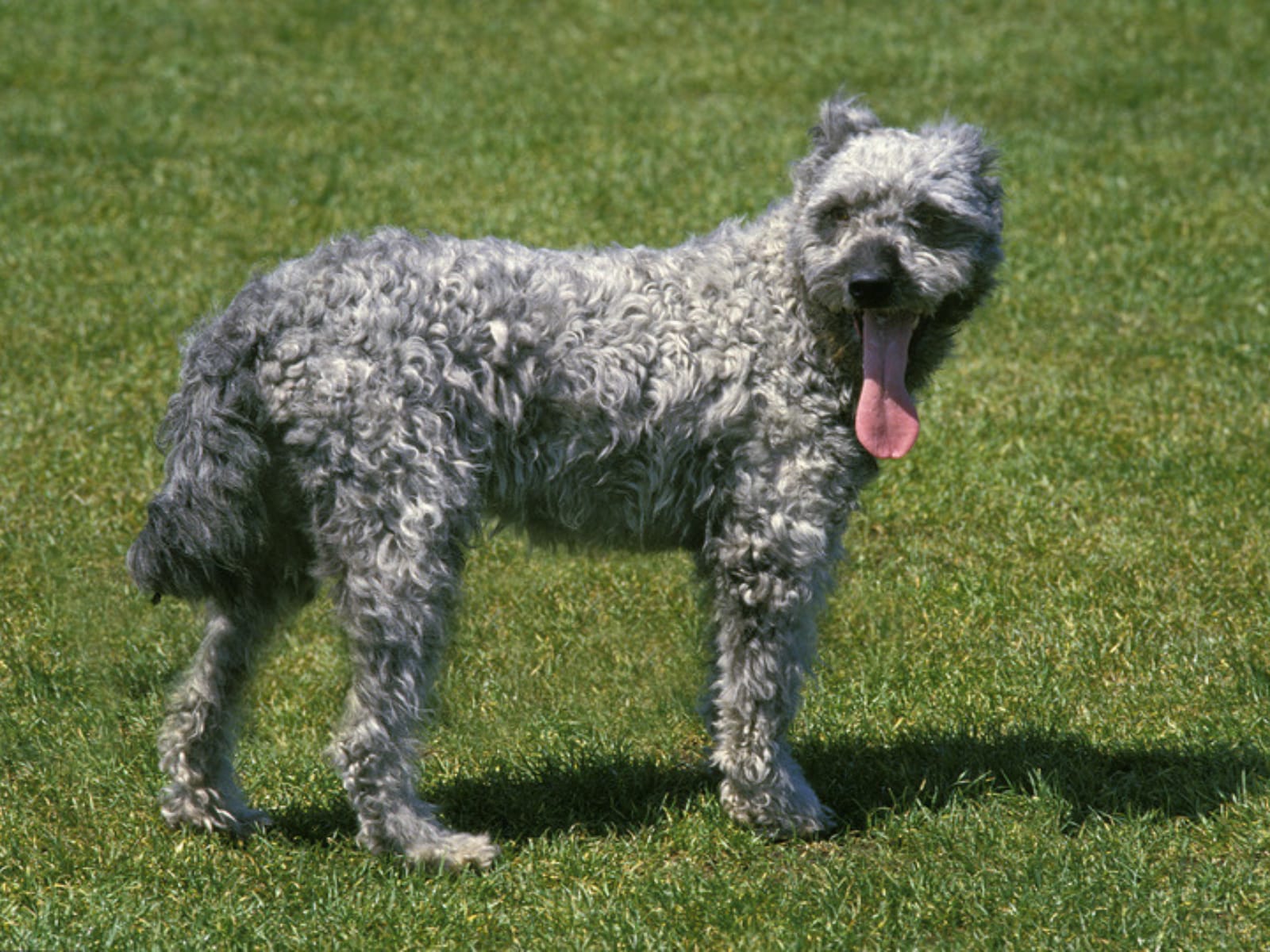
Grey Pumi standing on a lawn

Breed facts

FCI
no. 56 · group 1, sheepdogs
Origin
Hungary
Height at withers
male 41–47 cm · female 38–44 cm
Size
The standard also gives an ideal size within these ranges.
Weight
male 10–15 kg · female 8–13 kg
Exercise
up to 1 hour a day (according to the Royal Kennel Club)
Lifespan
over 12 years
Coat
medium length, sheds little

The GoPuppy profile

These are breed averages and our own assessment. Your own dog’s age, fitness and training matter more.

  1. WalkingLong walksThe standard says he needs plenty of exercise.
  2. Dog sportSports partnerAccording to the standard an excellent sporting dog. Agility, herding and scentwork suit him.Suitsherdingagilityscent work
  3. Terraces and cafésRather not a busy terraceThe standard calls him restless, rather noisy and a little suspicious of strangers.
  4. Travel and staysTravels with some planningSmall to medium-sized, easy to take along.
  5. CityBetter with a gardenThe standard calls him an excellent house pet. The RKC suggests a small house with a garden.

Temperament

According to the FCI standard the Pumi is a lively herding dog with a restless temperament. He is extremely bold and a little suspicious of strangers. He is rather noisy and always on the move. Shy or phlegmatic behaviour is untypical of the breed.

Origin

The Pumi came into being in Hungary in the 17th and 18th centuries by crossing the primitive Puli with imported German and French prick-eared dogs of terrier type. He was recognised as a separate breed at the beginning of the 20th century. He herds livestock and tackles beasts of prey and rodents. Another Hungarian herding dog is the Mudi. The FCI places him in Group 1, Section 1, sheepdogs.

Health

The Royal Kennel Club prioritises genetic diversity and lists elbow and hip testing.

Size

Dogs measure 41 to 47 cm and weigh 10 to 15 kg. Bitches measure 38 to 44 cm and weigh 8 to 13 kg.

Health: what a good breeder tests for

  • Prioritising genetic diversity when choosing the parents
  • Elbows (X-ray, official result)
  • Hips (X-ray, official result)

Ask for the parents’ results when you visit a litter. This is not medical advice; your vet knows your dog.

Breeders of this breed on GoPuppy

No breeder of this breed on GoPuppy yet.

GoPuppy does not check breeders’ health tests. A listing here is not a seal of approval.

Read also