FCI 146 · Southern Africa

Rhodesian Ridgeback

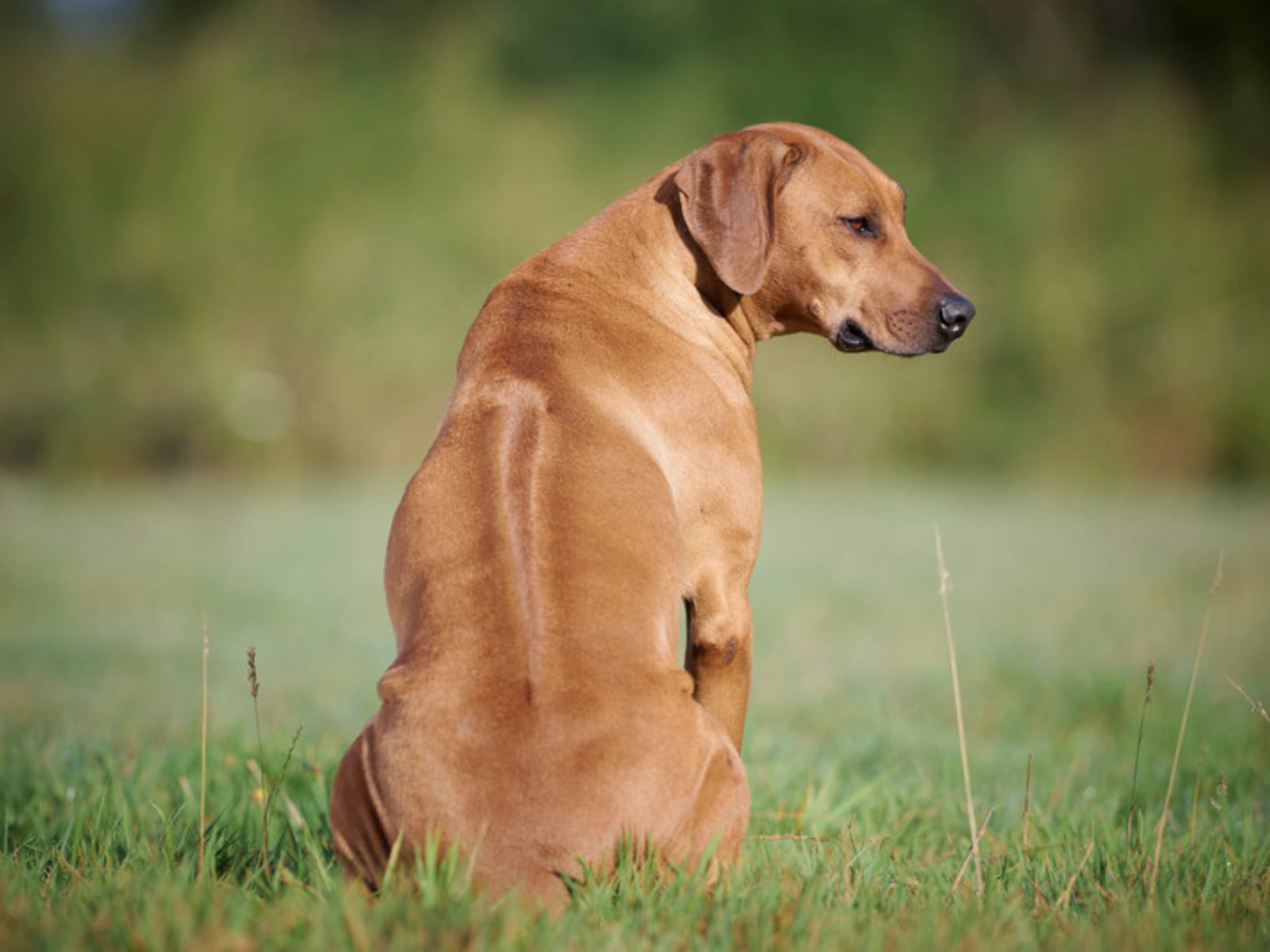
The only recognised breed native to southern Africa. You know him by the ridge on his back, where the hair grows against the rest of the coat. He once tracked lions and held them at bay until the hunter arrived.

Rhodesian Ridgeback sitting in the grass, ridge visible

Breed facts

FCI
no. 146 · group 6, related breeds
Origin
Southern Africa
Height at withers
male 63–69 cm · female 61–66 cm
Size
Males 63 to 69 cm and about 36.5 kg, females 61 to 66 cm and about 32 kg.
Exercise
more than 2 hours a day (according to the Royal Kennel Club)
Lifespan
over 10 years
Coat
short, sheds

The GoPuppy profile

These are breed averages and our own assessment. Your own dog’s age, fitness and training matter more.

  1. WalkingFull-day hikesMore than two hours of exercise a day, according to the Royal Kennel Club. An adult Ridgeback will manage a full-day hike.
  2. Dog sportSport with a build-upCanicross and scent work suit a hunting dog the standard credits with 'great agility'. Wait until he is fully grown before running beside a bike.Suitscanicrossscent work
  3. Terraces and cafésTerrace after trainingThe standard calls him 'dignified, intelligent, aloof with strangers', without aggression or shyness. After a good walk he lies quietly.
  4. Travel and staysTravel takes preparationLarge, with a short coat. Plan stops on the way where he can really run.
  5. CityNeeds a big gardenThe Royal Kennel Club assumes a large house with a large garden, in town or country.

Character

According to the FCI standard, the Ridgeback is dignified and intelligent, aloof with strangers, but neither aggressive nor shy. He is still used for hunting, but is especially prized as a watchdog and family pet.

Origin

His ancestors come from the Cape Colony, where the early pioneers’ dogs crossed with the semi-domesticated, ridged hunting dogs of the Khoikhoi. The Ridgeback hunted in groups of two or three: he tracked game, especially lion, and kept it at bay until the hunter arrived, hence the name ‘Lion Dog’. The first standard was drafted by F.R. Barnes in 1922 in Bulawayo, in what was then Rhodesia, and approved by the South African Kennel Union in 1926. The FCI places him in Group 6, section 3.

The ridge

The standard calls the ridge ‘the escutcheon of the breed’. It must be clearly defined, symmetrical, tapering towards the haunch, with two identical crowns opposite each other.

Health and size

The Royal Kennel Club recommends hip and elbow testing for breeders, plus DNA tests for JME (a form of juvenile epilepsy) and DM. Males measure 63 to 69 cm and weigh about 36.5 kg, females 61 to 66 cm and about 32 kg.

Health: what a good breeder tests for

  • Hips (X-ray, official result)
  • Elbows (X-ray, official result)
  • DNA test for JME (juvenile myoclonic epilepsy)
  • DNA test for DM (degenerative myelopathy)

Ask for the parents’ results when you visit a litter. This is not medical advice; your vet knows your dog.

Breeders of this breed on GoPuppy

No breeder of this breed on GoPuppy yet.

GoPuppy does not check breeders’ health tests. A listing here is not a seal of approval.

Read also