FCI 74 · Great Britain

Sealyham Terrier

A short-legged white terrier from Wales, named after Sealyham Manor on the river Seal.

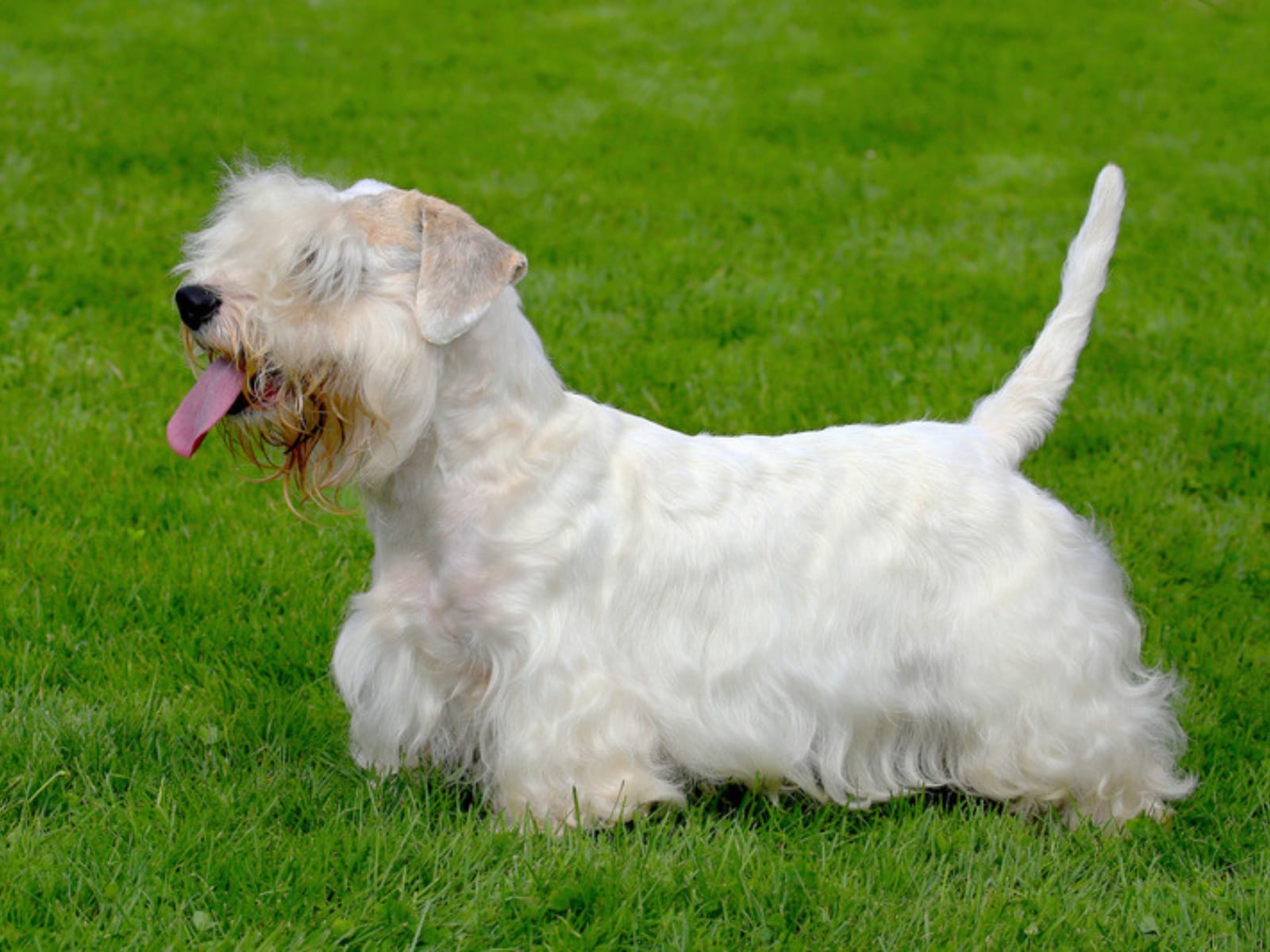
White Sealyham Terrier standing on the grass

Breed facts

FCI
no. 74 · group 3, small terriers
Origin
Great Britain
Height at withers
at most 31 cm
Size
Height should not exceed 31 cm. Ideal weight is about 9 kg for dogs and 8.2 kg for bitches.
Weight
male 9 kg · female 8.2 kg
Exercise
up to 1 hour a day (according to the Royal Kennel Club)
Lifespan
over 10 years
Coat
long, sheds little

The GoPuppy profile

These are breed averages and our own assessment. Your own dog’s age, fitness and training matter more.

  1. WalkingOne to two hoursThe Royal Kennel Club gives up to an hour of exercise a day.
  2. Dog sportScent work and one sportScentwork, hoopers and obedience suit a sturdy small terrier.Suitsscent workhoopersobedience
  3. Terraces and cafésTerrace with some practiceThe standard calls him alert and fearless, but friendly.
  4. Travel and staysTravels easilySmall, easy to take along.
  5. CityTown or villageThe RKC suggests a small house with a small to medium garden. The coat needs daily grooming.

Temperament

According to the FCI standard the Sealyham is sturdy, game and workmanlike. He is alert and fearless, but of a friendly disposition.

Origin

The Royal Kennel Club explains that the breed takes its name from a village in Pembrokeshire on the river Seal. Captain John Owen Edwardes of Sealyham Manor developed a short-legged white terrier, mainly from white terriers of Jack Russell type, with input from the West Highland White Terrier, the Dandie Dinmont Terrier and the Bull Terrier, among others. He worked alongside otterhounds and went to earth after otter, badger, fox and polecat. The first breed club was founded in 1908, and the Kennel Club recognised the breed in 1911. Popular in the 1930s and 1940s, he is now rare, and the RKC lists him as a vulnerable native breed. The Cesky Terrier was created from a cross with the Sealyham. The FCI places him in Group 3, Section 2, small terriers.

Health

The Royal Kennel Club prioritises genetic diversity and lists a DNA test for primary lens luxation (PLL) and eye testing.

Size

Height should not exceed 31 cm. Ideal weight is about 9 kg for dogs and 8.2 kg for bitches.

Health: what a good breeder tests for

  • Prioritising genetic diversity when choosing the parents
  • DNA test for primary lens luxation (PLL)
  • Eye testing

Ask for the parents’ results when you visit a litter. This is not medical advice; your vet knows your dog.

Breeders of this breed on GoPuppy

No breeder of this breed on GoPuppy yet.

GoPuppy does not check breeders’ health tests. A listing here is not a seal of approval.

Read also