FCI 309 · China

Shar Pei

A Chinese hunting and watch dog, found for hundreds of years in the provinces bordering the South China Sea. The standard prefers a bluish-black tongue.

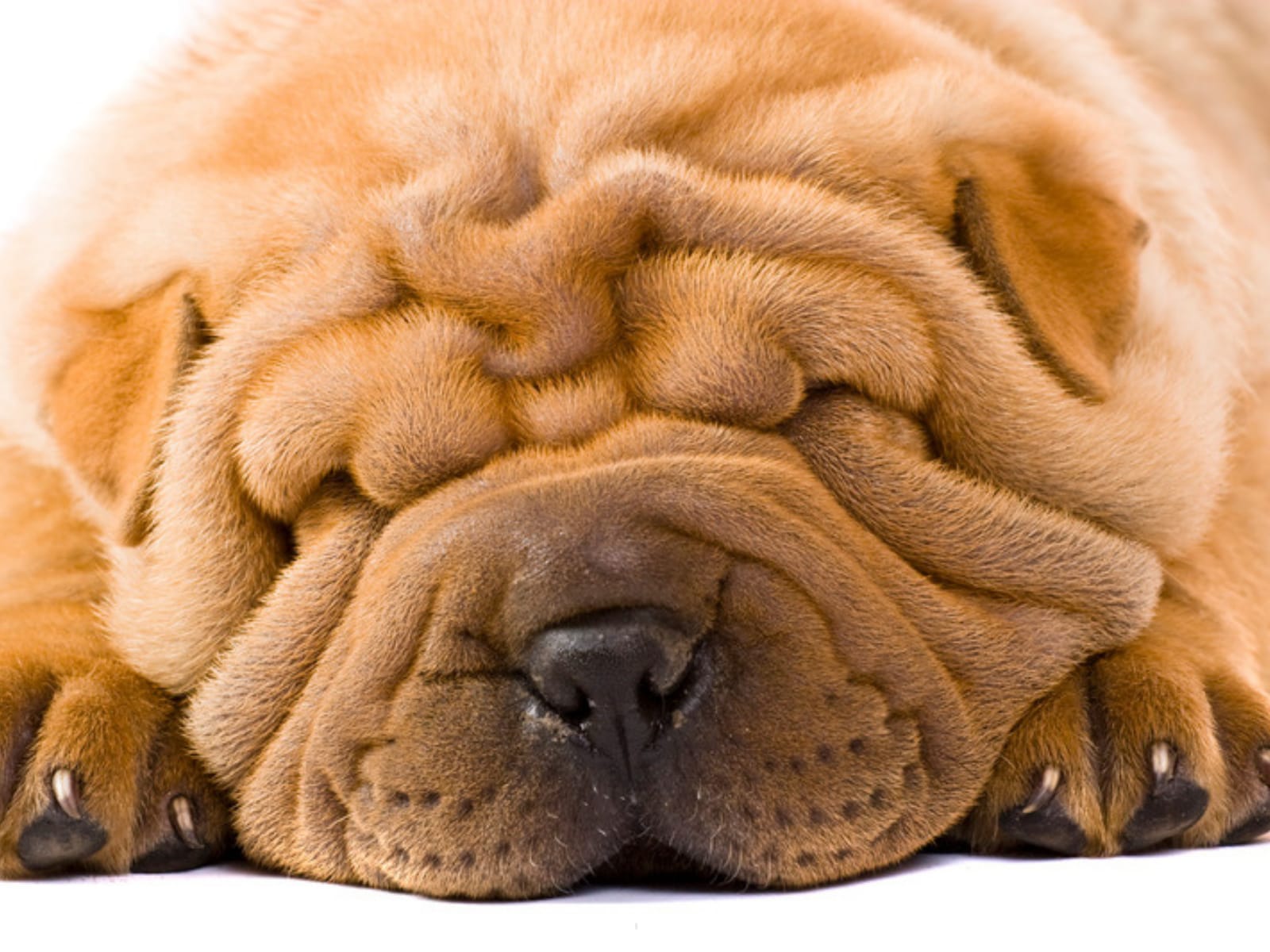
Shar Pei with his typical folds, close-up

Breed facts

FCI
no. 309 · group 2, molossoid, mastiff type
Origin
China
Height at withers
44–51 cm
Exercise
up to 1 hour a day (according to the Royal Kennel Club)
Lifespan
over 10 years
Coat
short, sheds

The GoPuppy profile

These are breed averages and our own assessment. Your own dog’s age, fitness and training matter more.

  1. WalkingOne to two hoursThe Royal Kennel Club gives up to an hour of exercise a day. Easy walks, in warm weather during the cool hours.
  2. Dog sportCalm gamesCalm scent work. Not a dog for intense sport.Suitsscent work
  3. Terraces and cafésTerrace after trainingThe standard calls him 'calm, independent, loyal, affectionate to his family'.
  4. Travel and staysTravel takes preparationMedium-sized, with a short coat. Easy to take in the car.
  5. CityBetter with a gardenThe Royal Kennel Club says a small house with a small to medium garden is enough, in town or country.

Character

According to the FCI standard, the Shar Pei is calm, independent, loyal and affectionate to his family.

Origin

This Chinese breed has existed for hundreds of years in the provinces bordering the South China Sea. According to the standard, the town of Dialak in the province of Kwun Tung is probably its place of origin. He was used as a hunting and watch dog. The FCI places him in Group 2, section 2.1.

Tongue and skin

The standard prefers a bluish-black tongue, roof of mouth and flews; in dilute-coloured dogs the tongue is lavender. The Royal Kennel Club lists the breed under Breed Watch, category 2, for points of concern that may not appear in the standard.

Health and size

The Royal Kennel Club recommends eye testing, a DNA test for POAG/PLL (glaucoma and lens luxation), and elbow and hip testing. Height at the withers is 44 to 51 cm.

Health: what a good breeder tests for

  • Eye testing
  • DNA test for POAG/PLL (glaucoma and lens luxation)
  • Elbows (X-ray, official result)
  • Hips (X-ray, official result)

Ask for the parents’ results when you visit a litter. This is not medical advice; your vet knows your dog.

Breeders of this breed on GoPuppy

No breeder of this breed on GoPuppy yet.

GoPuppy does not check breeders’ health tests. A listing here is not a seal of approval.

Read also