FCI 102 · Germany

Small Münsterländer

A German gundog from the Münsterland, also called the Heidewachtel. The standard calls him suitable for family life.

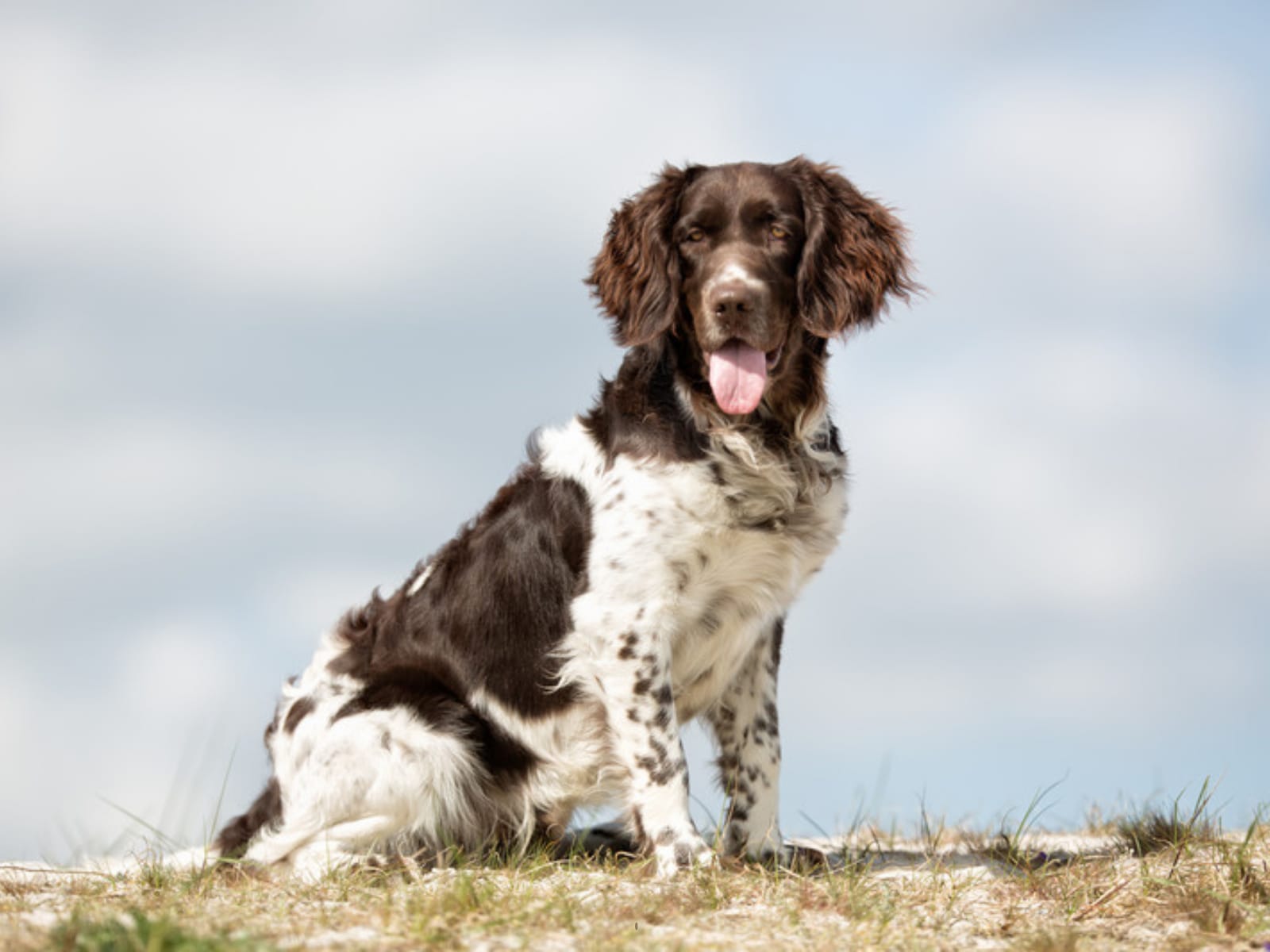
Small Münsterländer sitting outdoors in the sun

Breed facts

FCI
no. 102 · group 7, continental pointing dogs
Origin
Germany
Height at withers
male 54 cm · female 52 cm
Size
The standard allows 2 cm either way.
Exercise
up to 1 hour a day (according to the Royal Kennel Club)
Lifespan
over 10 years
Coat
medium length, sheds

The GoPuppy profile

These are breed averages and our own assessment. Your own dog’s age, fitness and training matter more.

  1. WalkingFull-day hikesThe Royal Kennel Club gives up to an hour of exercise a day; a gundog like him happily goes further.
  2. Dog sportSport with a build-upA versatile gundog for field, forest and water. Dummy training and scent work suit him.Suitsgundog workdummy trainingscent work
  3. Terraces and cafésTerrace after trainingThe standard calls him alert and friendly towards people, with a steady character.
  4. Travel and staysTravel takes preparationMedium-sized and easy to take along.
  5. CityNeeds a big gardenThe Royal Kennel Club suggests a small house with a small to medium garden, in the country.

Character

According to the FCI standard, the Small Münsterländer is intelligent and capable of learning, full of temperament but even, with a steady character. He is alert and friendly towards people, suitable for family life, and keeps close contact with his master. He also has a strong, persevering hunting instinct.

Origin

Breeding in the northern German Münsterland has been documented since around 1870. In 1912 the association for Kleine Münsterländer pointing dogs (Heidewachtel) was founded in Germany, and in 1921 Dr Friedrich Jungklaus wrote the first standard. According to the Royal Kennel Club, he was developed by crossing the Large Munsterlander with spaniels. He is related to the Drentsche Partridge Dog. The FCI places him in Group 7, section 1.2, continental pointing dogs of spaniel type, with a working trial. Section 1.1, pointing dogs of braque type, includes the German Shorthaired Pointer. Other longhaired German pointing dogs are the Large Munsterlander and the German Longhaired Pointer.

Health

The Royal Kennel Club puts genetic diversity first when choosing the parents.

Size

Males measure 54 cm, females 52 cm, with 2 cm allowed either way.

Health: what a good breeder tests for

  • Prioritising genetic diversity when choosing the parents

Ask for the parents’ results when you visit a litter. This is not medical advice; your vet knows your dog.

Breeders of this breed on GoPuppy

No breeder of this breed on GoPuppy yet.

GoPuppy does not check breeders’ health tests. A listing here is not a seal of approval.

Read also