Temperament
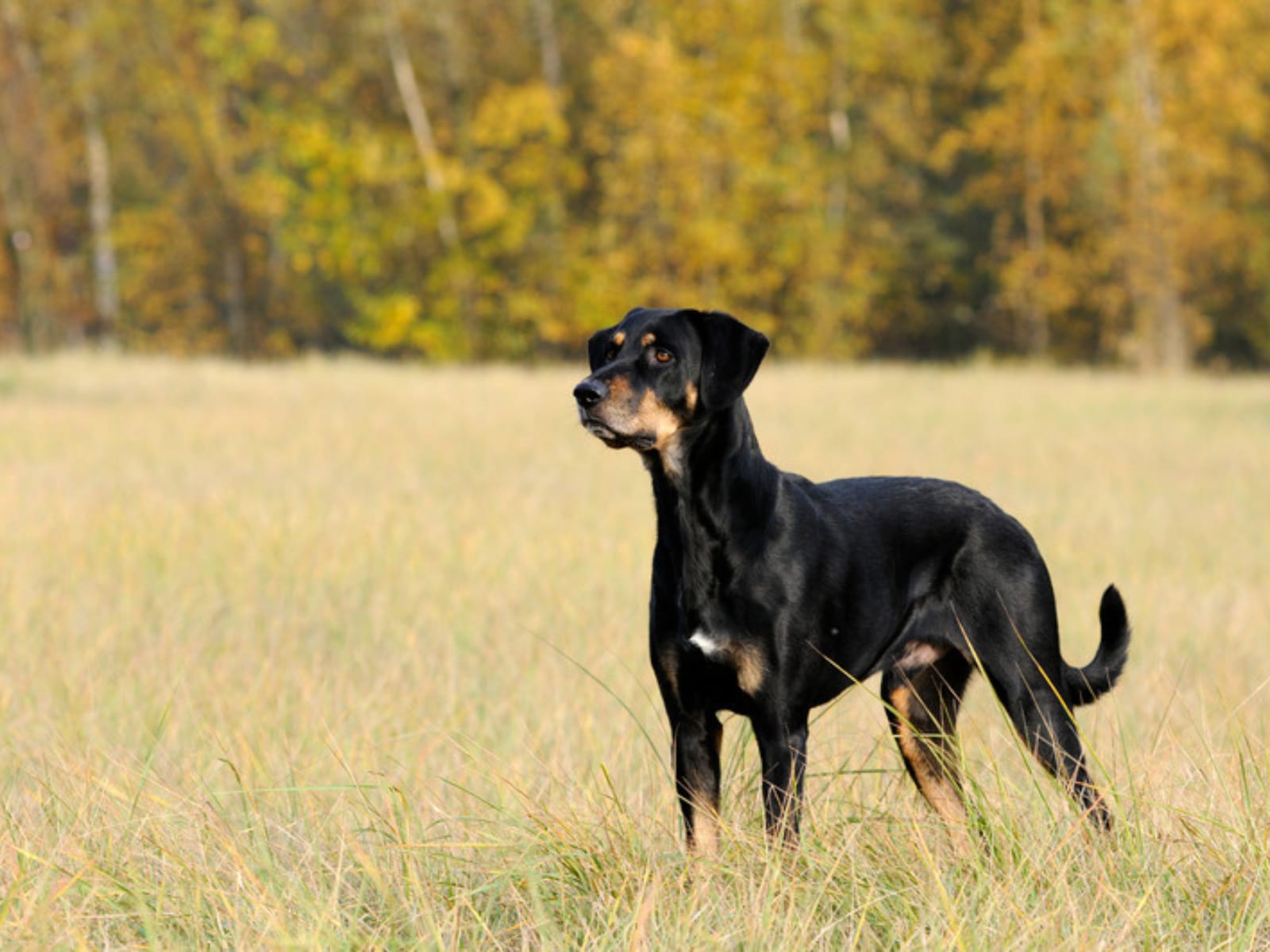
The FCI standard calls the Transylvanian Hound good-natured, courageous and enduring. His basic character is quiet and even, but also determined and lively. He copes with extreme weather. He hunts independently, even far from his handler, alone or in a brace. On a fresh scent he whines; during the chase his bark is resounding and high-pitched.
Origin
He is an ancient Hungarian breed, shaped by climate, terrain and hunting conditions. In the Middle Ages he was the aristocracy’s favourite hunting dog. As farming and forestry developed, he was pushed back into the pathless forests of the Carpathians. Two varieties evolved: a long-legged one for big game, first buffalo and later bear, wild boar and lynx, and a short-legged one for fox, hare and chamois. By the early 20th century the breed was almost extinct. Breeding resumed in 1968. Today there are many long-legged dogs in Hungary and neighbouring Romania; the short-legged variety has disappeared. The FCI places him in group 6, section 1.2, medium-sized hounds, with working trial.
Health
We found no breed page at the Royal Kennel Club and no list of recommended health tests from the FCI. Ask the breeder about the tests done on both parents.
Size
The ideal height at the withers is 55 to 65 cm and the weight at least 25 kg. The standard says overall balance counts for more than the measurement.