FCI 126 · Great Britain

Welsh Springer Spaniel

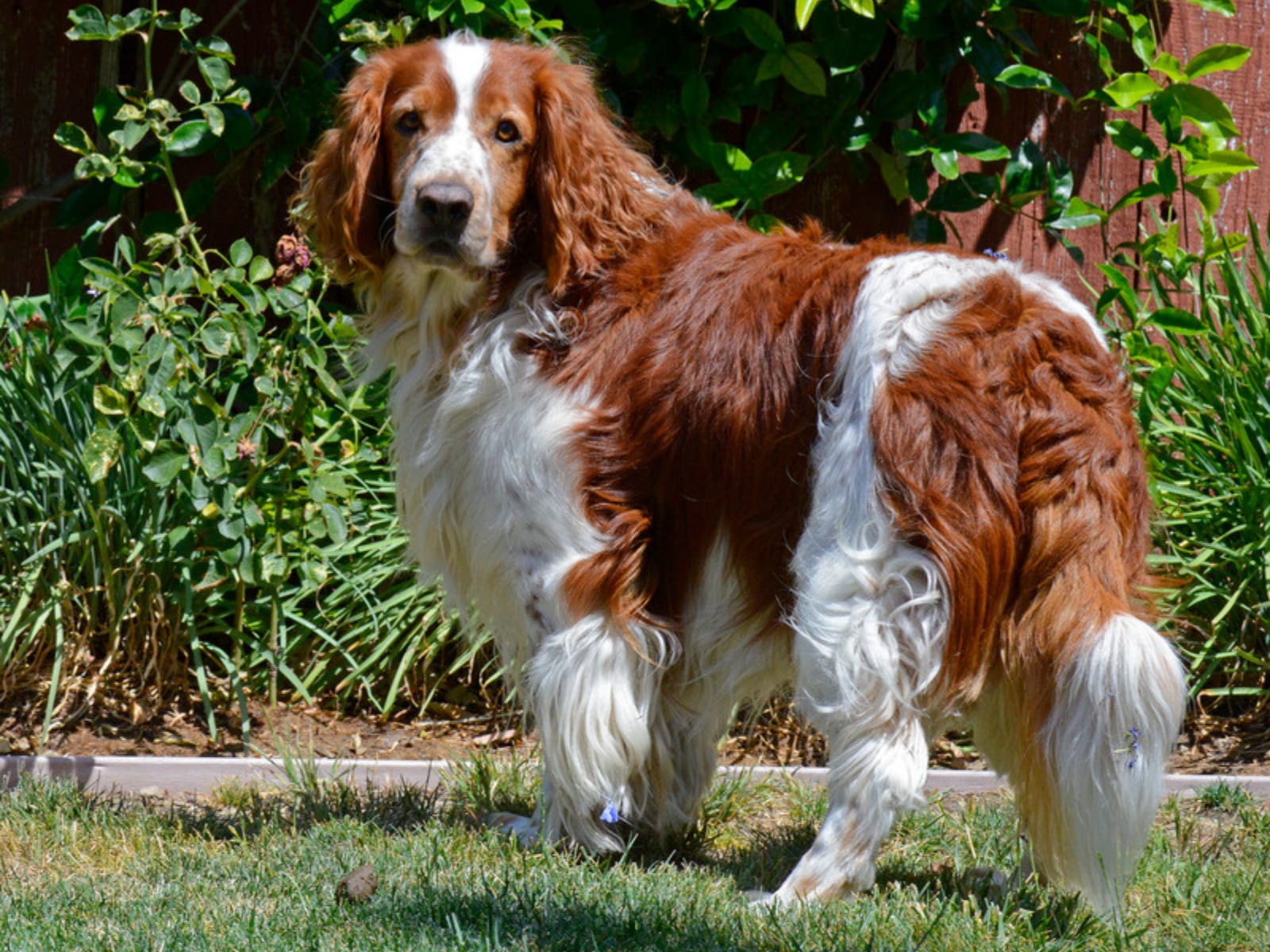
A red and white hunting dog from Wales, already described in medieval Welsh literature. He comes only in this colour.

Red and white Welsh Springer Spaniel in a garden

Breed facts

FCI
no. 126 · group 8, flushing dogs
Origin
Great Britain
Height at withers
male 48 cm · female 46 cm
Size
The standard gives these as approximate heights.
Exercise
more than 2 hours a day (according to the Royal Kennel Club)
Lifespan
over 10 years
Coat
medium length, sheds

The GoPuppy profile

These are breed averages and our own assessment. Your own dog’s age, fitness and training matter more.

  1. WalkingFull-day hikesThe Royal Kennel Club gives more than two hours of exercise a day. Long walks with water along the way suit him.
  2. Dog sportSports partnerA gundog with a working trial. Dummy training, swimming and scent work suit him.Suitsdummy trainingswimmingscent work
  3. Terraces and cafésTerrace after trainingThe standard calls him kindly and never nervous. After a good outing he settles down.
  4. Travel and staysTravels with some planningMedium-sized and easy to take along.
  5. CityNeeds a big gardenThe Royal Kennel Club suggests a small house with a large garden, in town or country.

Character

According to the FCI standard, the Welsh Springer Spaniel is a very ancient and distinct breed of pure origin. He is strong, merry and very active, kindly and never nervous. Aggression is unacceptable.

Origin

According to the Royal Kennel Club, medieval Welsh literature already described the red and white Welsh hunting dog, the likely ancestor of this breed. He comes only in red and white. He was once simply called the Welsh Spaniel, and such a red and white spaniel played a part in establishing the parti-coloured Cocker Spaniel. The Kennel Club recognised the breed in 1902. He is a separate breed from the English Springer Spaniel, which is larger and usually liver and white. The FCI places him in Group 8, section 2, flushing dogs, with a working trial.

Health

The Royal Kennel Club puts genetic diversity first and asks for eye testing with gonioscopy (PLA) and hip testing.

Size

The standard gives approximately 48 cm for males and 46 cm for females.

Health: what a good breeder tests for

  • Prioritising genetic diversity when choosing the parents
  • Eye testing, with gonioscopy (PLA)
  • Hips (X-ray, official result)

Ask for the parents’ results when you visit a litter. This is not medical advice; your vet knows your dog.

Breeders of this breed on GoPuppy

No breeder of this breed on GoPuppy yet.

GoPuppy does not check breeders’ health tests. A listing here is not a seal of approval.

Read also