Temperament
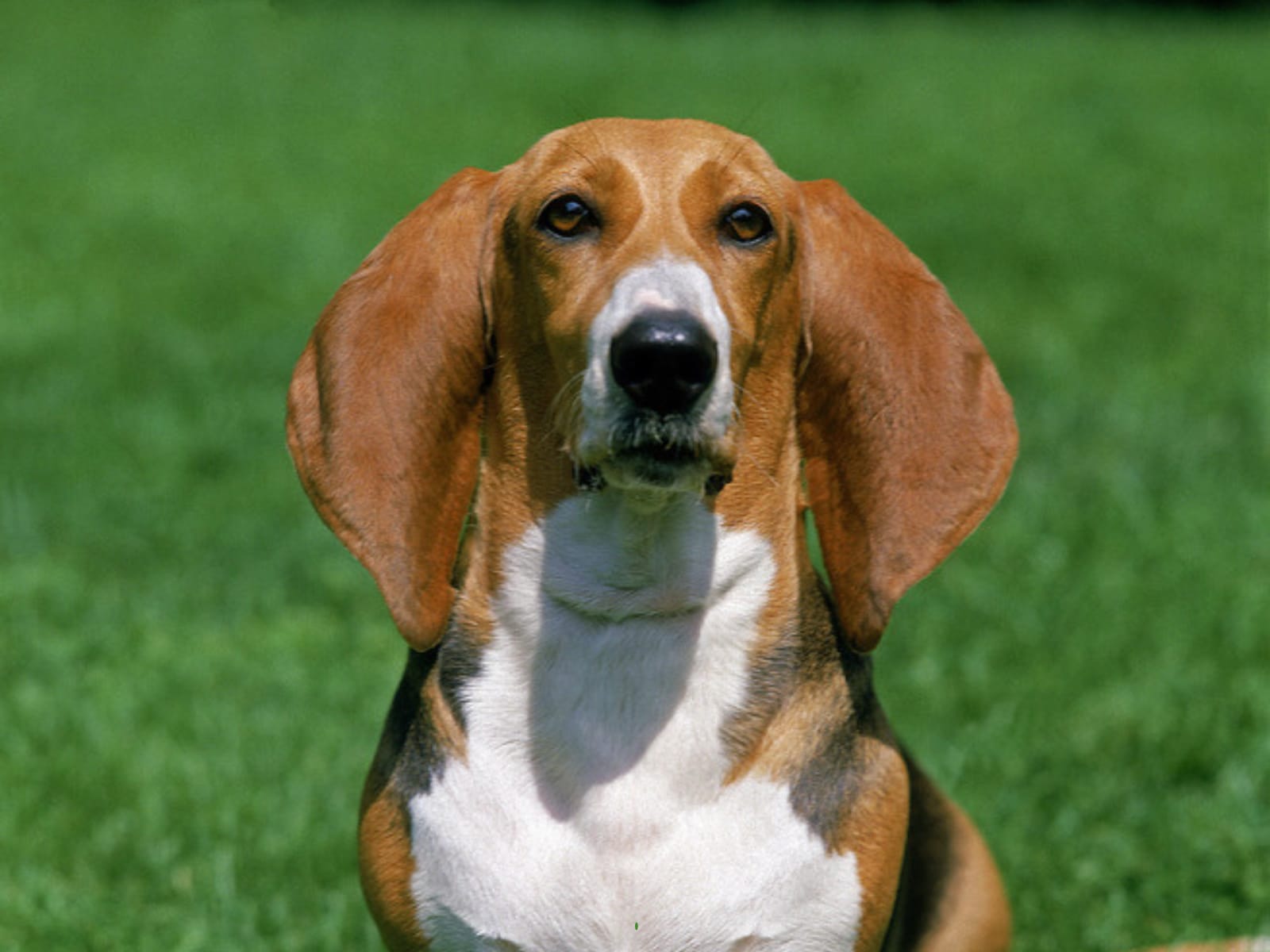
According to the FCI standard, the Basset Artésien Normand has an excellent nose and a melodious voice. He is persistent but not too fast on the line, so his owner can follow the work well. He is outgoing and very affectionate. He hunts alone or in a pack, giving tongue. His short legs take him into the densest cover, where a big dog cannot go. Rabbit is his favourite quarry, but he also hunts hare and deer.
Origin
Controlled breeding of the smooth-coated French basset began around 1870. Count Le Couteulx de Canteleu fixed a practical type with straight front legs, called Artois, while Louis Lane developed a more striking type with crooked front legs, called Normand. The name Basset Artésien Normand was only adopted in 1924. Léon Verrier became club chairman in 1927, at the age of 77, and wanted to strengthen the Norman character. The 1930 book of standards states that the breed should only be a stage of transition towards a Norman type, without any trace of Artois. The Artois Hound is the larger scent hound from that region. The FCI places him in group 6, section 1.3, small-sized hounds, with a working trial.
Health
We found no breed page at the Royal Kennel Club and no list of recommended health tests from the FCI. Ask the breeder about the tests done on both parents.
Size
Dogs and bitches measure 30 to 36 cm and weigh 15 to 20 kg. Exceptional dogs may be 1 cm outside this range.