Character
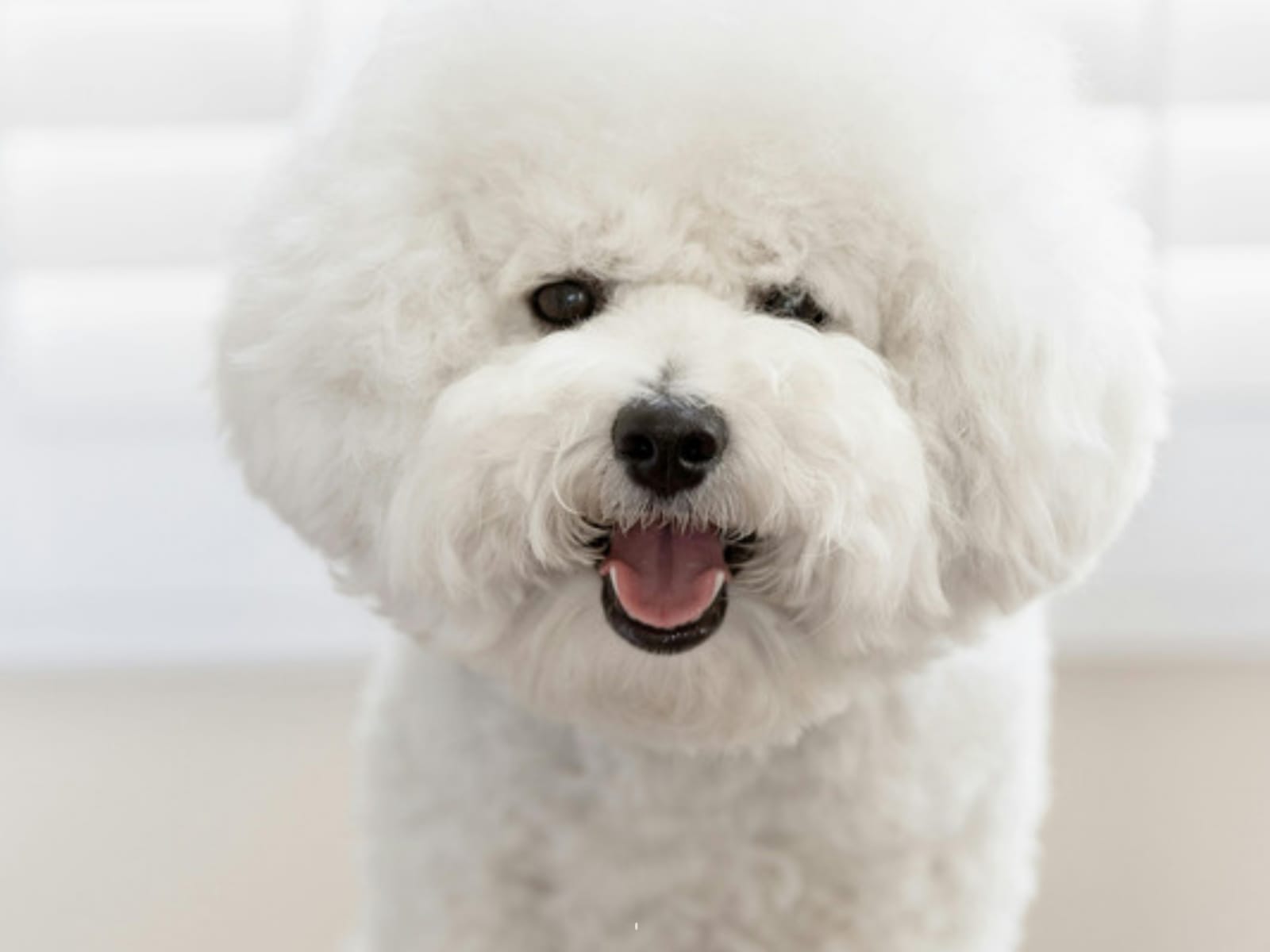
According to the FCI standard, the Bichon Frisé is a true companion dog that can be taken anywhere without trouble. He is not nervous, does not often bark, and is very sociable with people and dogs, even ones he does not know. He adapts easily and is very attached to his owners.
Origin
The Bichon came to France from Italy during the Renaissance. Because he looked like a very small Barbet, he was called ‘barbichon’, later shortened to ‘bichon’. He came back into fashion under Napoleon III, then known as the ‘Ténériffe’. After the two world wars he had almost disappeared; French and Belgian breeders rebuilt the breed. The first dog registered in Belgium was Pitou, born on 23 March 1924 and entered in the Belgian stud book (LOSH) in 1932. In 1978 the breed received its current French name, ‘Bichon à poil frisé’, and was recognised as a Franco-Belgian breed. The FCI places him in Group 9, section 1.
Coat
The Royal Kennel Club lists the Bichon among dogs that do not shed, with a coat that needs daily care. Not shedding is not the same as hypoallergenic; see our page on designer crossbreeds. The Royal Kennel Club recommends eye testing for breeders.
Size
25 to 29 cm; males may be 1 cm taller, females 2 cm shorter. Weight is about 5 kg.