FCI 153 · Croatia

Dalmatian

The spotted coach dog. The FCI names Croatia as the country of origin, with paintings and church chronicles from the 16th to 18th century.

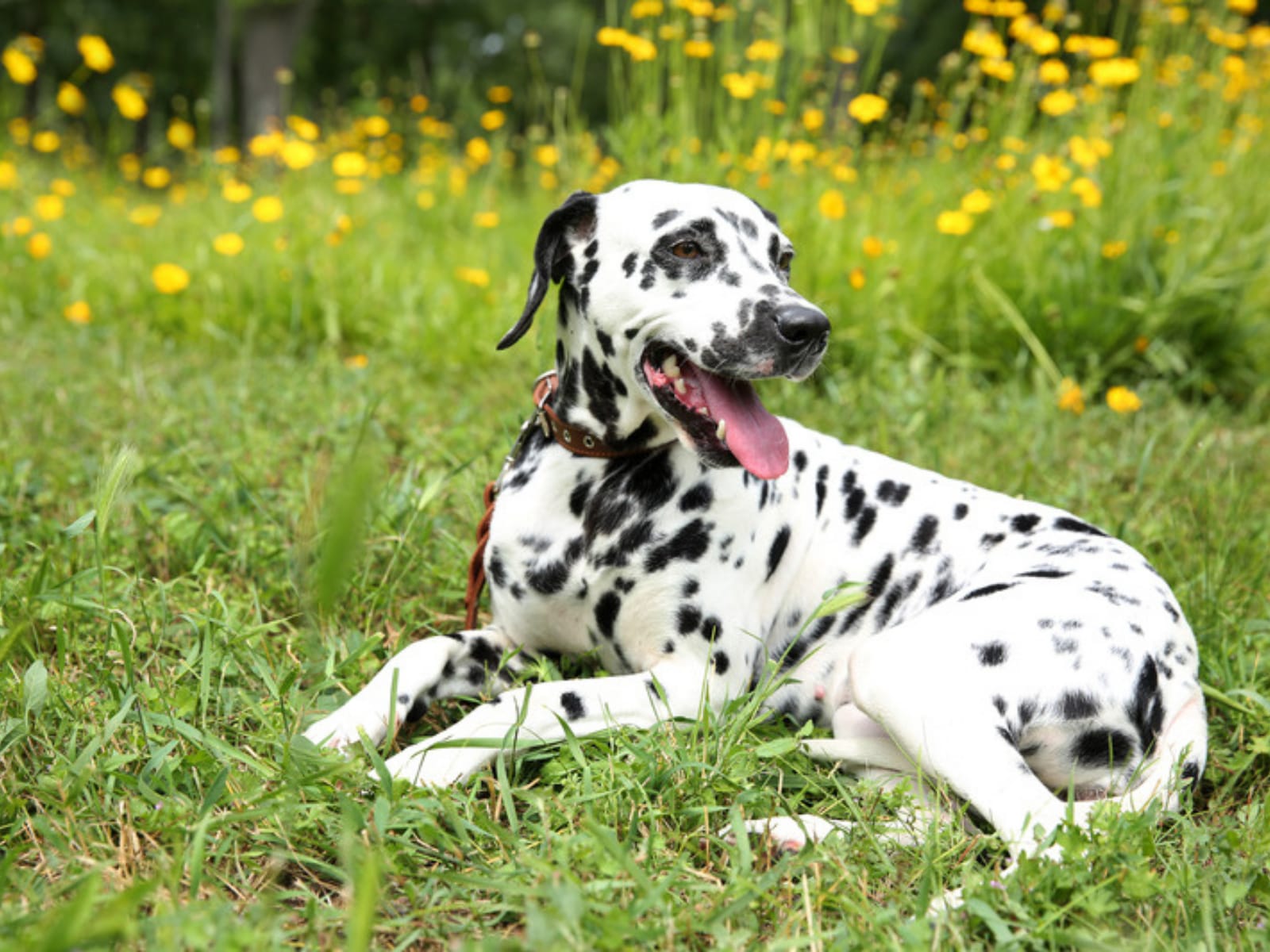
Dalmatian lying in the grass among yellow flowers

Breed facts

FCI
no. 153 · group 6, related breeds
Origin
Croatia
Height at withers
male 56–62 cm · female 54–60 cm
Exercise
more than 2 hours a day (according to the Royal Kennel Club)
Lifespan
over 12 years
Coat
short, sheds

The GoPuppy profile

These are breed averages and our own assessment. Your own dog’s age, fitness and training matter more.

  1. WalkingFull-day hikesThe Royal Kennel Club gives more than two hours of exercise a day. According to the standard he likes water and outdoor activities.
  2. Dog sportSport with a build-upBuilt to trot alongside horse and carriage. Canicross and long runs suit an adult dog.Suitscanicrossagilityscent work
  3. Terraces and cafésTerrace after trainingThe standard calls him friendly, not shy and free from nervousness. After a good walk he settles down.
  4. Travel and staysTravel takes preparationMedium to large. Fits in a roomy car or crate.
  5. CityNeeds a big gardenThe Royal Kennel Club suggests a large house with a large garden, in town or country.

Character

According to the FCI standard, the Dalmatian has a pleasant temperament: friendly, not shy or hesitant, free from nervousness and aggression. He is lively, loyal, independent and easy to train. He likes water and outdoor activities and has a marked hound instinct.

Origin

The FCI places his origin in the eastern Mediterranean, in the historic province of Dalmatia. An altarpiece in Veli Lošinj (1600-1630) and a fresco in Zaostrog already show such dogs, and church chronicles from 1719 and 1737 describe the “Canis Dalmaticus”. The Royal Kennel Club is more cautious about that origin. It describes how, in England, the dog ran alongside carriages, guarded passengers and cargo, and watched the stables at night. He also ran ahead of horse-drawn fire engines to clear the way. The FCI places him in Group 6, section 3, related breeds.

Health

The Royal Kennel Club asks breeders for a DNA test for hyperuricosuria (HUU), a hearing test (BAER) that includes the puppies, hip and elbow testing, and a DNA test for disproportional dwarfism. Ask the breeder for the results of both parents and of the litter.

Size

Males measure 56 to 62 cm, females 54 to 60 cm. According to the standard, a well-balanced dog above that limit is not penalised.

Health: what a good breeder tests for

  • DNA test for hyperuricosuria (HUU)
  • Hearing test (BAER), puppies included
  • Hips (X-ray, official result)
  • Elbows (X-ray, official result)
  • DNA test for disproportional dwarfism (DD-PRKG2)

Ask for the parents’ results when you visit a litter. This is not medical advice; your vet knows your dog.

Breeders of this breed on GoPuppy

No breeder of this breed on GoPuppy yet.

GoPuppy does not check breeders’ health tests. A listing here is not a seal of approval.

Read also