Character
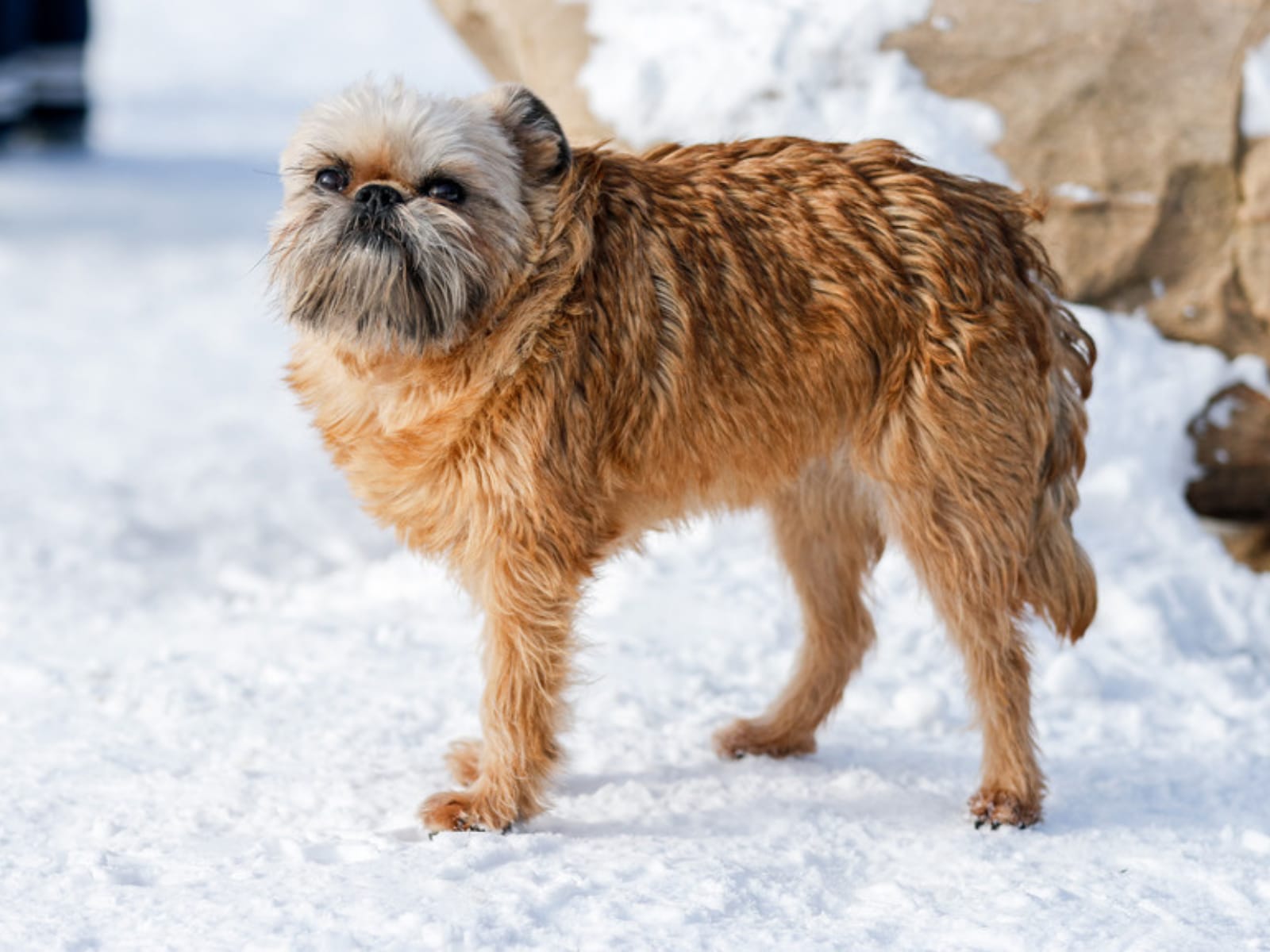
The FCI standard describes the Griffon as a well-balanced little dog, alert and proud, very attached to his owner and very watchful, but neither timid nor aggressive. His head stands out most: large for his body, with a beard, moustache and eyebrows that give him what the standard calls an “almost human expression”.
Origin
The Griffon Bruxellois, the Griffon Belge and the Petit Brabançon all descend from the ‘Smousje’, a small rough-coated dog found for centuries around Brussels. In the 19th century, Ruby King Charles Spaniel and Pug blood was brought in. These alert little dogs guarded carriages and kept the stables free of rodents. In 1883 the first Griffons Bruxellois were entered in the Belgian stud book (LOSH): Topsy and Foxine. By around 1900 they had become very popular, helped by the interest of Queen Marie-Henriette, and many were exported.
Three breeds, one standard
The FCI describes the three small Belgian dogs in a single standard, in Group 9, section 3. The two Griffons are rough-coated and differ in colour: the Griffon Bruxellois is red, the Griffon Belge black or black and tan. The Petit Brabançon has a short, flat coat.
Muzzle and breathing
The standard asks for a very short foreface, with the nose level with the eyes. For this breed the Royal Kennel Club recommends eye testing and a breathing test (BOAS) to breeders; the breathing test will be formally added from January 2027. Ask a breeder for the results of both parents.
Ears and tail
The 2003 standard accepts cropped and uncropped ears, and a docked or natural tail. Uncropped, his small ears are carried semi-erect and fall forward.
Coat and weight
The coat is harsh, slightly wavy, and it is trimmed. The standard gives no height, only a weight of 3.5 to 6 kg.