FCI 190 · Germany

Hovawart

An old German farm dog. The name comes from Middle High German: hova (yard, farm) and wart (guardian).

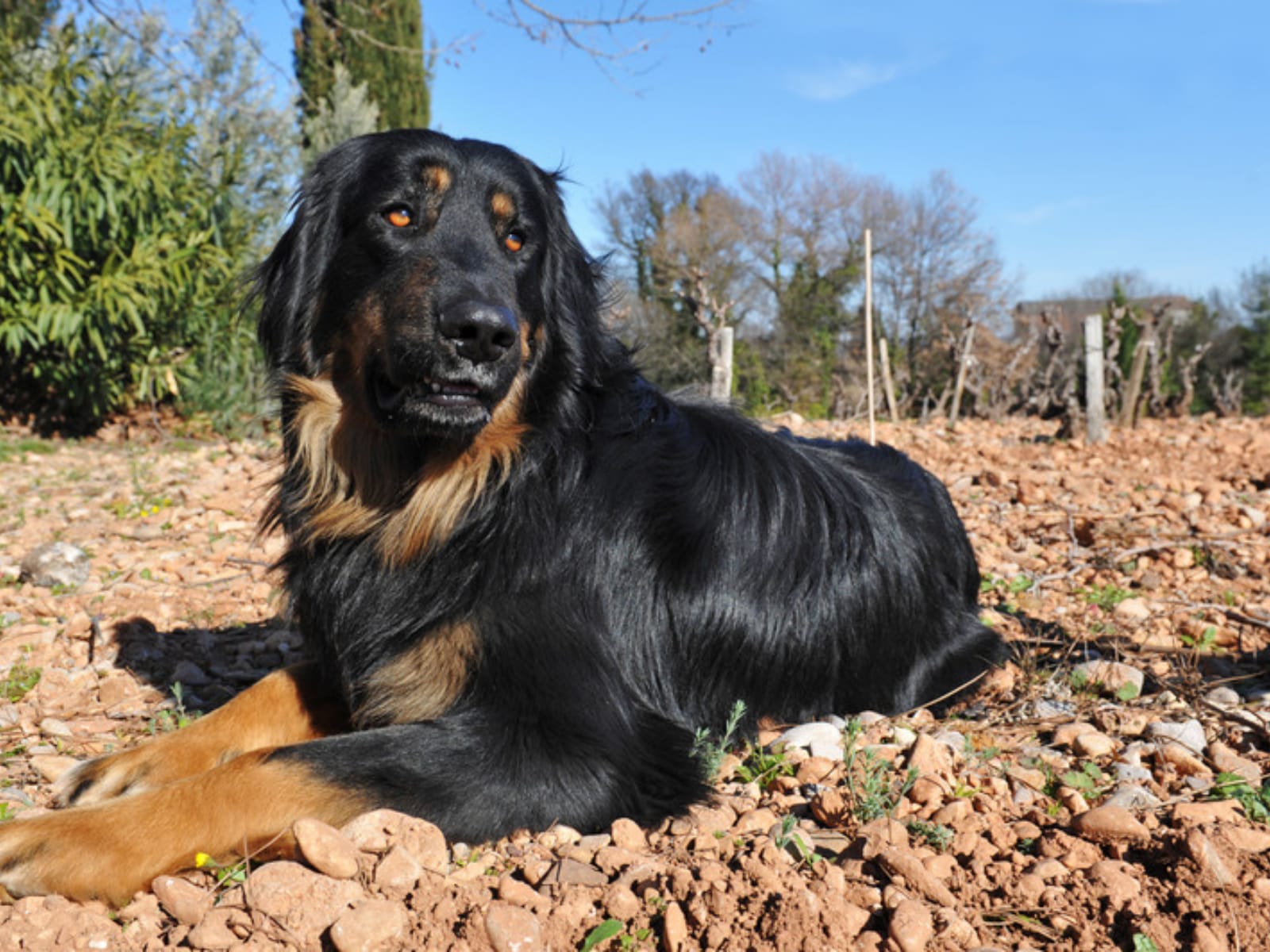
Black and gold Hovawart lying in a stony field

Breed facts

FCI
no. 190 · group 2, molossoid, mountain type
Origin
Germany
Height at withers
male 63–70 cm · female 58–65 cm
Exercise
more than 2 hours a day (according to the Royal Kennel Club)
Lifespan
over 10 years
Coat
medium length, sheds

The GoPuppy profile

These are breed averages and our own assessment. Your own dog’s age, fitness and training matter more.

  1. WalkingFull-day hikesThe Royal Kennel Club gives more than two hours of exercise a day. Long walks in all weathers suit him.
  2. Dog sportSport with a build-upThe standard calls him a versatile working dog with a very good nose. Mantrailing, scent work and IGP suit him.Suitsmantrailingscent workIGPobedience
  3. Terraces and cafésTerrace after trainingThe standard calls him good-natured and even, with a medium temperament. He stays watchful.
  4. Travel and staysTravel takes preparationLarge. Fits in a roomy car or crate.
  5. CityNeeds a big gardenThe Royal Kennel Club suggests a large house with a large garden, in town or country.

Character

According to the FCI standard, the Hovawart is a recognised working dog for versatile use. He is good-natured and even, with protectiveness, self-confidence and the ability to take stress. He has a medium temperament and a very good nose. His devotion to his family makes him an outstanding companion, watch, guard, rescue and tracking dog.

Origin

The Hovawart is an old German working dog. From 1922 he was rebuilt from dogs of similar type still found on farms, with outcrosses to German Shepherd Dogs, Newfoundlands and Leonbergers among others. He was recognised as a breed in 1937 and as a working dog in 1964. The FCI places him in Group 2, section 2.2, molossoid breeds of mountain type, with a working trial.

Health

According to the standard, breeders have selected for freedom from hip dysplasia since the 1960s, and the condition has almost disappeared. The Royal Kennel Club puts genetic diversity first and asks for hip testing.

Size

Males measure 63 to 70 cm, females 58 to 65 cm.

Health: what a good breeder tests for

  • Prioritising genetic diversity when choosing the parents
  • Hips (X-ray, official result)

Ask for the parents’ results when you visit a litter. This is not medical advice; your vet knows your dog.

Breeders of this breed on GoPuppy

No breeder of this breed on GoPuppy yet.

GoPuppy does not check breeders’ health tests. A listing here is not a seal of approval.

Read also