Designer crossbreed · Labrador Retriever × Poodle (Standard or Medium)

Labradoodle

A cross between a Labrador Retriever and a Standard or Medium Poodle. There is no breed standard, so size, coat and character depend on the parents and vary even within one litter.

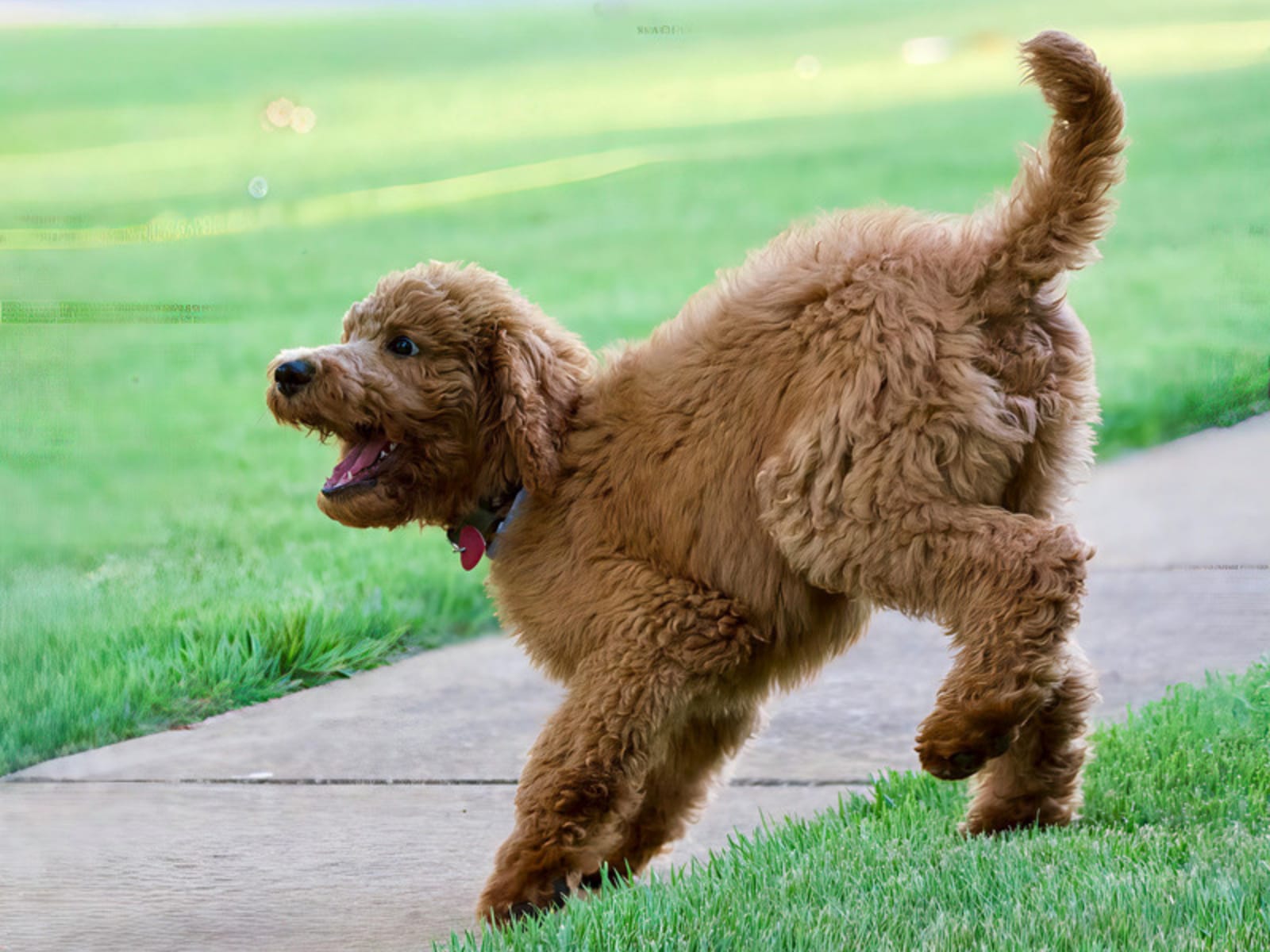
Labradoodle bounding across the grass

Breed facts

Parents
Labrador Retriever × Poodle (Standard or Medium)
Breed standard
none: a crossbreed has no FCI standard and no pedigree
Size
Depends on the parents: a Labrador measures 54 to 57 cm, a Standard Poodle 45 to 60 cm.

The GoPuppy profile

These are breed averages and our own assessment. Your own dog’s age, fitness and training matter more. A crossbreed inherits from both parents. That is why we show the range between the two parent breeds; your own dog can take after either side.

  1. WalkingLong walks – Full-day hikesBoth parents are active dogs: according to the Royal Kennel Club the Labrador needs more than two hours of exercise a day, the Standard Poodle up to an hour. Expect a dog that likes long walks.
  2. Dog sportSport with a build-upDummy training, swimming and scent work suit two parents bred to work in and around water.Suitsdummy trainingswimmingscent workagility
  3. Terraces and cafésTerrace with some practiceMedium to large, and he usually seeks contact. After a walk he settles more easily under the table.
  4. Travel and staysTravels with some planningHis size matters for the crate and the accommodation. A curly coat holds on to mud and sand.
  5. CityBetter with a gardenFor both parents the Royal Kennel Club assumes a large house. A city works, with a long walk every day.

A crossbreed, not a breed

The FCI does not recognise the Labradoodle. No standard sets his size, coat or character, and two puppies from the same litter can look very different. A Labrador measures 54 to 57 cm, a Standard Poodle 45 to 60 cm, and the Labradoodle falls somewhere in between. The GoPuppy profile above therefore gives a range.

Not hypoallergenic

Labradoodles are often sold as dogs for people with allergies. A study at Utrecht University (Vredegoor et al., 2012) measured the main dog allergen, Can f 1, in the coats of 196 ‘hypoallergenic’ dogs and 160 other dogs. The coats of the ‘hypoallergenic’ group actually contained more allergen. For Labradoodles the amount in floor dust was somewhat lower, but in the air there was no difference. The researchers found no evidence for calling certain breeds hypoallergenic. If you are allergic, test that with the dog itself first.

Health of both parents

A crossbreed can inherit the conditions of both breeds. Ask a breeder for the results of the Labrador parent (hips, elbows, eyes, DNA tests including EIC and prcd-PRA) and of the poodle parent (DNA tests for prcd-PRA, PRA rcd4 and vWD1, eyes and hips). Crossbreeds fall outside the pedigree organisations, so nobody else checks whether those tests were done. Our article on puppy farming and the checklist for visiting a breeder help you ask the right questions.

Health: what a good breeder tests for

  • Labrador parent: hips, elbows, eyes and DNA tests (including EIC and prcd-PRA)
  • Poodle parent: DNA tests for prcd-PRA, PRA rcd4 and vWD1, eyes and hips

Ask for the parents’ results when you visit a litter. This is not medical advice; your vet knows your dog.

Breeders of this breed on GoPuppy

No breeder of this breed on GoPuppy yet.

GoPuppy does not check breeders’ health tests. A listing here is not a seal of approval.

Read also