Temperament
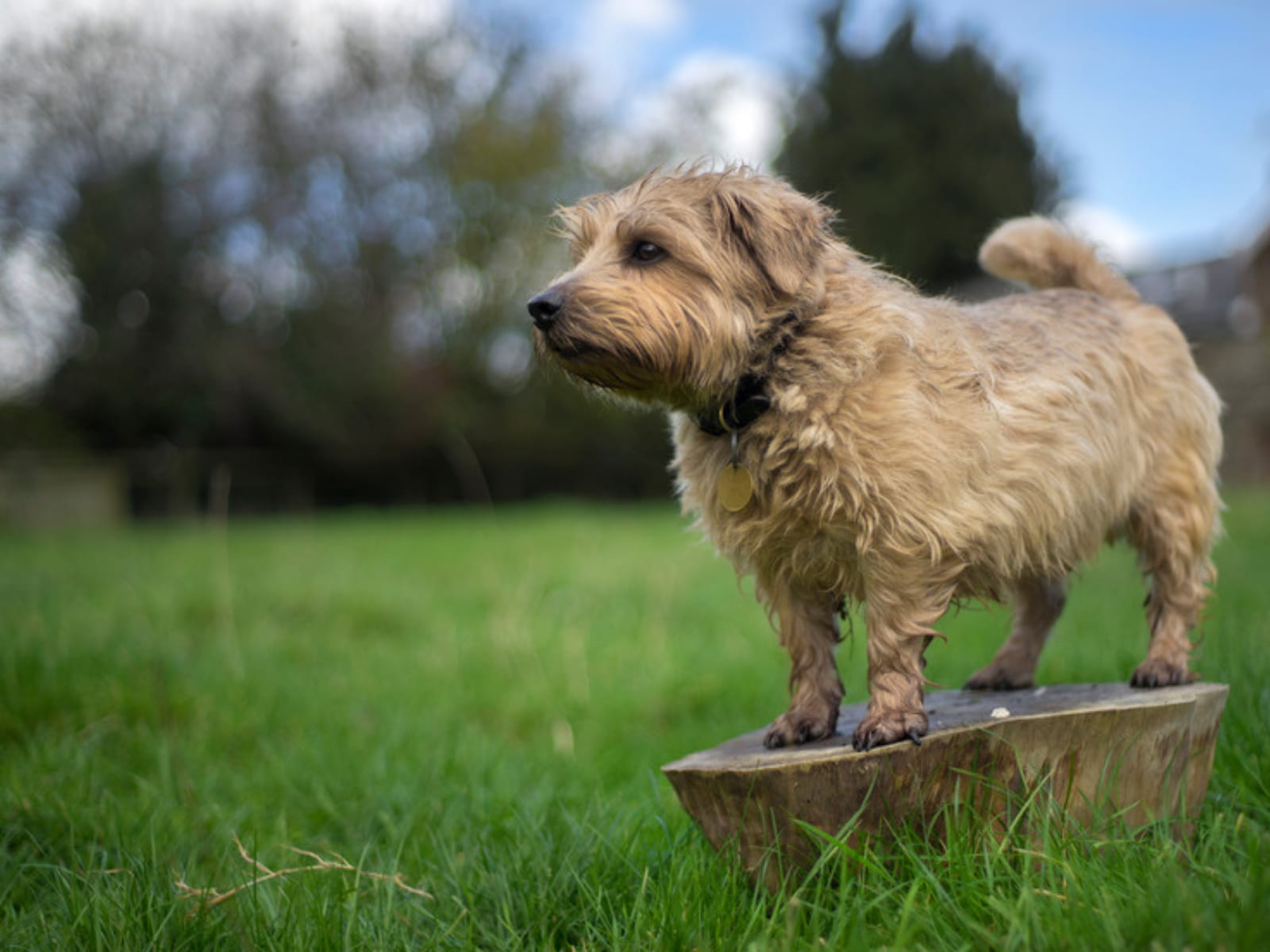
The FCI standard calls the Norfolk Terrier a demon for his size: lovable by nature, not quarrelsome, hardy, alert and fearless.
How it differs from the Norwich Terrier
The Norfolk and the Norwich Terrier look very much alike. The clearest difference is the ears: the Norfolk has V-shaped ears that drop forward close to the cheek. The Norwich has erect, pointed ears. According to the Royal Kennel Club both types were shown as the Norwich Terrier until 1964. In 1957 breeders decided to treat them as separate breeds, and in 1964 the drop-eared type was named the Norfolk Terrier.
Origin
Both breeds take their names from the county of Norfolk and the city of Norwich in East Anglia. According to the standard there was no distinction in the early 19th century: this was simply a farm dog. Glen of Imaal Terriers, red Cairn Terriers and Dandie Dinmonts are among the breeds behind it. He worked on fox, badger and rats. The FCI places him in Group 3, Section 2, small-sized terriers.
Health
We found no list of recommended health tests for this breed at the Royal Kennel Club. Ask the breeder about the tests done on both parents.
Size
The ideal height at the withers is 25 cm.