FCI 207 · China

Pekingese

A small, surprisingly heavy dog from the imperial palace in Peking. The standard calls him fearless, loyal and aloof.

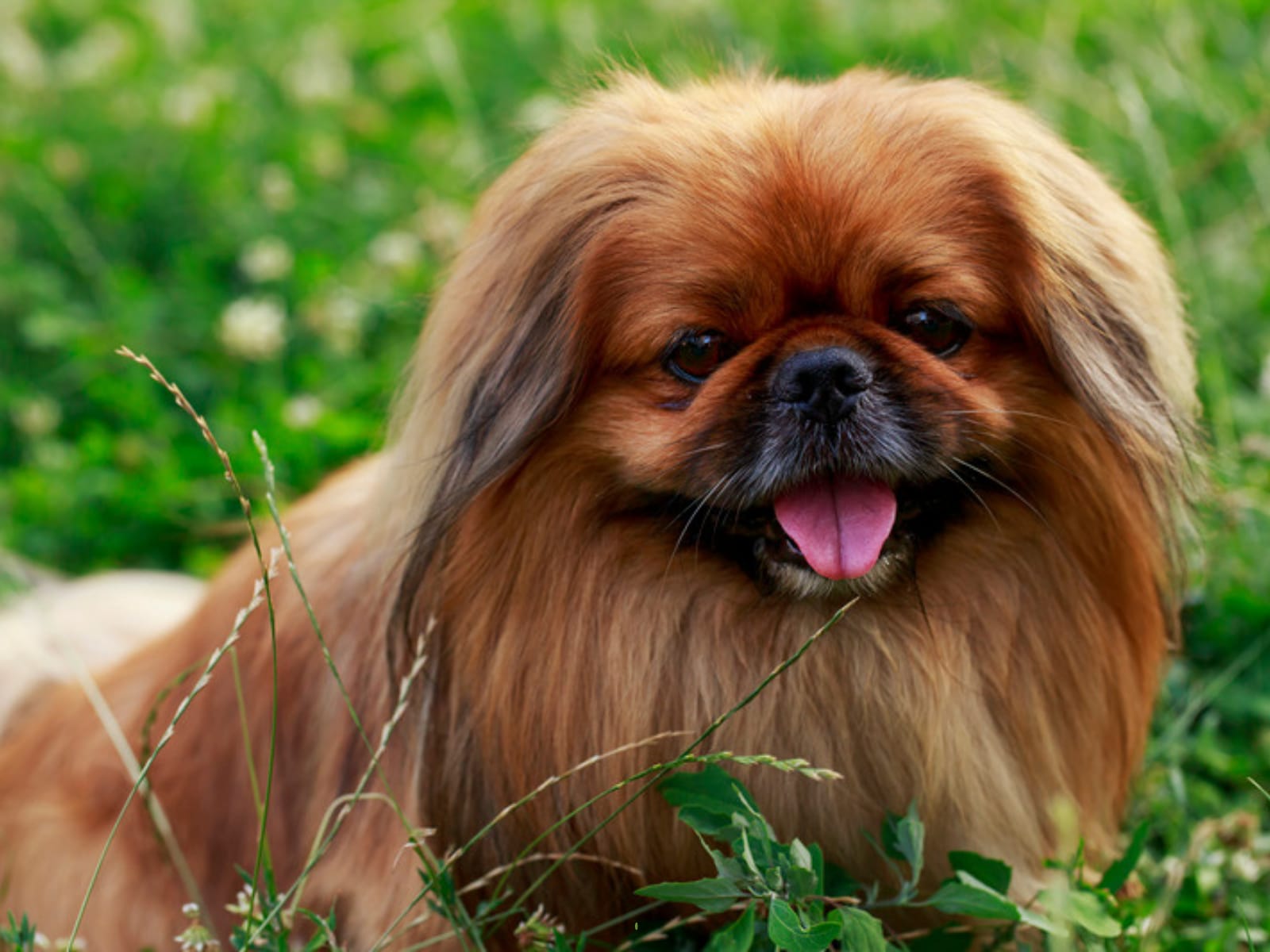
Red Pekingese in the grass

Breed facts

FCI
no. 207 · group 9, Japanese Chin and Pekingese
Origin
China
Size
Ideal weight is no more than 5 kg for males and 5.4 kg for females. According to the standard he looks small but is surprisingly heavy when picked up.
Exercise
up to 30 minutes a day (according to the Royal Kennel Club)
Lifespan
over 12 years
Coat
long, sheds

The GoPuppy profile

These are breed averages and our own assessment. Your own dog’s age, fitness and training matter more.

  1. WalkingShort loopsThe Royal Kennel Club gives up to thirty minutes of exercise a day. Short, gentle walks, in warm weather during the cool hours.
  2. Dog sportNot a sports dogWith his short muzzle and long coat, avoid exertion. Calm scent work is fine.Suitsscent work
  3. Terraces and cafésTerrace with some practiceThe standard calls him fearless, loyal and aloof, neither timid nor aggressive.
  4. Travel and staysTravel takes preparationSmall, but flat-faced: in a hot car and on a plane his muzzle matters.
  5. CityCity dogThe Royal Kennel Club says a flat is enough, in town or country.

Character

According to the FCI standard, the Pekingese is fearless, loyal and aloof, neither timid nor aggressive.

Origin

According to the Royal Kennel Club, the breed goes back to the Tang dynasty in China, where short-legged, short-faced dogs of this type existed as early as the 8th century. He was a favourite in the imperial palace in Peking; commoners were not allowed to own one. When the British ransacked Peking in 1860, four dogs were brought back to Britain. The Kennel Club accepted them for registration in 1910. The FCI gives China as the country of origin and places him in Group 9, section 8, Japanese Chin and Pekingese.

Muzzle and health

The Royal Kennel Club puts genetic diversity first and lists eye testing and a breathing test (BOAS) for breeders. Keep exertion low in warm weather. The long coat needs daily care.

Weight

The ideal weight is no more than 5 kg for males and 5.4 kg for females. According to the standard he looks small but is surprisingly heavy when picked up.

Health: what a good breeder tests for

  • Prioritising genetic diversity when choosing the parents
  • Eye testing
  • Breathing test for BOAS (Respiratory Function Grading)

Ask for the parents’ results when you visit a litter. This is not medical advice; your vet knows your dog.

Breeders of this breed on GoPuppy

No breeder of this breed on GoPuppy yet.

GoPuppy does not check breeders’ health tests. A listing here is not a seal of approval.

Read also