FCI 83 · Belgium

Schipperke

A small black Belgian shepherd. 'Schipperke' means 'little shepherd' in Flemish dialect, and around 1690 he was the favourite dog of the cobblers in the Saint-Géry quarter of Brussels.

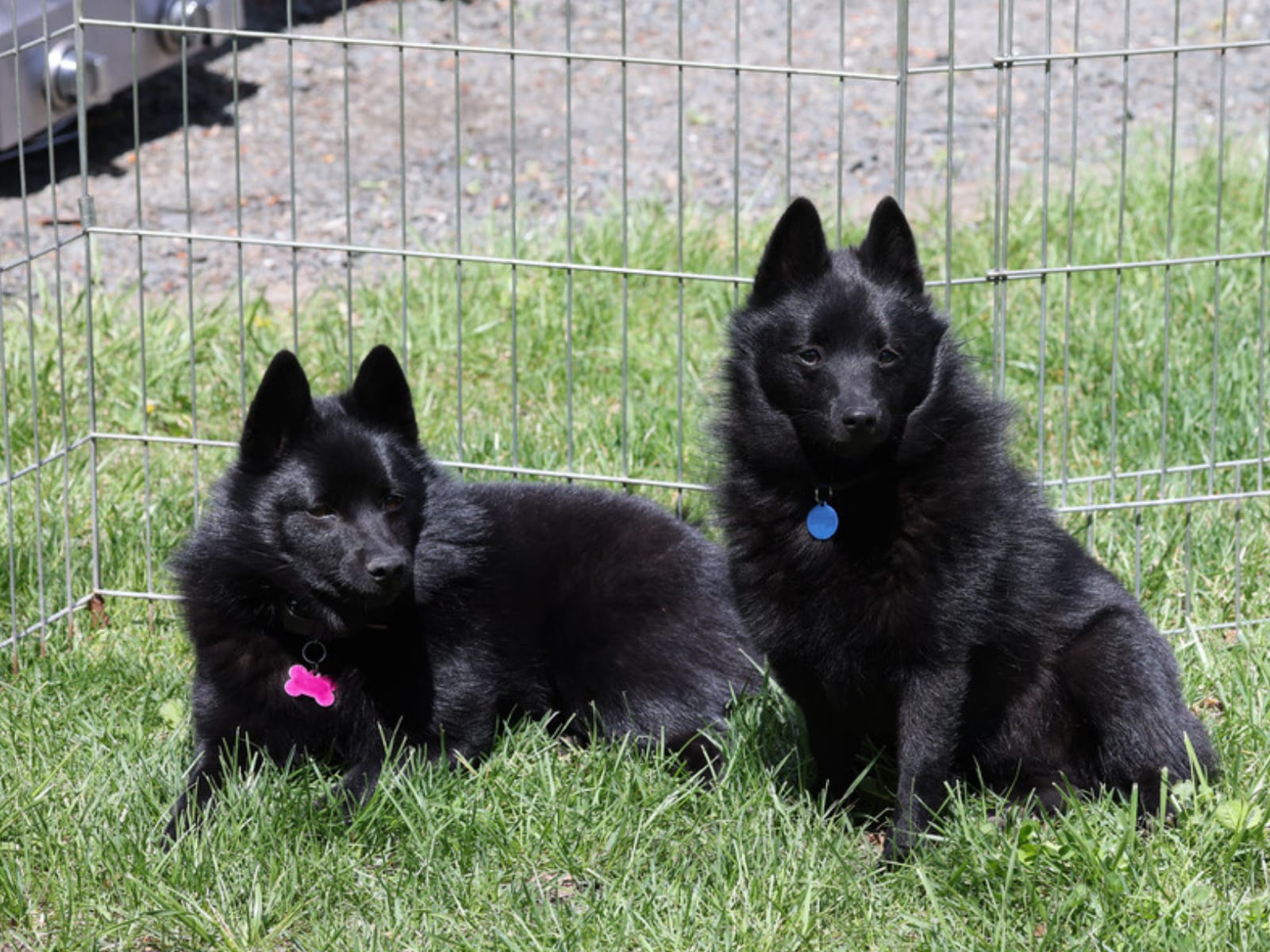
Two Schipperkes in the grass

Breed facts

FCI
no. 83 · group 1, sheepdogs
Origin
Belgium
Size
The standard only gives a weight: 3 to 9 kg, preferably 4 to 7 kg.
Weight
3–9 kg
Exercise
up to 1 hour a day (according to the Royal Kennel Club)
Lifespan
over 12 years
Coat
medium length, sheds

The GoPuppy profile

These are breed averages and our own assessment. Your own dog’s age, fitness and training matter more.

  1. WalkingLong walksThe Royal Kennel Club gives up to an hour of exercise a day, but the standard calls him 'tireless'. A healthy Schipperke manages long walks with ease.
  2. Dog sportSport with a build-upAgility, scent work and hoopers fit a dog that is 'active and busy, agile'.Suitsagilityscent workhoopers
  3. Terraces and cafésTerrace after trainingThe standard calls him an excellent small guard dog with a high-pitched bark, aloof with strangers. A busy terrace takes practice.
  4. Travel and staysTravels easilySmall, light and easy to take along.
  5. CityTown or villageThe Royal Kennel Club says a flat is enough. Bear his watchfulness in mind: he will let you know who walks past the door.

Character

The FCI standard describes the Schipperke as “an excellent small guard dog, an exceptional alarm, bubbling with vitality, aloof with strangers”. He always wants to know what is happening behind a closed door, guards what is entrusted to him, and according to the standard is “very gentle with children”.

Origin

The common ancestor of the Belgian Shepherds and the Schipperke was probably the Leuvenaar, a small, usually black sheepdog. Around 1690, workers and cobblers from the Saint-Géry quarter in Brussels held competitions with their Schipperkes, which wore ornate brass collars. He was known as a catcher of mice, rats and moles. He was first shown in 1882, in Spa, and Queen Marie-Henriette made him popular. The breed club of 1888 is the oldest breed club in Belgium. The FCI places him in Group 1, section 1.

Tail

The tail used to be docked completely. The current standard assumes a natural tail; some puppies are born without a tail or with a short one, and this is not penalised. The Royal Kennel Club recommends a DNA test for this (T-box), alongside a test for MPS IIIB.

Weight

The standard gives no height, only a weight of 3 to 9 kg, preferably 4 to 7 kg.
Health: what a good breeder tests for

  • DNA test for MPS IIIB (mucopolysaccharidosis)
  • DNA test for T-box (natural bob tail)

Ask for the parents’ results when you visit a litter. This is not medical advice; your vet knows your dog.

Breeders of this breed on GoPuppy

No breeder of this breed on GoPuppy yet.

GoPuppy does not check breeders’ health tests. A listing here is not a seal of approval.

Read also