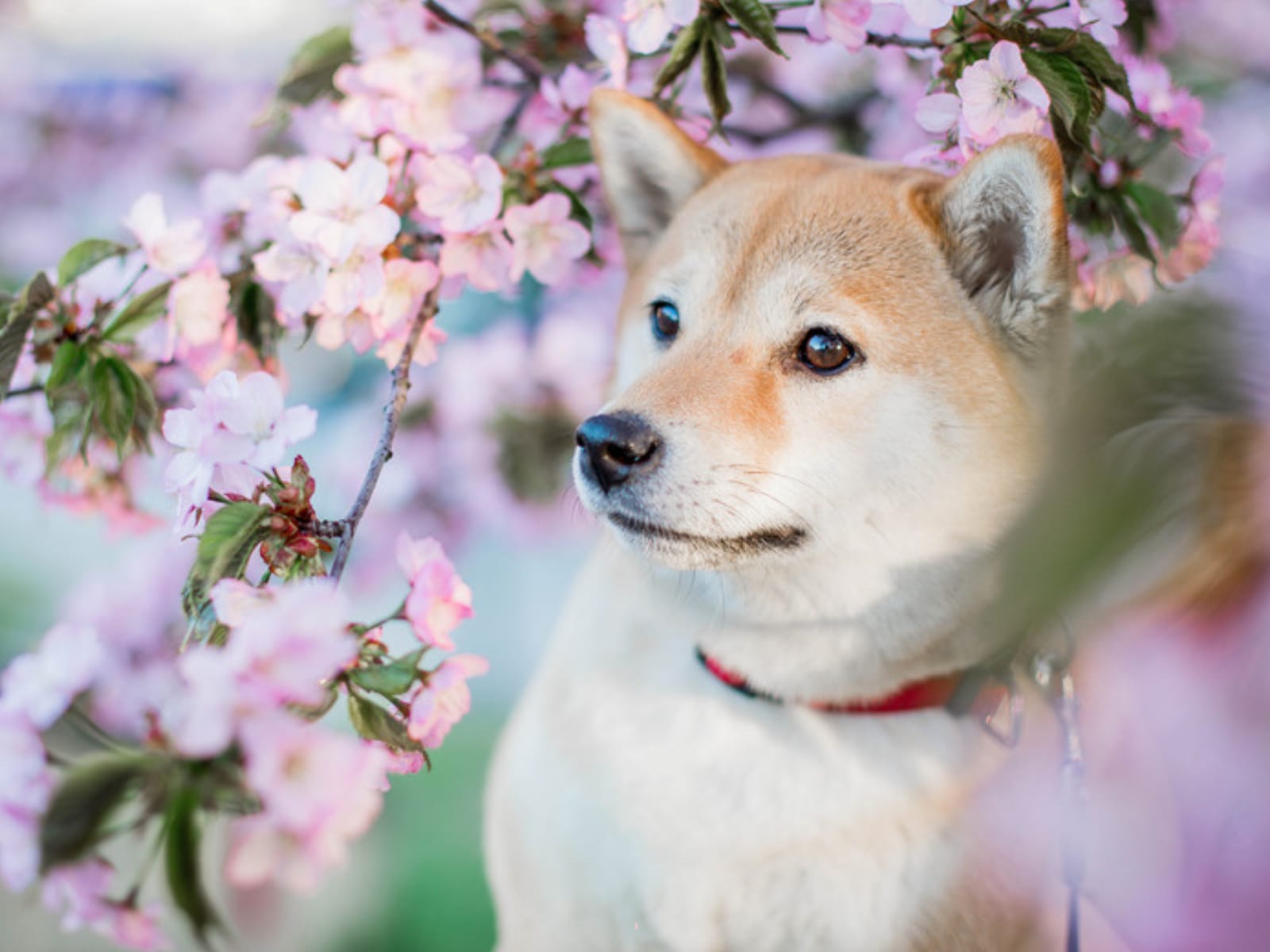
FCI 257 · Japan

Shiba Inu

A small Japanese spitz, originally used to hunt small game and birds in the mountains along the Sea of Japan. Since 1937 he has been listed in Japan as a 'natural monument'.

Shiba Inu under flowering cherry branches

Breed facts

FCI
no. 257 · group 5, Asian spitz
Origin
Japan
Height at withers
male 38–41 cm · female 35–38 cm
Exercise
up to 1 hour a day (according to the Royal Kennel Club)
Lifespan
over 10 years
Coat
short, sheds

The GoPuppy profile

These are breed averages and our own assessment. Your own dog’s age, fitness and training matter more.

  1. WalkingOne to two hoursThe Royal Kennel Club gives up to an hour of exercise a day. One to two hours of walking suits a healthy Shiba, on a long line outside fenced areas: he was bred as a hunting dog.
  2. Dog sportScent work and one sportScent work builds on his hunting past. Canicross is possible once he is fully grown. The standard has no working trial.Suitsscent workcanicross
  3. Terraces and cafésTerrace after trainingThe standard calls him faithful, with keenness in sense and high alertness. On a busy terrace he notices everything; practise somewhere quiet first.
  4. Travel and staysTravels with some planningSmall and easy to take in the car. For a holiday home, pick one with a well-fenced garden.
  5. CityTown or villageThe Royal Kennel Club says a small house with a small to medium garden is enough, in town or country.

Character

The FCI standard describes his temperament as “faithful, with keenness in sense and high alertness”. A Shiba notices a lot and reacts quickly. Keep training sessions brief and repeat them often.

Origin

According to the standard, the Shiba has been a native Japanese breed since ancient times. The word ‘shiba’ refers to something small. Between 1868 and 1912 English setters and pointers were brought to Japan and crossbreeding became common, so pure Shibas grew scarce. From 1928 hunters and enthusiasts worked to preserve the breed; the standard was unified in 1934, and in 1937 the Shiba was declared a ‘natural monument’. The FCI places him in Group 5, spitz and primitive types.

Size

The ideal height at the withers is 39.5 cm for males and 36.5 cm for females, with 1.5 cm allowed either way.

Health: what a good breeder tests for

  • Eye examination, including gonioscopy
  • Hips (X-ray, official result)
  • DNA tests for gangliosidosis GM1 and GM2

Ask for the parents’ results when you visit a litter. This is not medical advice; your vet knows your dog.

Breeders of this breed on GoPuppy

No breeder of this breed on GoPuppy yet.

GoPuppy does not check breeders’ health tests. A listing here is not a seal of approval.

Read also