FCI 14 · Sweden

Swedish Vallhund

A low-set Swedish cattle dog, rediscovered around Vara in the 1940s.

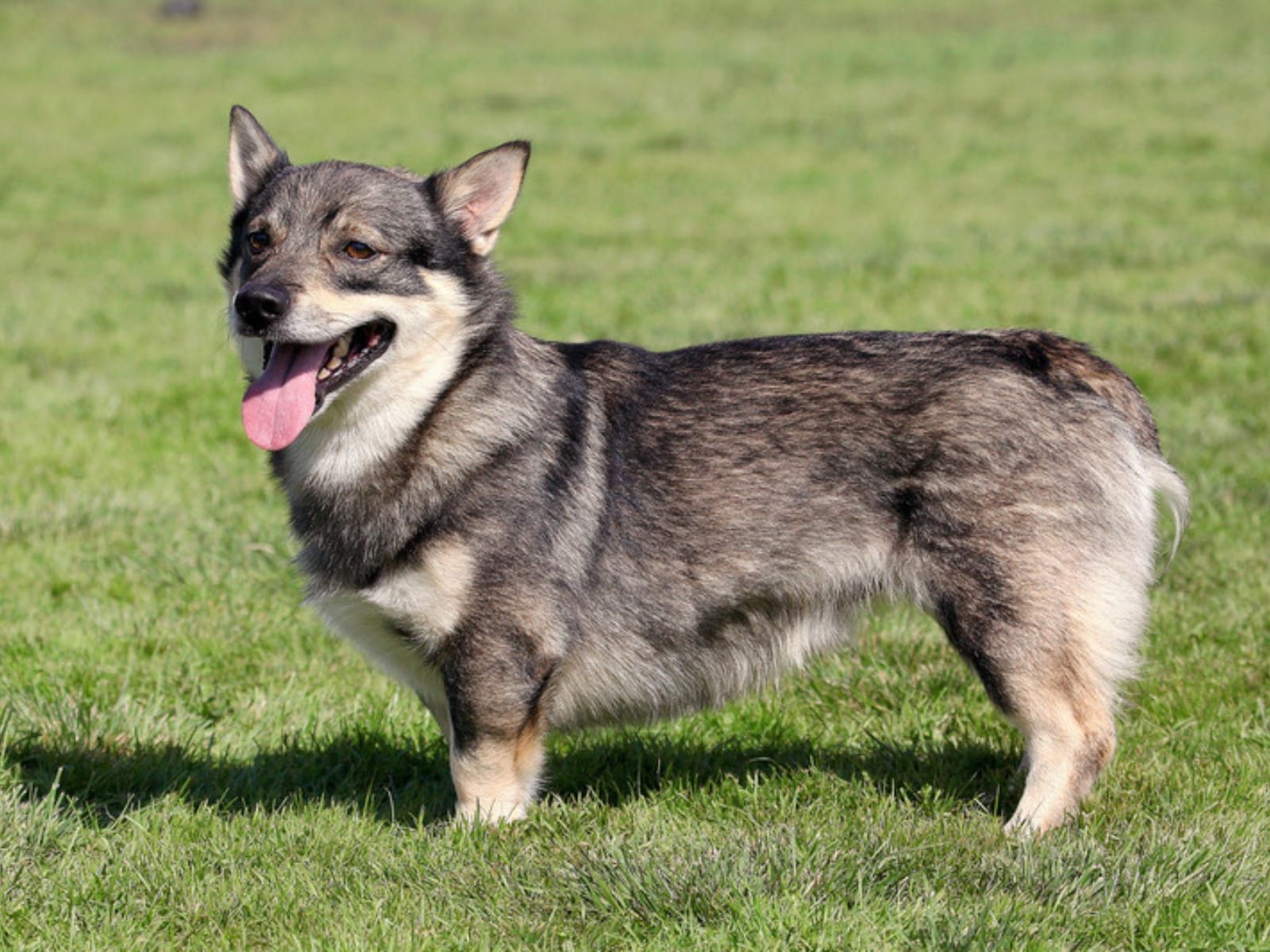
Grey Swedish Vallhund standing on a lawn

Breed facts

FCI
no. 14 · group 5, Nordic watchdogs and herders
Origin
Sweden
Height at withers
male 32–35 cm · female 30–33 cm
Size
The standard gives 33 cm as ideal for dogs and 31 cm for bitches, with a tolerance of 2 cm above and 1 cm below. It gives no weight.
Exercise
up to 1 hour a day (according to the Royal Kennel Club)
Lifespan
over 10 years
Coat
short, sheds

The GoPuppy profile

These are breed averages and our own assessment. Your own dog’s age, fitness and training matter more.

  1. WalkingLong walksThe Royal Kennel Club gives up to an hour of exercise a day.
  2. Dog sportSport with a build-upBred to drive cattle; agility and hoopers suit him as well.Suitsherdingagilityhoopers
  3. Terraces and cafésTerrace after trainingThe standard calls him watchful, energetic, fearless and alert.
  4. Travel and staysTravels easilySmall and sturdy, he fits in any car.
  5. CityBetter with a gardenThe RKC suggests a small house with a small to medium garden, in town or country.

Temperament

The FCI standard describes the vallhund as watchful, energetic, fearless and alert. Small, low on the legs and sturdy, he worked as a heeler, driving cattle by nipping at their heels.

Origin

Swedes regard him as a native breed, although his link with the Pembroke Welsh Corgi remains unclear. Nobody knows whether the Vikings took corgi-type dogs to Sweden or the other way round. In the early 1940s, Count Björn von Rosen heard that the old type still existed. In the county of Västergötland, mainly on the plains around Vara, he found a small group of similar dogs, and he started breeding with headmaster Zettersten. The tail is long or naturally short; the standard accepts both. The FCI places him in group 5, section 3, Nordic watchdogs and herders.

Health

The Royal Kennel Club prioritises genetic diversity and lists a DNA test for retinopathy, eye testing and a hip X-ray.

Size

The standard gives 33 cm as ideal for dogs and 31 cm for bitches, with a tolerance of 2 cm above and 1 cm below. It gives no weight.

Health: what a good breeder tests for

  • Prioritising genetic diversity when choosing the parents
  • DNA test for retinopathy
  • Eye testing
  • Hips (X-ray, official result)

Ask for the parents’ results when you visit a litter. This is not medical advice; your vet knows your dog.

Breeders of this breed on GoPuppy

No breeder of this breed on GoPuppy yet.

GoPuppy does not check breeders’ health tests. A listing here is not a seal of approval.

Read also