FCI 78 · Great Britain

Welsh Terrier

A black and tan working terrier from Wales, once called the Welsh Black and Tan Rough Coated Terrier.

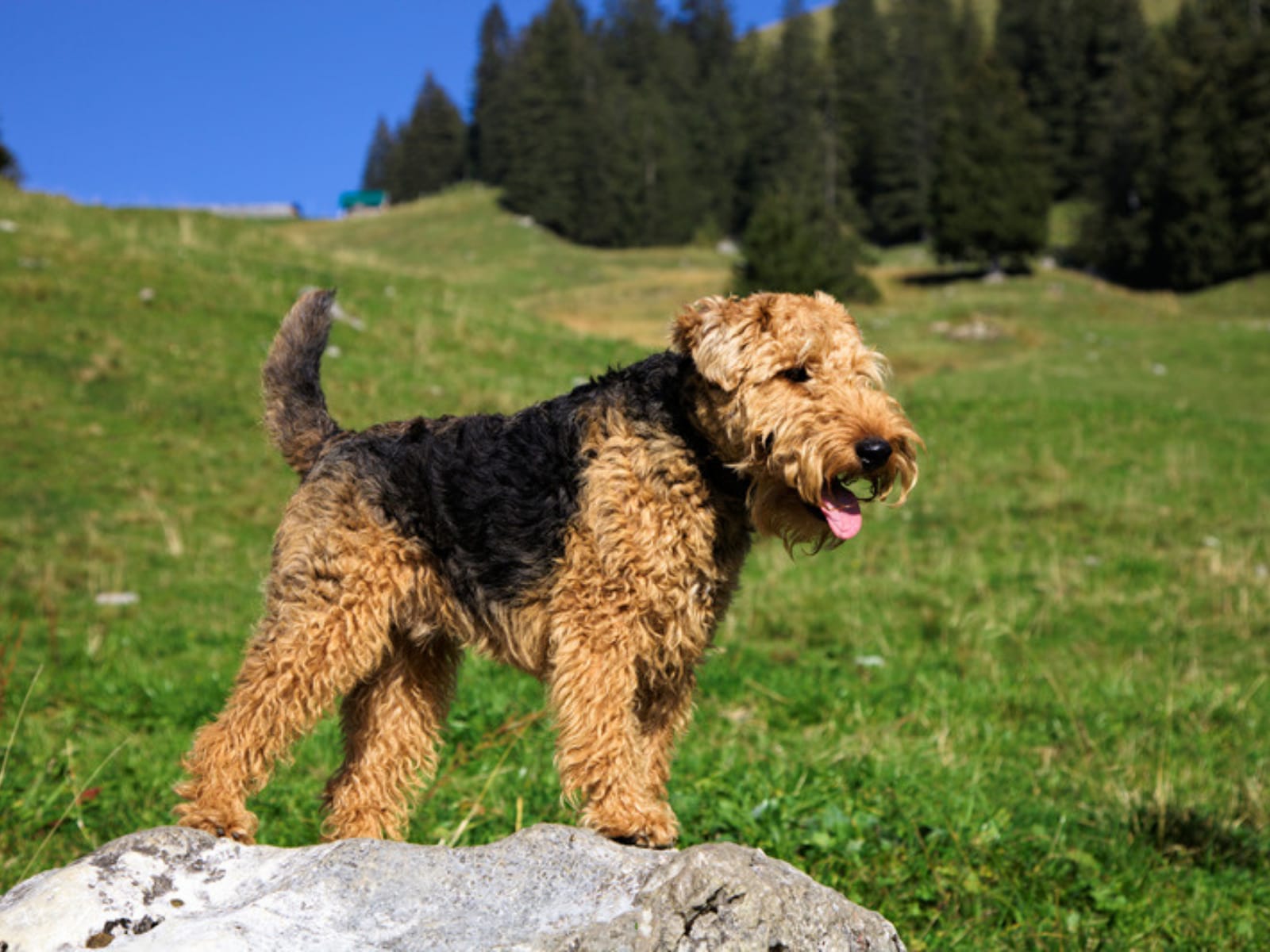
Welsh Terrier standing on a rock in a mountain meadow

Breed facts

FCI
no. 78 · group 3, large and medium-sized terriers
Origin
Great Britain
Height at withers
at most 39 cm
Weight
9–9.5 kg
Exercise
up to 1 hour a day (according to the Royal Kennel Club)
Lifespan
over 12 years
Coat
medium length, sheds

The GoPuppy profile

These are breed averages and our own assessment. Your own dog’s age, fitness and training matter more.

  1. WalkingLong walksThe Royal Kennel Club gives up to an hour of exercise a day; a healthy Welsh Terrier happily walks further.
  2. Dog sportSport with a build-upAgility, scent work and hoopers suit a quick terrier.Suitsagilityscent workhoopers
  3. Terraces and cafésTerrace after trainingThe standard calls him affectionate, obedient and easily controlled, definitely not aggressive.
  4. Travel and staysTravels with some planningSmall to medium, easy to take along.
  5. CityBetter with a gardenThe Royal Kennel Club suggests a small house with a small to medium garden, in town or country.

Character

According to the FCI standard, the Welsh Terrier is affectionate, obedient and easily controlled. He is happy and volatile, rarely shy, game and fearless but definitely not aggressive, although able to hold his own when necessary.

Origin

The standard calls him a terrier with a truly working background, perhaps rather less exuberant than some others. He hunted fox, badger and even otter. The Welsh and the Lakeland Terrier are very similar and may share a common origin. According to the Royal Kennel Club, he was once called the Welsh Black and Tan Rough Coated Terrier. Welsh huntsmen stayed true to that colour and later added Irish Terrier, Airedale and Lakeland blood. The first breed club was formed in 1885 in Pwllheli. The FCI places him in Group 3, section 1, large and medium-sized terriers.

Coat and health

The tight, wiry coat is normally black and tan. The Royal Kennel Club puts genetic diversity first and asks for a DNA test for primary lens luxation (PLL).

Size

Height does not exceed 39 cm; weight is 9 to 9.5 kg.

Health: what a good breeder tests for

  • Prioritising genetic diversity when choosing the parents
  • DNA test for primary lens luxation (PLL)

Ask for the parents’ results when you visit a litter. This is not medical advice; your vet knows your dog.

Breeders of this breed on GoPuppy

No breeder of this breed on GoPuppy yet.

GoPuppy does not check breeders’ health tests. A listing here is not a seal of approval.

Read also