Temperament
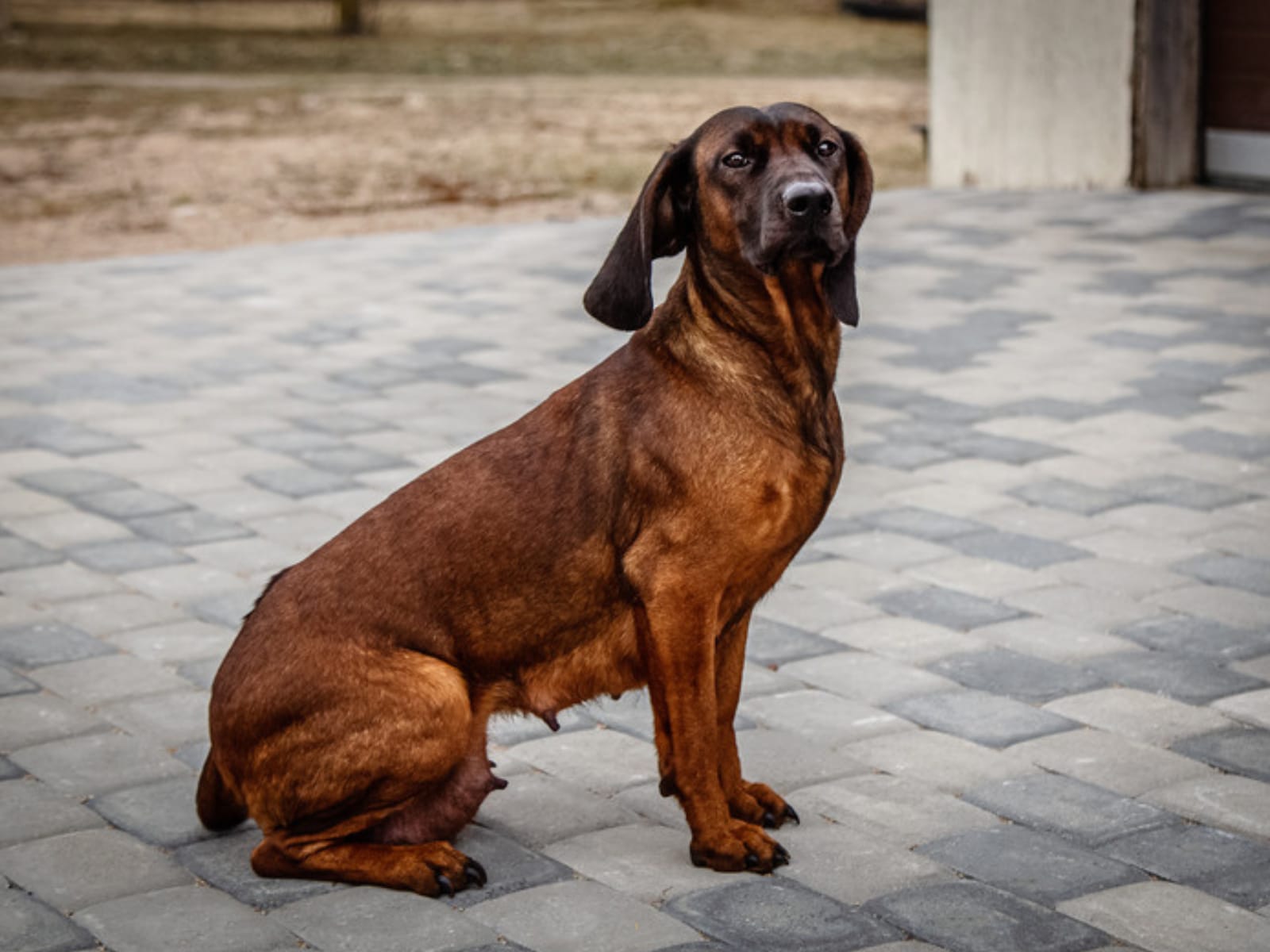
The FCI standard describes the Bavarian Mountain Scent Hound as calm and balanced, devoted to his owner and reserved with strangers. It asks for a sound, self-assured, fearless and biddable dog, neither shy nor aggressive.
Origin
According to the standard, all leash hounds and blood-tracking hounds descend from the Bracken. The most reliable and persevering Bracken were taken from the pack and put on the leash to find a lost trail. From them came the leash hounds, which work a natural cold scent, and the blood-tracking hounds, which follow wounded game. After the 1848 revolution the large hunting estates broke up, and with better firearms the dog was needed mainly “after the shot”. In the mountains the Hanoverian Scent Hound proved too heavy. So after 1870 Baron Karg-Bebenburg of Reichenhall bred a lighter mountain scent hound by crossing Hanoverian Scent Hounds with red mountain hounds. The breed club was founded in Munich in 1912. According to the standard he is today the classic companion of the professional hunter and gamekeeper in the mountains. The FCI places him in group 6, section 2, leash (scent) hounds, with working trial.
Health
The Royal Kennel Club prioritises genetic diversity and lists no further tests for this breed. The RKC also asks for hip testing.
Size
Dogs measure 47 to 52 cm, bitches 44 to 48 cm; the standard allows no departure from this. Ideal weight is 20 to 30 kg for dogs and 17 to 25 kg for bitches.