FCI 159 · Great Britain

English Foxhound

A British pack hound whose stud books go back to before 1800.

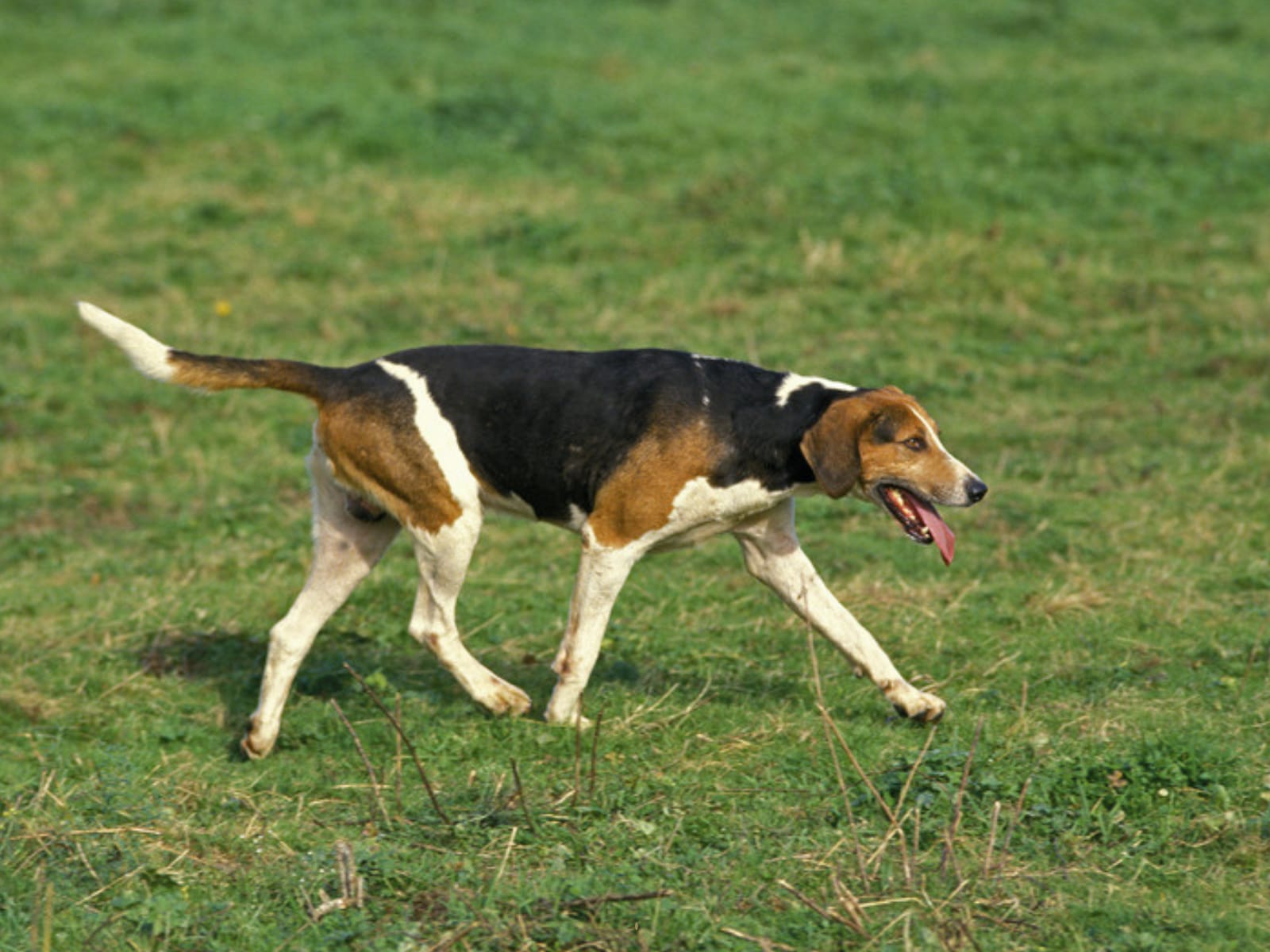
Tricolour English Foxhound trotting across a grass field

Breed facts

FCI
no. 159 · group 6, large-sized hounds
Origin
Great Britain
Height at withers
58–64 cm
Size
The standard gives approximately 58 to 64 cm and no weight.
Exercise
more than 2 hours a day (according to the Royal Kennel Club)
Lifespan
over 12 years
Coat
short, sheds

The GoPuppy profile

These are breed averages and our own assessment. Your own dog’s age, fitness and training matter more.

  1. WalkingFull-day hikesThe Royal Kennel Club suggests more than two hours of exercise a day.
  2. Dog sportSport with a build-upCanicross suits a dog with this much stamina.Suitscanicrossscent workmantrailing
  3. Terraces and cafésTerrace after trainingThe standard calls him friendly and not aggressive.
  4. Travel and staysRules or heat when travellingLarge; you will need a roomy boot.
  5. CityThe RKC suggests the country, a large house and a large garden.

Temperament

The FCI standard lists stamina, endurance and a natural ability to hunt. The English Foxhound is friendly and not aggressive. He is bred as a pack hound for mounted hunting.

Origin

The English Foxhound has been carefully bred for more than two hundred years. The stud books of the Masters of Foxhounds Association go back to before 1800, so any owner can trace a hound’s pedigree. Breeding has always been in the hands of the masters of foxhounds, who kept careful records. According to the standard there have been more than 250 packs in Great Britain. The FCI recognised the breed in 1964. The coat is short, dense and weatherproof, in any recognised hound colour. The FCI places him in group 6, section 1.1, large-sized hounds, with working trial. In France a cross with the Foxhound produced the Great Anglo-French White and Black Hound.

Health

The Royal Kennel Club prioritises genetic diversity and lists no further tests for this breed.

Size

The standard gives a height at the withers of approximately 58 to 64 cm. It gives no weight.

Health: what a good breeder tests for

  • Prioritising genetic diversity when choosing the parents

Ask for the parents’ results when you visit a litter. This is not medical advice; your vet knows your dog.

Breeders of this breed on GoPuppy

No breeder of this breed on GoPuppy yet.

GoPuppy does not check breeders’ health tests. A listing here is not a seal of approval.

Read also