FCI 221 · Netherlands

Wetterhoun

The water dog of the Frisian lakes, once used to hunt otters. A rare breed, with about a thousand dogs worldwide in 2013.

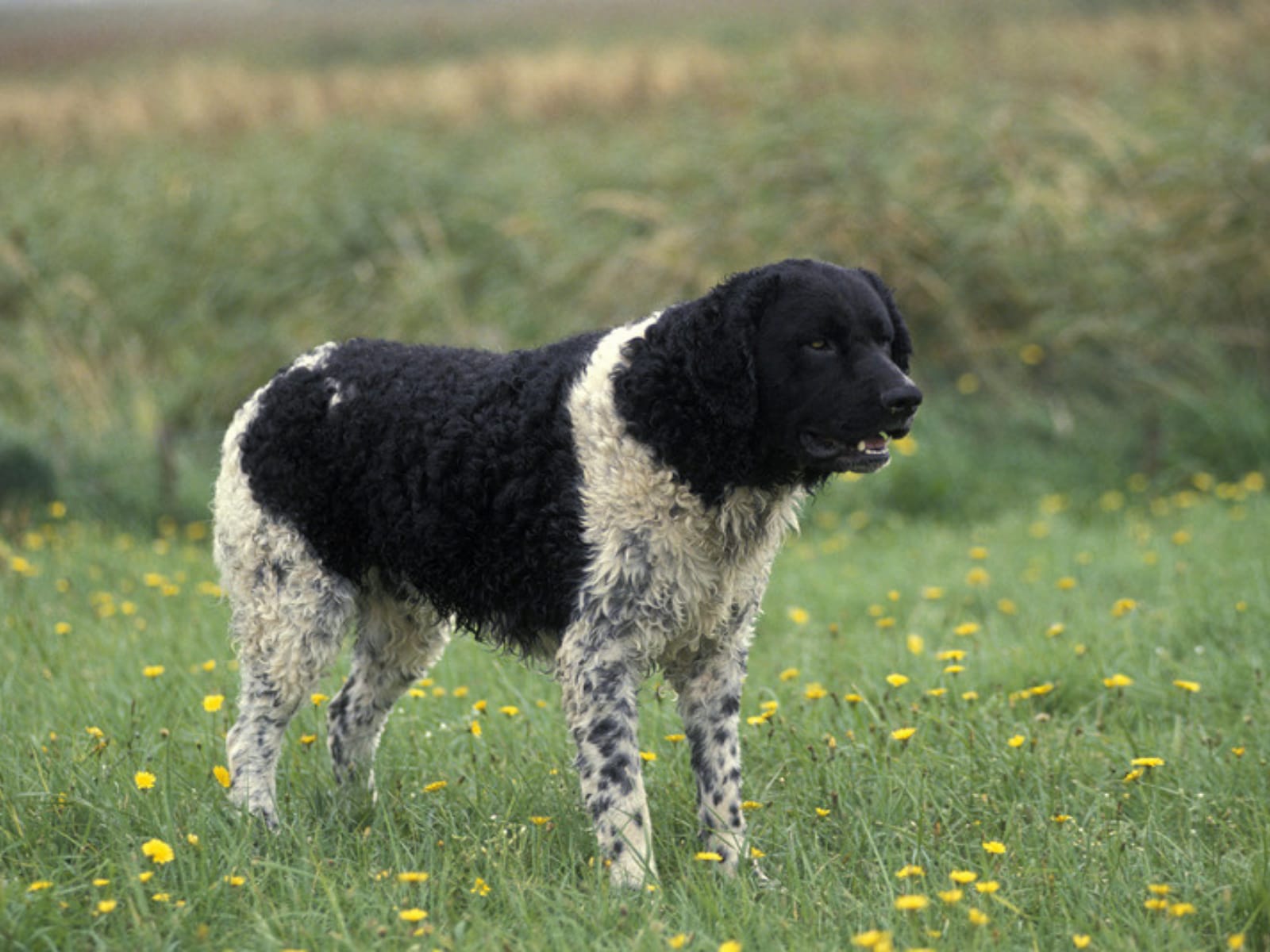
Black and white Wetterhoun in a meadow with buttercups

Breed facts

FCI
no. 221 · group 8, water dogs
Origin
Netherlands
Height at withers
male 59 cm · female 55 cm
Size
These are the ideal heights; weight is approximate.
Weight
male 34 kg · female 28 kg

The GoPuppy profile

These are breed averages and our own assessment. Your own dog’s age, fitness and training matter more.

  1. WalkingLong walksA sturdy hunting dog who likes long hours outside, ideally with water along the way.
  2. Dog sportSport with a build-upA water dog with a working trial. Swimming, scent work and dummy training suit him.Suitsswimmingscent workdummy training
  3. Terraces and cafésRather not a busy terraceThe standard calls him self-willed and initially reserved with strangers, without being fearful.
  4. Travel and staysTravel takes preparationMedium to large. Fits in a roomy car or crate.
  5. CityNeeds a big gardenBred for water and farmyard. A house with a garden suits him better than a flat.

Character

According to the FCI standard, the Wetterhoun is self-willed by nature. As a family pet he is affectionate. In and around the house he is watchful and keen to catch vermin. He can be reserved with strangers at first, but should not be fearful.

Origin

According to the standard, the breed was supposedly brought by travellers or sailors from countries around the Baltic Sea. In the 19th and 20th centuries he pulled dog carts, but mostly he hunted otters and other small predators in the water-rich parts of Friesland. In the early 20th century Wetterhoun and Stabyhoun were often crossed. In 1938 enthusiasts from the Kynologenclub Fryslân began purifying both breeds, which were officially recognised in 1942. The FCI places him in Group 8, section 3, water dogs, with a working trial.

Health

The standard counted about a thousand Wetterhouns worldwide in 2013. According to Wageningen UR, the breed counted as endangered under the FAO classification in 2008; the Dutch Centre for Genetic Resources stores semen from males in its gene bank. Ask the breeder about the relatedness and inbreeding of the parents.

Size

The ideal height is 59 cm for males and 55 cm for females. Males weigh approximately 34 kg, females approximately 28 kg.

Health: what a good breeder tests for

  • Rare breed: in 2008 'endangered' under the FAO classification. Ask about the relatedness and inbreeding of the parents

Ask for the parents’ results when you visit a litter. This is not medical advice; your vet knows your dog.

Breeders of this breed on GoPuppy

No breeder of this breed on GoPuppy yet.

GoPuppy does not check breeders’ health tests. A listing here is not a seal of approval.

Read also